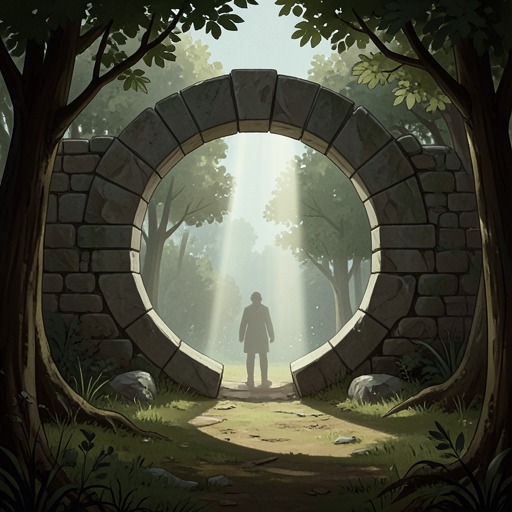
The Veil Between Worlds Thins at the Solstice
Last ChristmasThe solstice in the novel carries two meanings that pull against each other: it promises renewal through ceremony and new beginnings, yet leaves the world vulnerable to things crossing from beyond it. That tension shapes Lilliana and Caleb’s choice of a wedding date and Caleb’s later apprehension when he sees a shadow in the darkness.
Renewal and Marriage
Lilliana chooses the solstice for her marriage to Caleb because she sees it as the mark of a new year, associated with beginnings, rebirth, and celebration. Caleb reacts with unease rather than anticipation. To him, the date is the year’s longest night, when portals open and dangerous things can enter the world. Although he recognizes the risk, he does not press his objection against Lilliana’s wish to marry on that date.
The wedding gives the solstice’s promise of renewal a communal form. The priest places wreaths of dried greenery woven with holly berries on Caleb and Lilliana, lights candles, and calls Myone and Ophelos forward as witnesses. Xevikan is also present, and he and Myone receive benedictions. Lilliana explains that a bonfire will follow, where people can release past grievances and begin anew. Her account makes the wedding part of a wider seasonal rite: the day is not only a private starting point for the couple, but an occasion for renewed relations among those gathered.
The Thin Veil and Its Danger
The supernatural danger Caleb fears is later presented as a rule of the solstice night. While searching outside, he sees a shadow and finds nothing there. He might dismiss the sight on another night, but the veil is thin now, things can cross over, and those that do are more powerful than normal. The narration thus gives a reason for his suspicion without confirming that the shadow itself was one of these beings.
Caleb searches the darkness, calling for a cat as he tries to locate what he saw, and a bad feeling settles over him. The scene holds back the identity of the shadow: the threat remains unseen, while the solstice rule makes an ordinary explanation less reassuring. The contrast with the wedding is sharp. The same night that welcomes vows, blessings, and the promise of a fresh start also weakens the boundary that is supposed to keep danger out.
Recurrence and Significance
The solstice links personal change to a moment of supernatural instability. Lilliana embraces the date because its seasonal symbolism suits a marriage and a new life; Caleb understands that the threshold between years is also a threshold through which threats may pass. Neither meaning cancels the other. The ceremonies offer hope and a way to begin again, but they take place under the condition Caleb fears.
A later chapter opens with the heading Christmas 3250 and then turns again to the solstice motif. This return places the seasonal language in a later part of the narrative, though the heading alone does not establish what supernatural events occur there. Across the supplied scenes, the solstice’s importance rests on its double character: a time for renewal among people and a time when the world’s defenses are unusually weak.