The fatal vulnerabilities of immortals
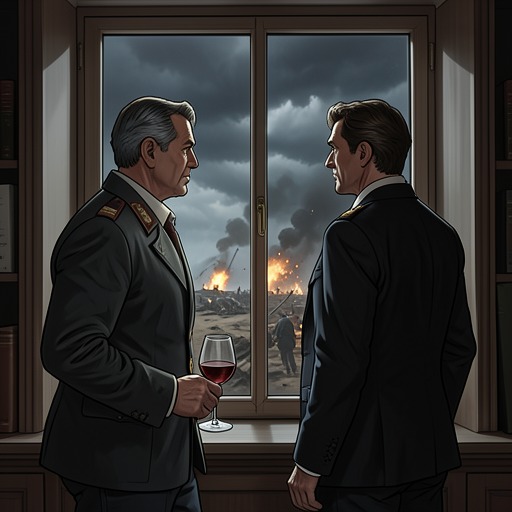
Last ChristmasThe fatal vulnerabilities of immortals define the limit of what immortality protects: it can prevent aging and ordinary death without making its bearer impossible to kill. The rule is established first as a practical danger, when Malphas’s god-forged sword or magic is identified as necessary to kill him, and later explained to Lilliana as a broader feature of immortal life. Longevity is real, but it is not invulnerability.
The limits of immortality
The first formulation of the rule comes amid suspicion about whether Lilliana can be trusted. The possibility that she has gone to fetch Malphas’s sword leads to the recognition that the weapon is no ordinary armament: it was forged by the gods, while mortal weapons are worthless against him. The immediate conclusion is stark and conditional. To kill Malphas, his god-forged sword or magic would be needed. Immortality therefore does not erase danger; it changes what can count as a credible threat.
That distinction also makes the sword more than a sign of power. In this exchange, its significance comes from its particular capacity to threaten someone ordinary weapons cannot harm. The rule establishes a threshold between mortal force and the means that could end an immortal. It does not say that the sword is the only possible means, since magic is named as an alternative, nor does it supply a complete catalogue of what magic can do.
The explanation of mortal vulnerability
The later explanation begins with a promise attached to ambrosia and nectar: together, they are said to ensure that Lilliana will never age or die. Caleb qualifies that assurance immediately. Immortals can die. Rather than treating the food’s gift as false, the conversation clarifies its limit: it confers immortality, but immortality still admits death under particular conditions.
Caleb points to his own wound in the cave as evidence. His injury is offered as a concrete example that an immortal can be wounded, and he explains that certain weapons and circumstances can end immortals. The cave wound is not described here as fatal; its importance is that it makes vulnerability visible in a body that might otherwise seem beyond harm. The scene turns an abstract promise of endless life into a more exact distinction between not aging, surviving ordinary threats, and being truly unkillable.
Beheading and the force of the rule
When Lilliana asks what circumstances could bring about an immortal’s death, Xevikan supplies beheading as an example. Cutting off the head, he explains, kills most things, whether immortal or not. His answer makes the rule physically specific: immortality does not necessarily protect the body from a decisive form of injury. The qualification that this applies to most things, rather than every possible being, also keeps the statement from becoming an absolute law about all immortals.
Lilliana rubs her neck as she hears this. The gesture registers the explanation as an immediate bodily possibility, not merely a distant piece of lore. Caleb responds by nudging the jar closer and urging her to eat. The exchange holds two facts together: the ambrosia and nectar offer the life-changing gift of immortality, while the warning about beheading prevents that gift from being mistaken for total safety. Reassurance does not cancel vulnerability; it follows the disclosure of its terms.
Narrative and thematic significance
The rule is disclosed in two distinct contexts. First, the god-forged sword and magic appear as the means required to kill Malphas, making vulnerability part of the immediate logic of danger. Later, the discussion of ambrosia, nectar, Caleb’s cave wound, and beheading gives the reader a broader account of what immortality does and does not promise. The movement is from a specific threat to an explicit limit on the condition itself.
Together, these details prevent immortality from functioning as simple invincibility. A being may escape aging and remain beyond the reach of ordinary weapons, yet still face exceptional weapons or fatal circumstances. The distinction matters both for the story’s stakes and for Lilliana’s understanding of the gift being offered: an immortal life is longer and differently protected, but it remains vulnerable to death.