
Time, Memory, and Eternal Being
Last and First MenThis flow follows the transformation of time from an abstract philosophical problem into an experimentally accessible past and, ultimately, a question of cosmic existence.
increasing Bearing strength in each event
 decreasing
Bearing strength in each eventdecreasingThe Past as Loss
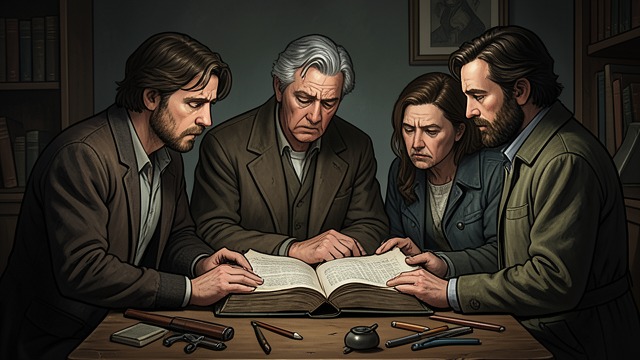
Mortality and Memory
The finite life
The Fifth Men know that their long-lived minds will eventually vanish in ordinary temporal terms. Their concern extends from personal death to the disappearance of humanity itself.
A disciplined response
They cultivate memory and historical study as duties toward earlier beings. Yet the past still appears to them as a domain of events that have ceased to exist.
Evidence from Biology
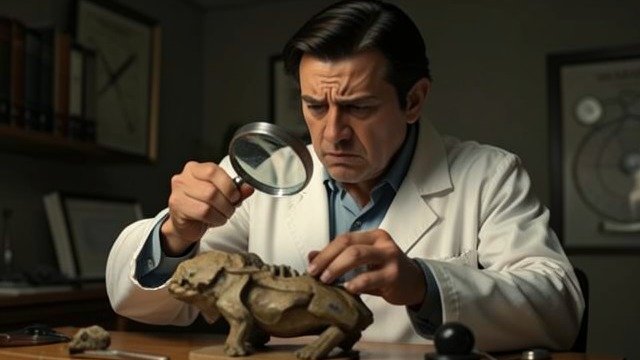
A Suspicion About Persistence
An empirical clue
Biological observations suggest that past events may endure in a manner different from ordinary memory. This possibility challenges the culture’s established account of loss.
A divided response
Some defend evanescence as part of cosmic beauty; others demand investigation. The dispute becomes serious because it threatens the emotional foundation of an entire civilization.
The First Past Encounter
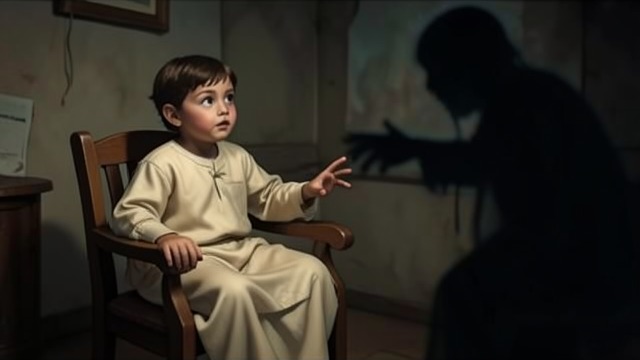
A Mind Reached Across Time
A child as medium
A trained child experiences the mind of a dead person and reports a specific episode from the past. Subsequent experiments connect memories to locations and events no living observer could have supplied.
A new method
Past history becomes accessible through the perspective of a former mind. The result transforms scholarship into a demanding form of participation.
The Permanence of Suffering
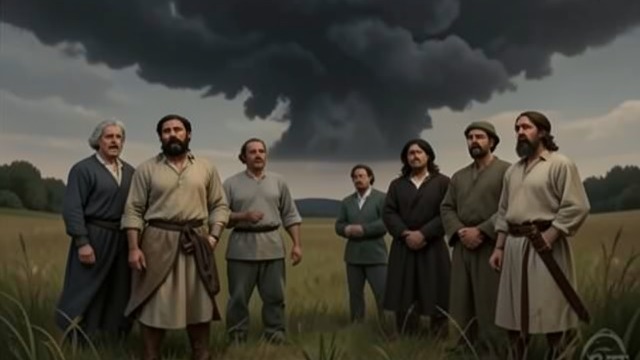
History’s Unfinished Pain
An expanded field of feeling
Explorers encounter the past with vividness, including its violence and misery. The present can no longer treat historical agony as safely concluded.
A philosophical crisis
The Fifth Men question whether aesthetic acceptance can truly encompass suffering. What began as a scientific discovery becomes an emotional and spiritual conflict.
The Last Men’s Eternal Cycle
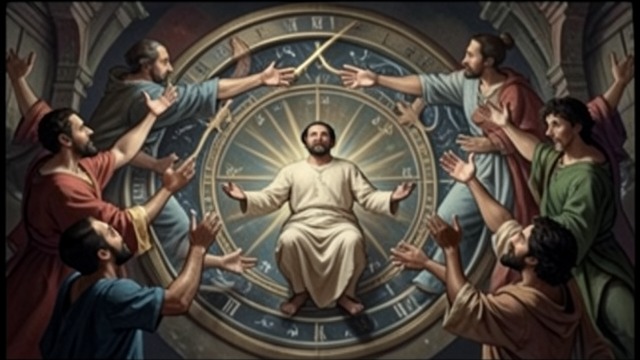
Time Without Repetition
A cyclic order
The Last Men describe time as finite yet boundless, with events forming a cycle that is not a repetition within some larger time. Past events possess eternal being while still undergoing passage.
An accepted antinomy
They cannot make this account fully intelligible to individual minds, even though racial consciousness has apprehended it. The novel leaves time as a real mystery rather than a solved puzzle.
During the Fifth Men’s early philosophical culture
After long eras of Fifth-Men research
During the first successful trance experiments
As supra-temporal exploration becomes reliable
During the Last Men’s cosmological account
