
The Last Men’s Cosmic Perspective
Last and First MenThis flow traces how the Last Men move from astronomical knowledge to a philosophical vision of humanity as a brief, beautiful participant in a vast and uncertain cosmos.
increasing Bearing strength in each event
 decreasing
Bearing strength in each eventdecreasingHumanity in Scale
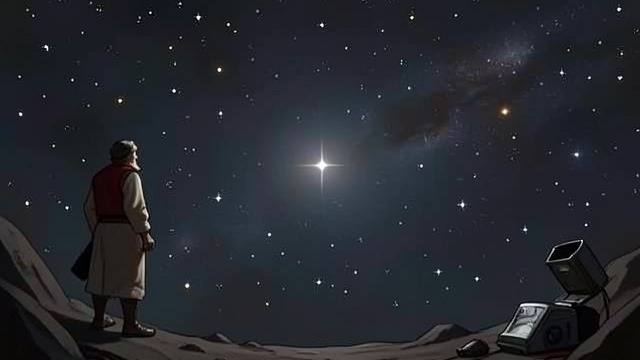
A Small Interval
Vast durations
The narrator places humanity’s history within the much longer life of stars and galaxies. Even the two-thousand-million-year human span occupies only a small interval of cosmic time.
Perspective without dismissal
Human smallness does not make human lives unreal. The scale of the cosmos changes the meaning of history without erasing its individual experience.
Aesthetic Knowledge
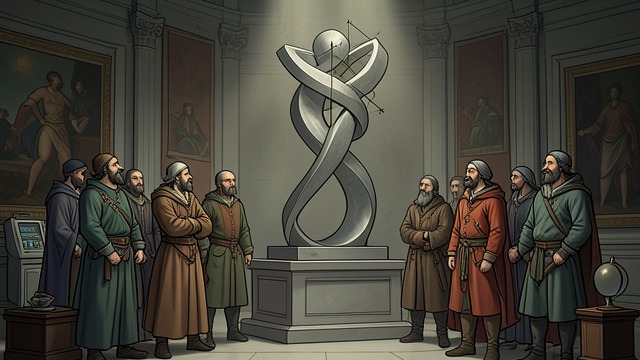
The Cosmos as Form
Art and science meet
The Fifth Men increasingly understand physical relations through aesthetic ideas and treat artworks as ways of apprehending complex aspects of reality. Their culture seeks both discovery and creation.
Beauty without an author
They cannot establish that a conscious artist designed the cosmos. The possibility that the universe is beautiful without being perfect becomes a central source of wonder and uncertainty.
The Last Men’s Cosmology
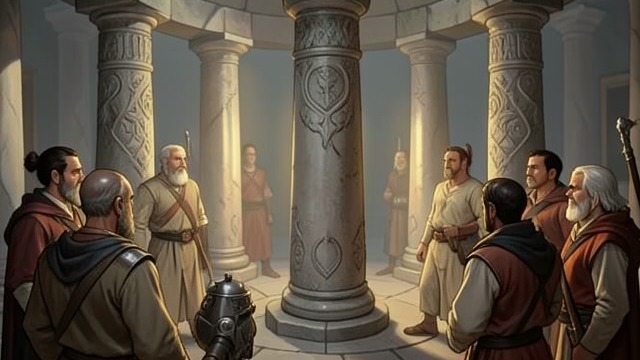
A Finite, Boundless Order
Cyclic time
The Last Men describe a universe whose events form a cycle without an external time in which the cycle repeats. Each event passes, yet also possesses eternal being.
Knowledge with limits
Racial consciousness can apprehend this structure more clearly than the individual mind. Even the most advanced species cannot make the account fully transparent after its shared awakening ends.
A Hope for the Soul of All
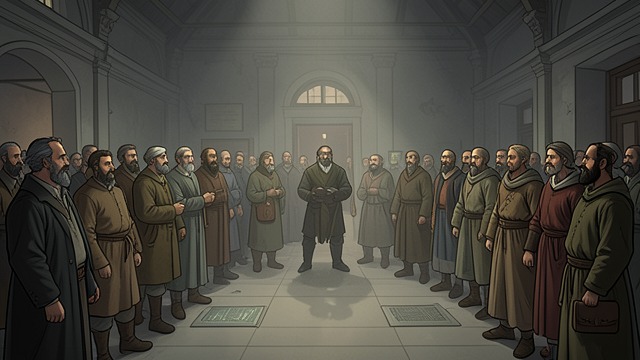
A Possible Universal Mind
A cosmic aspiration
The Last Men hope that the spirit might eventually gather all minds into a universal form of knowledge and admiration. Humanity may be only a beginning, but its awakening offers a model of what could follow.
Hope without proof
They cannot know whether another spirit will complete the work. The cosmic ideal remains an active desire rather than a fact they claim to possess.
A Beauty That Does Not Excuse
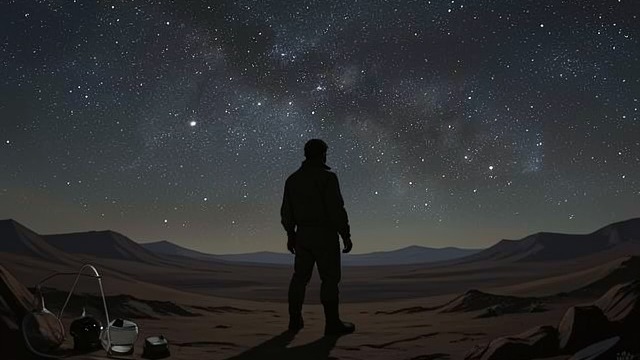
The Whole and the Human
The danger of consolation
The Last Men acknowledge the beauty of the cosmos without claiming that all suffering was necessary or fair. Their vision does not erase the victims of history.
A modest affirmation
Humanity may be small, doomed, and incomplete, yet its acts of understanding and creation have actual being. The closing voice accepts the Whole while leaving its ultimate goodness unresolved.
At the transition to the Neptunian history
During the Fifth Men’s mature culture
During the mature Eighteenth-Men philosophical age
Before the Purple-Star Crisis
In the final speech of the book
