
From Flight to Human Flight
Last and First MenThis flow traces the changing meaning of flight from mechanical worship among the First Men to embodied freedom among the Seventh Men and renewed technology among the Last Men.
increasing Bearing strength in each event
 decreasing
Bearing strength in each eventdecreasingFlight as Worship
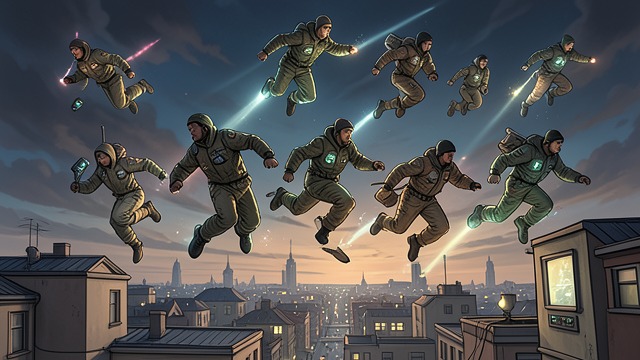
Machines in the Sky
Ritualized aviation
The First World State turns flying into both transport and religious performance. Aerial choreography fills the sky with elaborate patterns dedicated to motion.
A limited achievement
Mechanical flight gives the society spectacle and coordination but also consumes scarce resources. Its cultural prestige makes later reductions difficult even when survival requires them.
Flight as a Biological Ideal
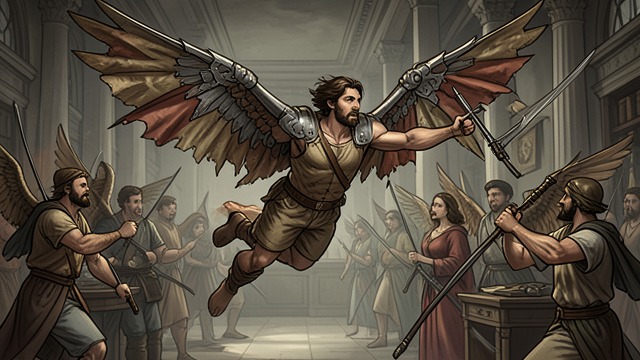
Wings in the Making
A recurring symbol
The Sixth Men repeatedly imagine flight as bodily and spiritual liberation from Venus’s confined landscapes. Advances in biological knowledge make an embodied transformation seem possible.
A designed successor
After many attempts, they create the Seventh Men, whose bodies and reflexes are adapted for aerial life. A cultural longing becomes a biological fact.
Aerial Ecstasy
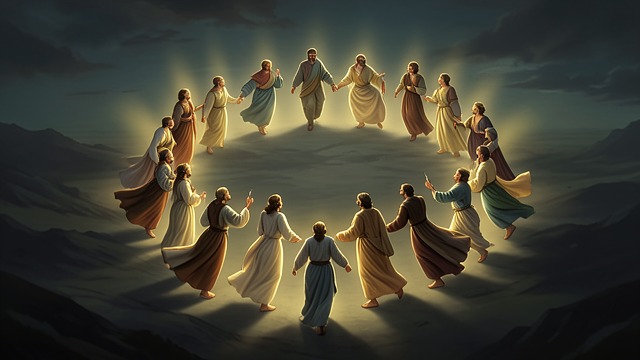
The World from Above
Flight as experience
In the air, the Seventh Men find heightened perception and a rare aesthetic detachment. Their communal dances make individual motion part of a larger pattern.
Life organized around a state
The species increasingly abandons terrestrial work and material culture. Its civilization remains stable because its bodies, environment, and values reinforce one another.
Technology Returns
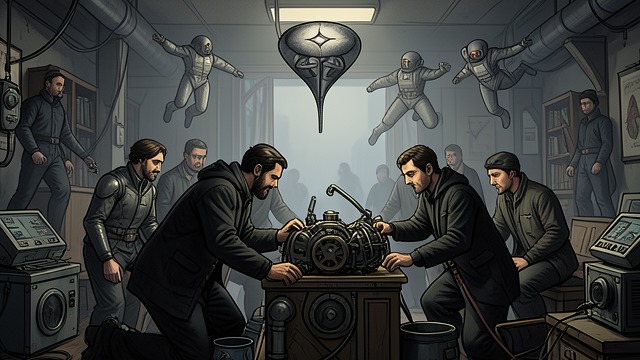
The Walkers Gain Power
A minority’s advantage
The surviving flightless become specialists in biology and engineering. Their scientific work restores mechanical flight but also reshapes society around terrestrial labor.
A changed hierarchy
Natural wings lose prestige as machines outperform them. The new order treats the fliers’ central joy as an unnecessary luxury and demands their submission.
Flight Renewed
Freedom Across the Air
Personal flight
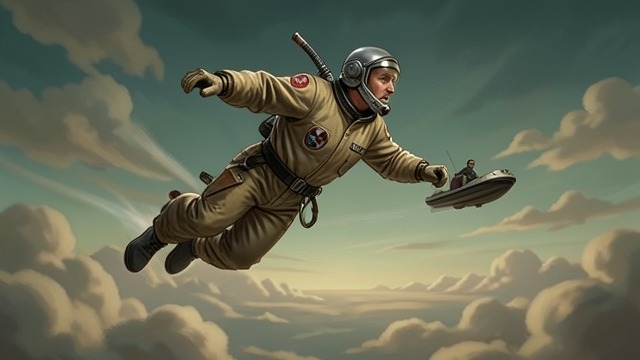
The Last Men use radiation-generator overalls for ordinary aerial movement and air-boats for speed. Flight becomes a flexible part of life rather than a single society’s compulsory ritual.
Meaning changed
The practice serves recreation, travel, and contact with the planetary environment. Its value is integrated into a broader culture instead of being treated as humanity’s sole spiritual purpose.
During the First World State Era
During the final Sixth-Men civilization
During the mature civilization of the Seventh Men
After flightless infants become more common
During the civilization of the Last Men
