
The Preservation and Rediscovery of Knowledge
Last and First MenThis flow follows humanity’s fragile attempts to preserve knowledge across collapse, from the Siberian tablets to the Last Men’s use of the past as a shared inheritance.
increasing Bearing strength in each event
 decreasing
Bearing strength in each eventdecreasingA Record Against Extinction
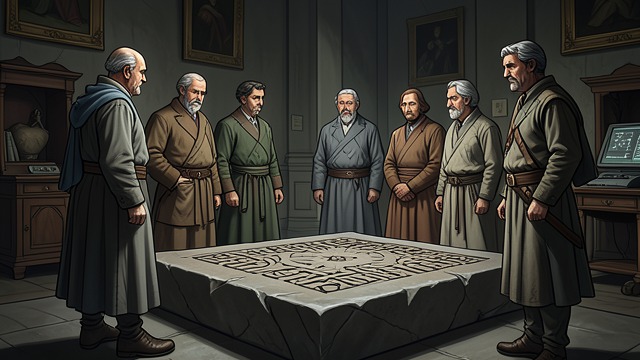
Writing for a Remote Future
The founders’ labor
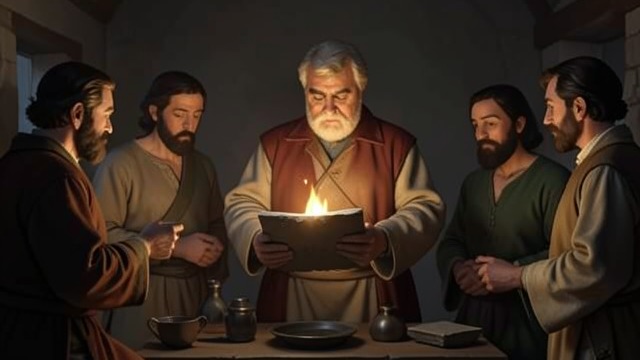
The Siberian survivors engrave outlines of science, history, and individual belief onto durable stone. They also create a pictorial guide for people who may no longer share their language.
A limited audience
Their children reject much of the work as an oppressive burden. Preservation depends on a few committed adults rather than a stable institution.
A Legacy Becomes Myth
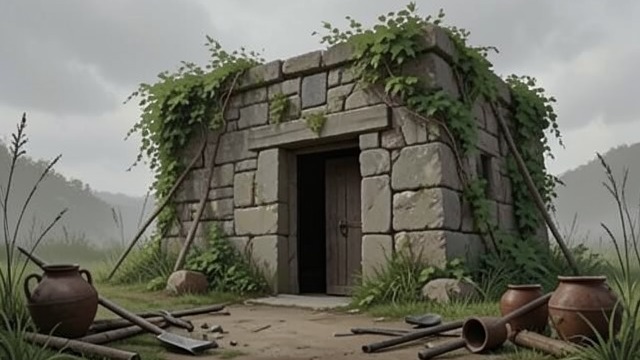
Memory Without Understanding
Civilization recedes
The descendants of the Siberian settlement lose much of their language and technical knowledge. They retain a reverence for the stones even when their contents are no longer readable.
A cultural thread
The library survives through ages of environmental change and mental decline. Its physical endurance preserves a chance for knowledge to return when a later species can interpret it.
Patagonia Finds the Ancients
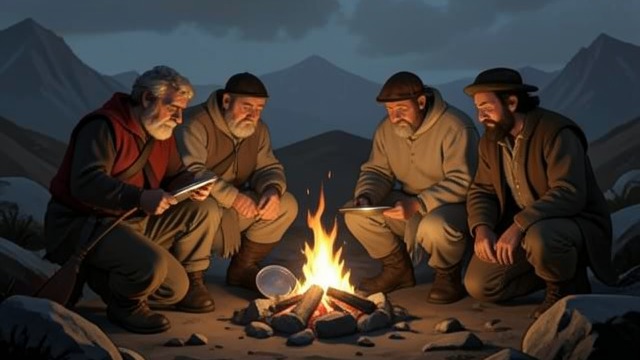
A Past Revealed
Archaeology changes scale
The Patagonians discover ancient metal printing plates and reconstruct the history of the First human species. They learn that their own civilization is not humanity’s first achievement.
A divided response
Some reject the findings as a threat, while others see a chance to learn from earlier failures. The recovered past destabilizes the culture’s image of itself.
The Second Men Read the Stones
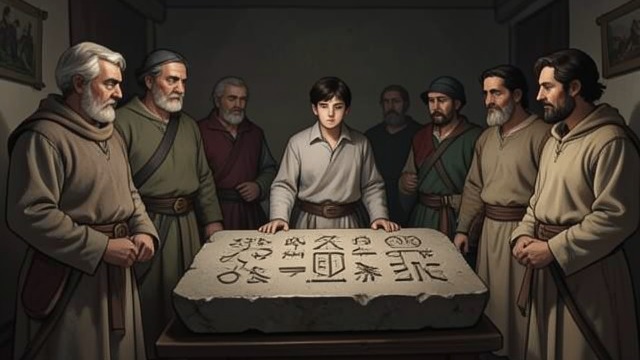
A Historical Encounter
Reconstruction
The Second Men recover and interpret the tablet collection, using its pictorial aids to understand a civilization many millions of years old. They recognize the records chiefly as historical evidence rather than final scientific authority.
A remembered voice
The young biologist’s account of the Divine Boy gives the later species a personal point of contact with a distant era. Preservation creates a connection no founder could have expected.
The Past Becomes Experience
Beyond the Archive
Direct entry
The Fifth Men learn to experience past minds rather than relying only on documents. Historical knowledge becomes intimate, detailed, and emotionally consequential.
A new obligation
The archive is no longer merely stored information; it becomes a population of lives that can be known. Later, the Last Men extend this relationship by seeking both understanding and help from the past.
During the first Siberian settlement
During the Second Dark Age
During the late Patagonian civilization
After the Second Men advance into Siberia
During Fifth-Men supra-temporal research
