Admiration of fate
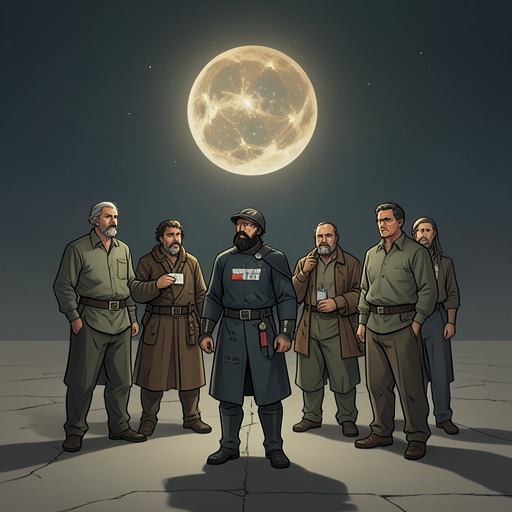
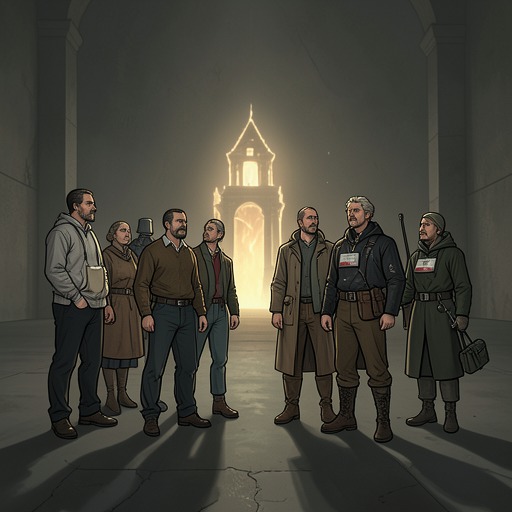
Last and First MenAdmiration of fate is the Second Men’s effort to face the world without denying its tragedies and to seek an apprehension of beauty broad enough to include suffering. It begins as the companion to their religion of love: clear-sighted compassion draws them toward one another, while dispassionate thought directs them toward acceptance of what happens. The ideal becomes most consequential when catastrophe makes the difference between understanding tragedy in theory and living through it impossible to ignore. Though the Second Men first treat this response as a source of strength, their later generations come to doubt that they ever achieved it.
Origins in the Second Men’s outlook
The Second Men’s capacity for admiration of fate rests on a distinctive combination of intellectual clarity and fellow-feeling. Their dispassionate cognition helps them confront facts without the confusion and superstition that had burdened the First Men. Their natural inclination to love one another, meanwhile, makes another person’s suffering more than an abstraction. Early in their history, they develop the religion of love, which returns in different forms throughout their existence. Yet their rigorous thought makes them especially vulnerable to a conflict at the heart of their outlook: they must reconcile love for individuals with loyalty to fate, including the acceptance of painful outcomes.
Their mature culture gives this tension a wider human setting. The Second Men respect individual personality, but they also regard each present individual as a stage toward more capable people in the remote future. They are troubled by short human lives and by the limits that keep one mind from fully apprehending another. Their hope for a community joined through direct telepathic understanding expresses a longing to overcome isolation, even as the ideal’s apparent unattainability darkens their culture. Admiration of fate belongs to the same search for a larger order: it asks them to meet the limits and losses of human existence without turning away from them.
Tragedy made immediate
The ideal acquires practical force during the Martian disaster. The Second Men are not accustomed to large-scale human bloodshed, and their initial response includes intense pity for those who have suffered. Yet that emotion does not displace the work of rescue. Faced with danger, they act with loyalty and courage, and understand their conduct not as exceptional heroism but as reasonable cooperation. Their response shows that admiration of fate is not an excuse for passivity: they try to defend and save people while also confronting the reality of public catastrophe.
The disaster changes the scale of the spiritual task. The Second Men had already accepted that the universe contained private and public tragedies, and their philosophy had prepared them to face personal suffering with fortitude. But knowing that world-tragedy exists in the abstract is different from encountering it directly. They therefore set themselves the harder task of examining the catastrophe and incorporating its force into their understanding, rather than cursing their gods or pleading for the world to be otherwise. Their intended movement is double: to acknowledge the depth of suffering and, through that encounter, to perceive height as well. The disaster is to become part of what they are, not an event they can safely observe from outside.
A conviction tested across generations
The first response appears to succeed. Spiritual leaders urge people not only to endure disaster but to admire even its sternest outcomes. The population accepts this counsel, and writers produce works that seem to articulate the experience and give it a place in people’s hearts. In this early phase, the ideal links immediate efforts to preserve civilization with an attempt to interpret what those efforts cannot prevent. Admiration of fate promises that active care and acceptance of the world’s harshness can coexist.
Repeated calamities gradually unsettle that promise. As the disasters recur across centuries, later generations begin to suspect that their forebears mistook a longing for an achieved experience. They question whether anyone had truly apprehended racial tragedy as part of cosmic beauty, or whether such an apprehension could ever be possible. This doubt persists even after the orthodox race on Mars has established and lost its colony three times. The repeated history does not resolve the spiritual problem; it makes the old assurance harder to trust.
The dilemma becomes sharper because the Second Men cannot settle it through simple belief or rejection. They fear either that humanity is too limited to experience the ultimate excellence it can intellectually imagine, or that humanity has deceived itself and events have no larger significance. Neither possibility is comforting. The first makes the desired spiritual insight inaccessible; the second threatens the belief that tragedy belongs to a meaningful whole. Admiration of fate thus shifts from a confident discipline of acceptance to a question about whether the beauty it seeks is real or humanly attainable.
Failure and legacy
The Second Men’s decline is tied to their judgment that they have failed at the spiritual feat they set themselves. They had tried to see their species’ tragedy as beautiful and could not make that vision fully real. Because they remain too reflective to dismiss the failure and simply resume their former lives, the unresolved ideal becomes a source of spiritual injury. Their society can recover materially and cultivate personality with great subtlety, yet it loses the courage to remake human nature and settles into cultural stagnation. The ideal that once promised to enlarge them instead leaves them unable to proceed when its central promise seems unfulfilled.
The book presents this failure as a consequence of the Second Men’s particular nobility as well as a limitation. Their sensitivity makes it difficult to evade the conflict between love and fate, and their intellectual seriousness prevents them from treating their doubt as a minor inconvenience. The ideal’s cost is not confined to religious speculation: the later account connects the species’ loss of vitality with a broader fading of personal, artistic, intellectual, and communal satisfactions. Admiration of fate remains significant, then, not because the Second Men securely attain it, but because their attempt exposes the gap between affirming tragedy as part of a beautiful order and actually experiencing suffering that way.