American Poison-Gas Massacre of Europe
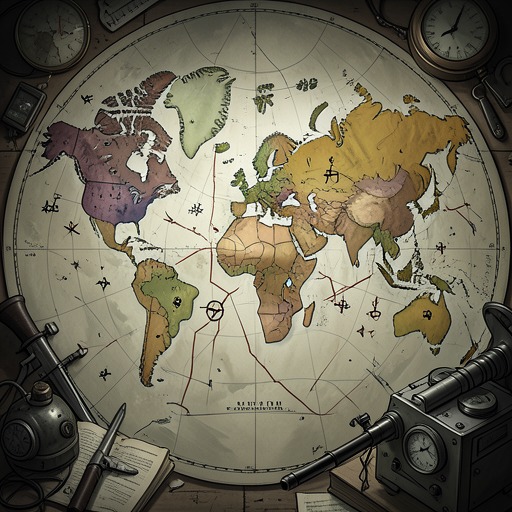
Last and First MenThe American Poison-Gas Massacre of Europe was the catastrophic climax of the Euro-American War, turning a conflict already driven by economic rivalry and nationalist violence into the destruction of Europe’s urban and intellectual heart. The attack killed Europe as a coherent civilization, while its aftermath burdened the victors with guilt that further distorted the American mind.
Causes and Escalation
The massacre followed a long contest between Europe and the United States. Europeans chafed under American financial influence and the presence of American business interests; Germany, though less dominated than its neighbors, also experienced continual friction with American enterprise. Neither side wanted war, but a series of provocations turned rivalry into open conflict: a murder in southern Italy, inflammatory press coverage, the lynching of an Italian in the American Midwest, and the massacre of American citizens in Rome. The United States dispatched an air fleet to occupy Italy, and European aircraft intercepted it. War was underway before it had been formally declared.
The European air action briefly checked the American advance, but it also brought the United States to respond with overwhelming force. By then the American people were described as collectively consumed by hatred of the English and of Europeans generally. The poison-gas attack emerged from this escalation: a war neither side had intended had become a catastrophe neither could restrain.
The Poisoning of European Cities
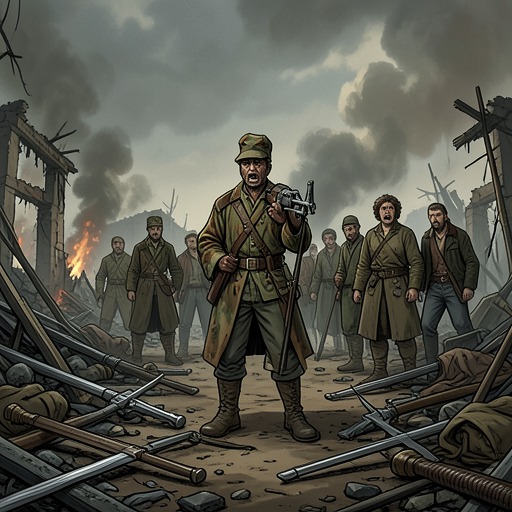
The Americans released a highly lethal gas across Europe. Its potency was expected to cease within three days, allowing American sanitary forces to enter each metropolis within a week of the attack. The gas spread from ground level upward, so that seeking higher ground offered no escape. The invaders encountered the dead throughout the cities, including on rooftops and other elevated places where people had fled from the rising gas.
The attack killed Europe’s cities as centers of population and culture. Its effects were not confined to the places directly struck: all the continent’s centers of intellectual life were blotted out, while only uplands and mountains escaped the poisoning of agricultural regions. Europe’s intellectual and cultural inheritance survived thereafter only in fragments, carried in the minds of Americans, Chinese, Indians, and other peoples.
Europe’s Destruction and the Victors’ Guilt
The massacre made the United States the victor, but the narrative presents victory as a lasting moral injury. Once their passion cooled, Americans could not conceal from themselves that they had committed mass murder. They had regarded themselves as a kind and pleasure-loving people, yet had been drawn into a crime on a continental scale.
The resulting collective guilt warped American public life. Existing traits of vainglory and intolerance grew more extreme; individuals and society became increasingly fearful of criticism, ready to blame and hate, self-righteous, hostile to critical intelligence, and superstitious. The destruction of Europe therefore altered not only the balance of power but also the character of the nation that had destroyed it.
Historical Significance
The massacre is the defining consequence of the Euro-American War: Europe’s surviving spirit became dispersed among other peoples, while American power carried the burden of the crime. In the book’s longer history, the episode exemplifies how primitive tribal impulses can overwhelm a materially powerful society. The United States had possessed the means to project influence across the planet; in war, that capacity became a means of annihilating a civilization and turning the victor’s self-image into a source of further instability.