Arctic
Last and First MenThe Arctic is both a refuge and a passage in humanity’s long history: a polar expedition survives the planetary catastrophe there, and, millions of years later, an iceberg carries the last island survivors south toward Asia. Its extreme conditions shape two migrations separated by vast stretches of time.
The Expedition in the Polar Sea
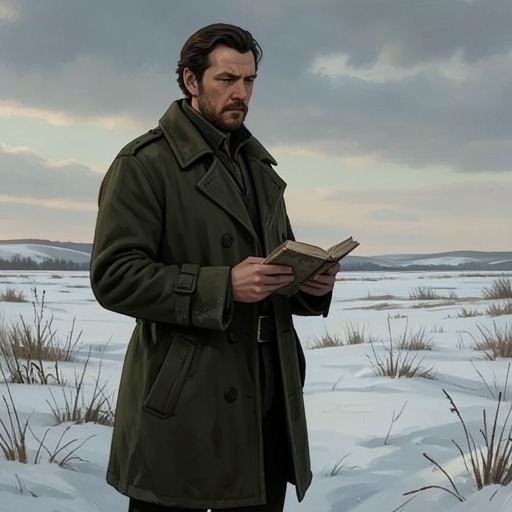
An Arctic exploration ship had become embedded in pack ice during a long drift across the Polar Sea. Provisioned for four years, it had been at sea for six months when disaster struck. The sailing vessel had departed before the newly discovered power source could be used, and its crew comprised twenty-eight men and seven women, all Patagonians of the governing class who claimed descent from The Divine Boy. They had been chosen for companionship, loyalty, health, and technical skill; the expedition also carried a pair of small pet monkeys.
The ship’s isolation in the ice was central to the crew’s survival. Its close-knit company faced the catastrophe far from settled refuge, with only its provisions and collective organization to rely on. The Arctic was not merely the backdrop to their escape: its icebound waters determined how long they remained at sea and which routes they could attempt.
Catastrophe and a Difficult Passage
The crew’s first indication of the catastrophe was a hot wind that melted the ice’s surface. The sky darkened, and the Arctic summer gave way to unusual heat and storms. Heavy rain, smoke and dust, and submarine earthquakes further disrupted the expedition’s surroundings.
A year after the explosion, the ship was still labouring in stormy, ice-strewn waters near the Pole. The crew tried to make its way south, but worsening conditions repeatedly drove them north again. After another twelve months of searching for a tolerable route, they reached Norway, the expedition’s original objective, and found the lowlands scorched and lifeless. The base town had been flattened by a hurricane. The company continued south, then tried to determine whether the devastation was local by circling the British Isles and returning toward France; there they encountered extensive volcanic upheaval and falling debris, forcing another retreat north.
The ship eventually worked its way along the Siberian coast and found a tolerable resting place at the mouth of a great river. By then, six men and two women had been lost during the voyage. Vegetation near the landing place had been scorched and dead animals were common, but the first fury of the explosion was evidently easing.
The Island Survivors and the Southward Drift
The Arctic’s role in human history continues long after the expedition. In a later age, as Arctic conditions spread south over an island inhabited by a diminished human population, crops failed and food sources dwindled. The islanders survived for a long period in increasingly harsh conditions, but their numbers and capacities declined.
Nearly ten million years after the Patagonian catastrophe, a group of these islanders drifted on an iceberg to the mainland of Asia. Their departure coincided with the island’s eventual extinction as worsening Arctic conditions continued. On the mainland, the survivors spread slowly into the heart of Asia; in time, the mingling of peoples and their new environment accompanied humanity’s recovery of vitality.
Narrative Significance
Across these episodes, the Arctic functions as a severe environment that can shelter survivors while also narrowing their choices. The expedition’s icebound route becomes an arduous escape from a devastated world; much later, the iceberg carries a remnant away from an island made increasingly difficult to inhabit. In both cases, survival depends not on command over the environment but on finding a passage through it.