Ecstatic fatalism
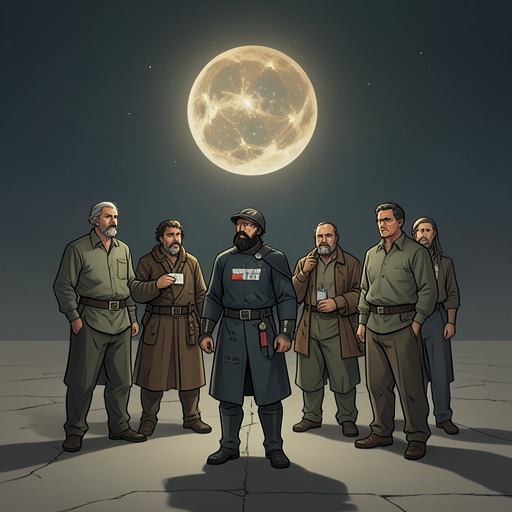
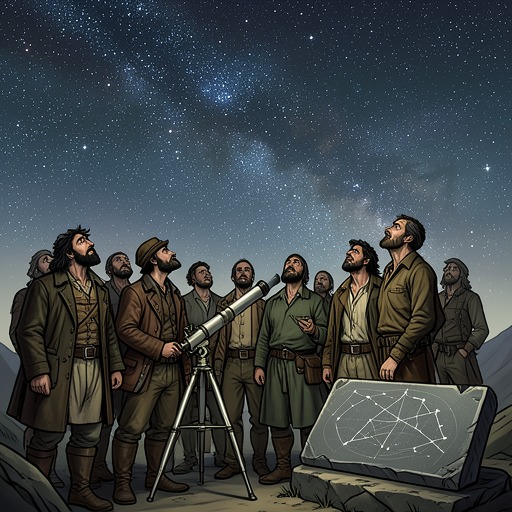
Last and First MenEcstatic fatalism is the Last Men’s practice of admiring reality without demanding that it conform to their wishes. It joins intense participation in life with an ability to welcome success and failure, even the extinction of mankind, as parts of a fate whose full meaning cannot be known. The practice is neither simple resignation nor a denial of desire: it shapes both individual feeling and the society’s larger purposes, allowing the Last Men to accept an uncertain cosmic outcome while continuing to act within it.
Individual Vision and Its Limits
At the individual level, ecstatic fatalism appears as a dispassionate ecstasy before events as they are. The defeated pioneer and the bereaved lover can find in disaster a supreme experience, not because suffering ceases to matter, but because their response no longer depends on changing the outcome. The Last Men can even regard humanity’s approaching extinction as superb in its tragic character. They face that prospect with inner peace, grounded in the conviction that the human spirit has already inscribed the cosmos with beauty and that mankind’s career must end sooner or later.
That acceptance does not remove every fear. In their individual state, the Last Men remain dismayed by the possibility that the cosmic enterprise itself may fail: that the full potential of reality will never be expressed, that conflicting existents will never form a harmonious living body, and that the beauties of space and time will remain imperfect and inadequately worshipped. Their calm before personal loss therefore coexists with a profound anxiety about what existence as a whole might become—or fail to become. Ecstatic fatalism holds that tension rather than resolving it through confidence in a guaranteed cosmic conclusion.
Racial Awakening and the Whole
The racial mode changes the scale of perception. During rare moments of racial awakening, the Last Men have experienced an intellectual and emotional clarification unavailable to them as individuals. In that state, the ultimate dread of cosmic defeat falls away: they can desire the fulfillment of the cosmic ideal without becoming enslaved to that desire. The racial mind wills the supreme achievement, yet simultaneously holds itself aloof from the desired outcome and from emotion except for the joy of admiring reality in its dark-bright form.
The Last Men contrast this racial vision with the artist’s brief creative insight. Once the artist’s clear vision has passed, the artist returns to the struggle for existence and can only remember what was seen, trying to make a perceptible embodiment of its vanished splendor. Likewise, individuals cannot recover the racial vision in full. They live among physical intimacy, relations between minds, cultural pursuits, cooperation and conflict, and the material work of maintaining society; nevertheless, the obscure memory of the wider vision remains with them, as though their lives were illuminated by a source no longer directly visible. The experience is thus not a permanent individual possession but a memory with lasting influence.
From Personal Feeling to Social Purpose
The racial vision has consequences beyond private consolation. The Last Men describe their society as dominated by a single racial purpose, religious in character, which becomes the unquestioned motive of social policy. This purpose does not require the suppression of individual fulfillment. On the contrary, the fulfillment of the racial purpose depends first on a wealth of individual physical and mental fulfillment. Ecstatic fatalism therefore does not ask individuals to withdraw from their lives; it situates their varied lives within a collective orientation that reaches beyond any one person’s success or failure.
This arrangement makes the concept both inward and civic. Individuals can welcome the outcome of their own enterprises whether they succeed or fail, while the remembered racial vision continues to govern the policies through which the society organizes its common life. The apparent paradox is central: detachment from a desired result does not cancel commitment to a shared purpose. The Last Men can remain loyal to striving even while recognizing that neither personal wishes nor collective aims command the final shape of reality.
The Past as a Discipline of Action
The Last Men’s engagement with the human past gives ecstatic fatalism a practical counterweight. They seek to know and love every past mind they can enter, understanding those minds, in many cases, more fully than the people understood themselves. No past individual, not even the worst, is to be excluded from this work. Such acquaintance is treated as an act of filial piety that creates a new relation of love and thereby enhances the cosmos.
The past also helps prepare the Last Men for a task they find deeply uncongenial: designing an artificial human seed, producing it in immense quantities, and projecting it among the stars. The work requires lengthy physical research and a worldwide manufacturing system, and will not be completed until their physical constitution is already being undermined and their community has begun to disintegrate. To sustain the effort, they revisit the heroic, often forlorn ventures of earlier humanity and recover the spirit’s other great achievement: loyalty to life struggling against death. The past thus does not replace their acceptance of fate. It enables them to preserve that peace while acting, in the final work of dissemination, as though victory alone mattered. Ecstatic fatalism is finally the union of those two dispositions: surrender to what reality may bring, and strenuous service to life while service remains possible.