Mars
Last and First MenMars is presented as a world already stripped of water and atmosphere, and as the site of remains from an earlier civilization. For the Fifth Men, it was one of two neighboring worlds considered as a possible refuge when a threat to Earth made eventual migration necessary; its apparent promise as an alternative to Venus ended at the threshold of habitability.
A World Known by Its Ruins
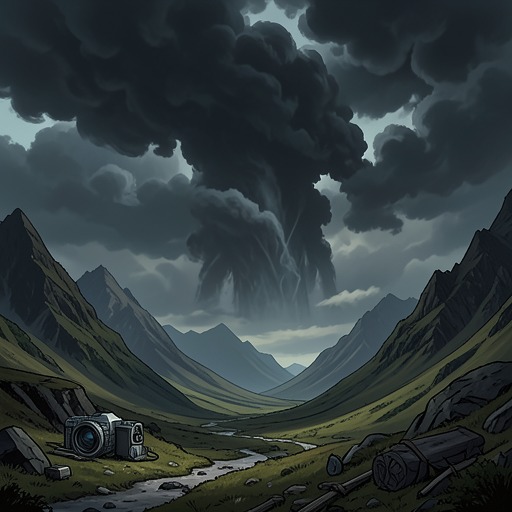
The Fifth Men’s first interplanetary voyages made Mars part of a newly accessible planetary landscape. Travelers could inspect the still-visible remains of Martian civilization from above, evidence that the planet had once supported a civilization even though it could no longer sustain human life in the present. The account gives no further description of those ruins, but their visibility makes Mars both a destination of exploration and a record of a vanished world.
The Choice of a Refuge
The prospect of leaving Earth arose from the Moon’s increasingly rapid approach: if it continued, it would disintegrate within less than ten million years, and its fragments would eventually strike Earth. The Fifth Men treated that distant danger as a problem for the whole human race, not as an abstract eternity, and redirected research toward interplanetary travel and the suitability of other worlds. Mars and Venus were the only alternatives considered.
Mars’s conditions ruled it out. By this time it was without water and without an atmosphere, making it impossible to render habitable by the available means. Venus, by contrast, had a dense, moist atmosphere and a shallow ocean, although its lack of free oxygen and extreme heat posed formidable obstacles. That comparison turned Mars from a possible refuge into the more forbidding of the two options.
Exploration Without Settlement
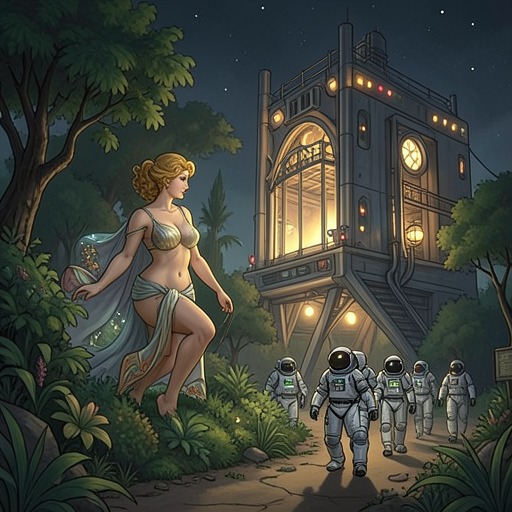
The Fifth Men developed immense rockets powered by matter annihilation and built ether ships capable of carrying people beyond Earth. As voyages grew safer and became popular, travelers explored the Solar System: they viewed the Martian remains, searched through Venus’s cloud banks for islands, and ventured toward other worlds before limits of air and provisions forced them to turn back. These journeys established the reach of Fifth-Men technology, but surveying Mars did not solve the separate problem of making another planet fit for human life.
The distinction between access and habitability defines Mars’s significance in this episode of human history. It could be reached and its ruins inspected, yet its lack of both air and water left it outside the practical choices for humanity’s survival. The Fifth Men therefore concentrated their efforts on Venus rather than attempt to transform Mars.