Peak Era of the Second Men
Last and First MenThe Peak Era of the Second Men names the high point of a species whose long history was marked by repeated recoveries and collapses. Its most enduring civilization joined industrial invention to an unusually vivid sense of human fellowship; at its height, that society treated present lives as precious in themselves and as a means of creating more capable people in the future. The achievement was not simply abundance or political unity, but the attempt to make social power answer to a humane ideal—and to use that ideal to remake humanity.
A long ascent, not a continuous golden age
The Second Men’s history extended across nearly a quarter of a million years of alternating prosperity and decline. Their brilliance did not spare them from contingencies: glacial conditions once drove their tribes toward the southern end of India and reduced their culture to a level comparable to that of the Inuit; later, epidemics repeatedly erased promising cultures. The era called their zenith came only after another hundred thousand years of development, and its prelude included more than one failed world order.
The first two world-wide communities of the Second Men had no mechanical power. Their intricate societies were built through intensive agriculture, skilled handwork, and human and animal labor. Garden-cities linked valleys, mountain slopes, and irrigated deserts; citizens shared necessary work, practised crafts, and had time for contemplation and gaiety. Coaches, caravans, and sailing ships connected the five great continental communities. The red-sailed clippers, with wooden hulls and carved prows and poops, carried both goods and travellers, some of whom spent a sabbatical year among foreigners. These societies achieved a broad common life without the machinery that had shaped earlier civilizations, but neither proved permanent.
A virus, undetected because the Second Men lacked the relevant physiological knowledge, gradually disturbed the glandular system and spread a pervasive fatigue. Over centuries, cultivation retreated from hills and deserts, craftsmanship declined, and thought hardened into repetition. The resulting lethargy became social despair: peoples lost contact with one another, forgot their shared culture, and fragmented into savage tribes. The account presents this collapse not as a sudden military defeat but as a slow failure of energy, memory, and connection.
Industrial change and the cost of division
The next attempt at world unity ended differently. After isolated peoples re-established contact, cultural upheaval and bloodshed preceded a new world order. Its unity could not survive profound subconscious differences. A monotheist nation tried to impose its faith on a broadly pantheist world, and religious division became a world-wide civil war. Armies fought with crude artillery, but the conflict’s brutality exceeded what the Second Men had previously known: fields and cities were destroyed, and rivers and winds were poisoned. The eventual breakdown left the species so disillusioned that thousands of years passed before it again achieved a world-community.
The third and most enduring civilization repeated the earlier societies’ community-minded life and then carried it into natural science and industrial development. Chemical fertilizers raised agricultural yields and population; wind and water generated electricity, supplementing human and animal labor; at last, after many failures, volcanic and subterranean heat could drive dynamos. This transition changed the material character of civilization, but the Second Men did not reproduce the industrial excesses associated with the First Men, the Americans, or Patagonia.
That difference rested on both social feeling and habits of mind. Their sympathy made people feel implicated in the lives of others, while practical common sense, indifference to the glamour of wealth, and an exceptional devotion to intellectual life helped contain the pursuit of private economic power. Mining and manufacture remained arduous, even with plentiful electricity, but the will to prevent industrial harms was effective because it was sincere. In contrast to the First World State, where the exhaustion of coal exposed a society unable to abandon energy-intensive ritual, the Second Men’s account of industrial life emphasizes limits imposed by fellowship rather than by a single technological or religious authority.
The zenith as a project of human development
At its height, the civilization placed respect for the individual human personality at its center. Individuals mattered as ends, but they were also understood as participants in a future larger than any one life. The Second Men lived longer than their predecessors, yet remained troubled by the brevity of life and by the smallness of individual achievement beside the vastness of what could still be understood and admired. They therefore sought a humanity with much greater natural longevity.
Their concern extended beyond lifespan. Though they participated in one another’s lives more fully than earlier people, they remained distressed by the distortions and errors that limited each mind’s understanding of others. The society’s prosperity did not silence these dissatisfactions; it gave them a collective setting. During a long summer of social harmony, prosperity, and cultural embellishment, generations of long-lived people succeeded one another, and the community felt that the capacities of its current human type had nearly been exhausted.
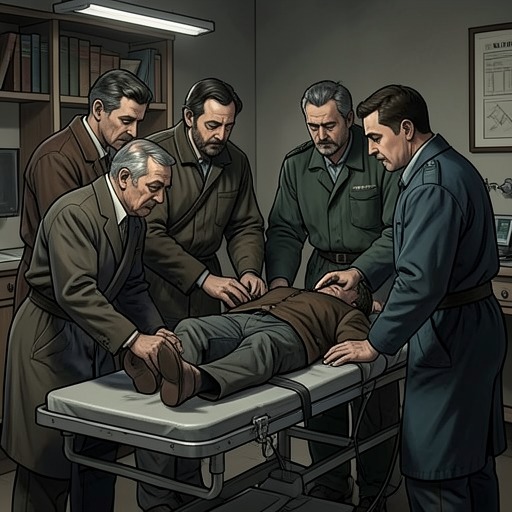
The response was a deliberate program of self-transformation. The Second Men regarded themselves as rough and incoherent products of nature and set two great inquiries in motion: one into the ideal of human nature, the other into practical means of remaking it. The undertaking was not confined to specialists or rulers. People across the world, maintaining their private lives and the bonds that kept society vigorous, were moved by the sense that their community had taken up a shared, heroic task. The peak thus culminates not in a finished definition of humanity but in a decision to intervene in humanity’s own development.
Historical significance and the approaching limit
The Second Men’s high point stands out against the book’s wider history of civilization because industrial power and social organization do not produce a uniform outcome. The First Men’s conflicts show how readily declared commitments to peace and civilization could coexist with tribal suspicion and violence; their later civilizations also failed when fuel supplies ran out and established institutions could not adjust. Elsewhere, the discovery of matter-annihilating power offered an almost limitless source of energy, but scientists unanimously ordered the instrument and its account destroyed. These histories sharpen the contrast: the Second Men’s achievement lay in combining material change with sympathy, not in assuming that more power alone guaranteed progress.
The peak nevertheless remains a stage, not a final resolution. The civilization’s most ambitious work—research into what humanity might become and how it might become it—began because its people recognized the limits of their existing nature. At the same time, life elsewhere in the Solar System was pursuing aims that humans could not understand. The narrative foreshadows that the two developments would meet, not in cooperation. The Second Men’s zenith is therefore both a culmination of social and intellectual achievement and the threshold of a new encounter that their humane order cannot simply be assumed to master.