Repeated Martian Invasions of Earth
Last and First MenRepeated Martian Invasions of Earth were a fifty-thousand-year cycle of devastation, adaptation, and failed communication. Each invasion left Earth crippled and sent water to Mars; each human countermeasure eventually drove the Martians back, until they at last established a permanent foothold on the planet.
The Invasion Cycle
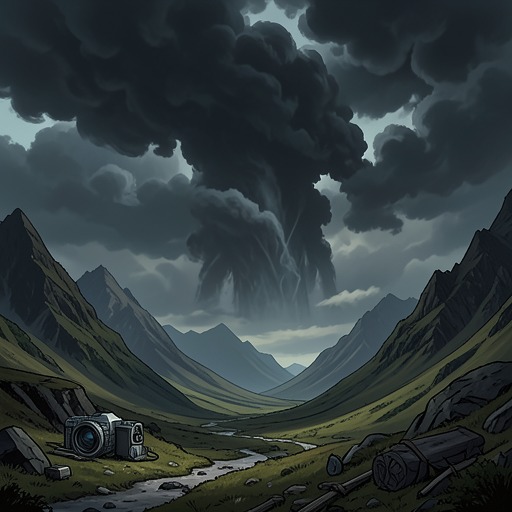
Four centuries after an earlier Martian attack, the clouds appeared in the sky again. The return brought devastation and slaughter, followed by another failure of the two species to understand one another. The Martians were destroyed once more, but the victory did not spare humanity from a pulmonary plague, a prolonged period of recovery, and a reduced population.
The attacks did not end there. Over the next fifty thousand years, they came again at irregular intervals. The Martians arrived each time equipped to resist the latest weapon humanity had used against them. Their repeated ability to meet human defenses with new ones gradually changed how people understood their enemy: the Martians could no longer be dismissed as merely instinctive brutes, but had to be recognized as intelligent beings.
Failed Overtures and the Struggle for Water
Recognition of Martian intelligence prompted humans to attempt contact and propose a peaceful settlement. The effort was structurally unequal. Human envoys were the only available intermediaries, but the Martians regarded individual human beings as mere cattle belonging to terrestrial intelligence. The envoys were therefore ignored or destroyed, and the attempts at negotiation achieved no settlement.
The invasions also had a material objective. During each attack, the Martians managed to send a considerable quantity of water to Mars. Yet they remained on Earth too long, continuing their crusade after securing that gain. In the delay, humanity found a weapon capable of circumventing the Martians’ latest defenses, and the invaders were routed. Their repeated failure to withdraw in time turned each successful water raid into another defeat.
Unequal Costs and the Lasting Foothold
The cycle took a mounting toll on both worlds. Earth’s recovery grew slower and less complete after every invasion; Mars, despite losing a large part of its population, was ultimately strengthened by the additional water. The outcome was therefore not a simple succession of victories: the Martians suffered devastating losses but gained a resource that invigorated their world, while humanity survived at progressively greater cost.
More than fifty thousand years after the Martians first appeared, they finally secured a permanent footing on the Antarctic tableland and overran Australasia and South Africa. For centuries they held much of Earth, practicing a form of agriculture, studying terrestrial conditions, and devoting considerable energy to the liberation of diamonds. This occupation marked a change in the conflict’s scale: the earlier invasions had ended in Martian defeat, but the eventual foothold made the struggle a prolonged contest over territory as well as water.