Socrates
Last and First MenSocrates is presented as a defining moral and intellectual figure whose ideal of truth-seeking gives the First human species one of its highest aspirations. His legacy also exposes a historical irony: later admirers preserve his concern with clear definitions while losing the spirit of inquiry that gave it purpose.
Identity and Intellectual Ideal
In the retrospective account of the First human species, Socrates stands for dispassionate intelligence. He delights in truth for its own sake rather than for practical advantage, and his example joins unbiased thinking to honesty of mind and speech. His ideal is not merely cleverness or the accumulation of answers: it is intellectual integrity, a discipline of thought and expression.
The narrative sets this ideal beside that of Jesus, who embodies unselfish love of other people and of God. The two figures begin from different emphases—clear intelligence in Socrates, passionate and self-oblivious worship in Jesus—but the account insists that neither ideal can finally be separated from the other. Socrates's intellectual integrity therefore belongs to a broader vision of human flourishing, not to reason isolated from moral life.
An Ideal Beyond Its Age
The Socratic ideal proves difficult for the nervous system of the First human species to sustain. For centuries it attracts the more precociously human individuals, yet the species cannot bring its intellectual and spiritual demands fully into practice. The failure is not attributed to Socrates's ideal itself, but to a mismatch between that aspiration and the capacities of the people who inherit it.
That unfulfilled promise has consequences. The inability to realize the ideals associated with Socrates and Jesus helps foster a cynical lassitude that contributes to the species' decline. Socrates thus matters both as an exemplar and as a measure of the distance between what humanity can conceive and what its historical condition allows it to become.
The Secret Socratics
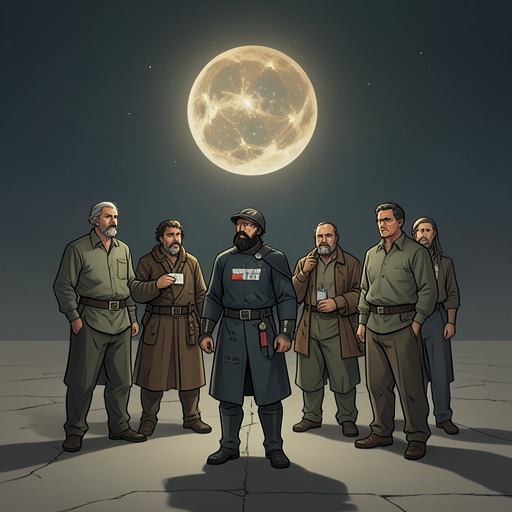
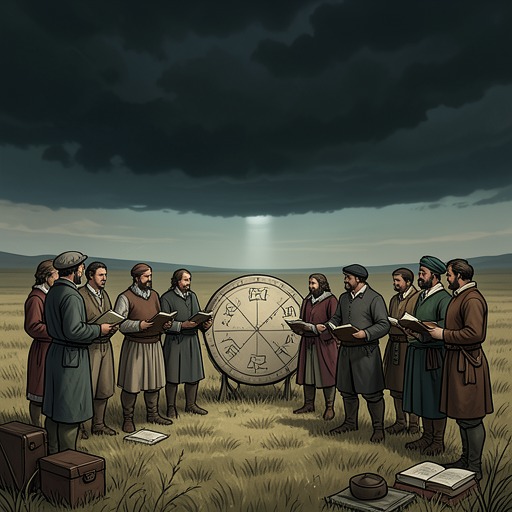
A later, illicit sect takes Socrates as its inspiration. Its members are naturally curious, but share the wider population's poverty of intelligence; their devotion is described as a remnant of repressed intellectual impulses. Meeting secretly and at constant risk of arrest for unauthorized intellectual activity, they dispute endlessly over definitions.
Their starting point is a simplified version of Socrates's teaching: clear thought requires clear definitions, and clear thinking is necessary for fullness of being. They turn that principle into a claim that knowing truth alone can secure immortality and that definition is the route to truth. Yet they do not investigate what they take to be the basic concepts of thought, believing these were settled once and for all by Socrates and his immediate followers.
Instead, their definitions spread across the whole surface of their world. They try to classify the processes of the state and the established religion's rituals, human emotions, and the forms of noses, mouths, buildings, mountains, and clouds. The scope of their inquiries makes their devotion look comprehensive, but its very exhaustiveness marks the departure from Socrates: they catalogue appearances rather than pursue the fundamentals of thought.
Legacy and Irony
The sect believes that its labor frees it from the philistinism of its age and wins it fellowship with Socrates after death. The narrative presents that hope as a misunderstanding, not as a fulfillment of his example. Socrates's insistence on definition had served clear thinking; his disciples turn definition into an end in itself, accepting inherited premises while endlessly sorting the world's details.
This contrast gives his legacy a double meaning. Socrates remains the source of an ideal of intellectual honesty that the First human species can barely attain, while the fate of his secret followers shows how readily an ideal can survive as a ritual after its animating purpose has been lost.