Third Men
Last and First MenThe Third Men are the third human species in the book’s sequence of human forms, and their defining impulse is an unusually intimate interest in living things. Hunting, animal companionship, herding, and selective breeding developed into a civilization organized around the study and shaping of life. At its height, this orientation produced the Third Men’s Vital Art, but it also preceded a reversal in their status: the rise of the Fourth Men gradually relegated the societies that had helped create them to subordinate work.
A Species Oriented Toward Living Things
In their primitive phases the Third Men were keen hunters, yet their strong parental impulses also led them to make pets of captured animals. The narrative presents their sympathy with animals and plants as an enduring trait of the species, not a passing custom. They took an active interest in the variety of living behavior and proved especially adept at manipulating organisms. Play, too, often became a form of such manipulation.
Their practical relations with animals ranged from riding domesticated moose-like deer to training a gregarious coursing beast. The Great wolf-dog helped with herding and hunting, but it was also trained for intricate hunting games. Between an animal and its human companion there could arise a special, wordless mutual understanding, grounded in shared work and described as a form of psychical symbiosis. The bond combined practical cooperation with religious symbolism and personal intimacy, making the animal more than a mere instrument in Third Men life.
Selective breeding grew naturally from their work as herdsmen and shepherds. They sought to perfect and enrich animal and plant kinds, and local leaders took pride not only in the people of their territories but in the distinctive qualities of their bears, birds, and other organisms. Their ambitions for excellence thus extended beyond their own species: the flourishing of other forms of life became part of local prestige and cultural purpose.
Vital Art and the Height of Their Culture
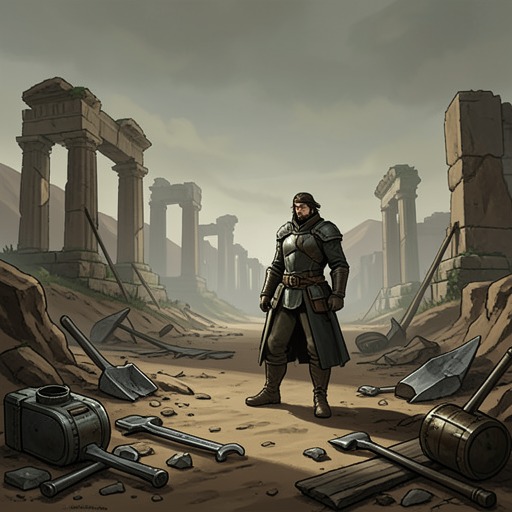
After a long period of eclipse, the Third Men’s culture reached its greatest brilliance in an order unlike familiar industrial civilizations. It had no great agglomerations of architecture; clothing was used only when warmth required it; and industry remained subordinate to other pursuits. The material simplicity of this society did not mean that it lacked resources. Its controlled industries first used wind and water, then subterranean heat, supplying the desired material comforts and allowing substantial leisure.
Biological knowledge came first. Hunting, agriculture, and the species’ spontaneous interest in manipulating living things produced a primitive but useful body of understanding. Only after the culture had unified the planet did biology give rise to chemistry and physics. The sequence reflects the Third Men’s priorities: they did not begin with abstract inquiry into nature, but with sustained attention to organisms and the practical, aesthetic, and cultural needs that living systems could answer. Industrial development remained a means of supporting life-centered activity rather than becoming the civilization’s dominant end.
The Fourth Men and the Third Men’s Changed Position
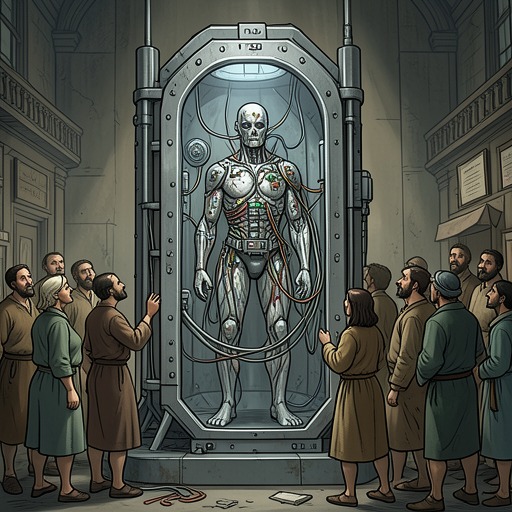
The Third Men’s history also includes their contribution to the emergence of a successor species. The races of Third Men that had originally cooperated in producing the Fourth Men continued to support their new society by cultivating land, tending cattle, and manufacturing the substantial materials it required. They also maintained increasingly stereotyped forms of their older Vital Art.
This subordination did not arrive as a single conquest. It developed slowly and almost imperceptibly, until the Third Men’s service had become a menial position within a civilization organized around the Fourth Men’s work. Resistance appeared from time to time, but sparks of rebellion never became a serious challenge. The Fourth Men’s prestige and persuasive power kept the arrangement in place. The change is a sharp counterpoint to the Third Men’s earlier confidence in cultivating and transforming life: the species that had once made the living world its central field of activity found itself serving the specialized intellectual project of its successors.