Third Men's Vital Art Period
Last and First MenThe Third Men's Vital Art Period was the most brilliant flowering of the Third Men’s civilization, organized around the deliberate shaping of living forms. Biology became not merely a science or a practical resource but the culture’s principal art and a religious vocation: humanity sought to adorn the planet through a coordinated world of plants and animals. That ideal contained a deep contradiction. The same power to cultivate harmony could also be used to make creatures suffer for the sake of spectacle or mastery.
Emergence and Cultural Setting
After an unusually long period of eclipse, the Third Men’s civilization reached its greatest brilliance. The Third Men had arisen after roughly thirty million years of racial stagnation among the Second Men. Geological change isolated part of that population on an island continent; as its climate shifted from subtropical toward temperate and subarctic conditions, changes in the germ-plasm produced extensive biological variation. One vigorous, well-adapted type eventually displaced its rivals and consolidated as the Third Men.
Their mature civilization was strikingly unlike an industrial city-world. It had no great architectural agglomerations; clothing was used only when warmth required it, and industry remained subordinate to other pursuits. Early knowledge of living things grew from the practical demands of hunting and agriculture, as well as a spontaneous impulse to manipulate organisms. Only after the culture had unified the planet did biology give rise to chemistry and physics. Wind, water, and later subterranean heat supplied material comforts and leisure, but the longstanding interest in life prevented industrial development from becoming the society’s dominant purpose.
Vital Art and Its Divided Ideals
As biological understanding deepened, the Third Men developed plastic vital art, practiced widely and with religious fervor because of its connection to belief in a god of life. Its practitioners did not agree on what successful creation meant. One school sought to bring out the full potential of a natural type as a harmonious, perfected organism, or to create new types that were equally coherent. Another prized monstrosity: it might intensify one capacity at the expense of an organism’s overall welfare, or force incompatible traits into a precarious combination.
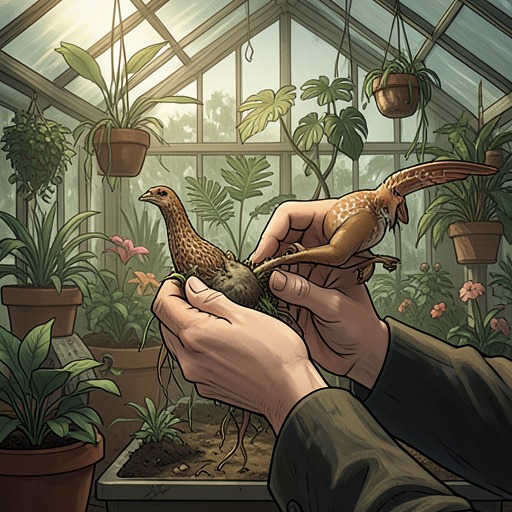
The resulting examples made the conflict concrete. One celebrated bird could fly faster than any other, but could neither feed nor reproduce and had to be maintained artificially. A carnivorous mammal was bred with feathered, wing-like forelimbs, yet its proportions made flight impossible; it could only run awkwardly with its wings spread. Other creations included a two-headed eagle and a deer whose tail had been developed into a second head, complete with brain, senses, and jaws. Such work made living creatures instruments of an aesthetic experiment, and the account connects this taste for imposed form with sadism and egotistical power.
Orthodox vital art set limits on that impulse. It rejected reducing a higher type to a lower one or wasting an organism’s capacities, and treated the creation of a systematic, planet-wide fauna and flora as the true end of art. The project was understood as cooperative: humanity served as an instrument of the ultimate artist, while the living world itself was to become an increasingly subtle adornment of the planet. The opposition was therefore not simply between art and utility, but between two accounts of artistic achievement—one centered on the welfare and harmony of living forms, the other on the creator’s power to force unusual forms into being.
Research and Public Institutions
The culture’s ambitions required knowledge beyond the rule-of-thumb breeding practices of earlier ages. Many thousands of years of research were needed to uncover finer principles of heredity and develop techniques for manipulating hereditary factors in the germ. This biological advance also opened deeper regions of chemistry and physics. The sequence shaped the Third Men’s conception of those sciences: the electron was understood as a basic organism, and the cosmos as an organic whole.
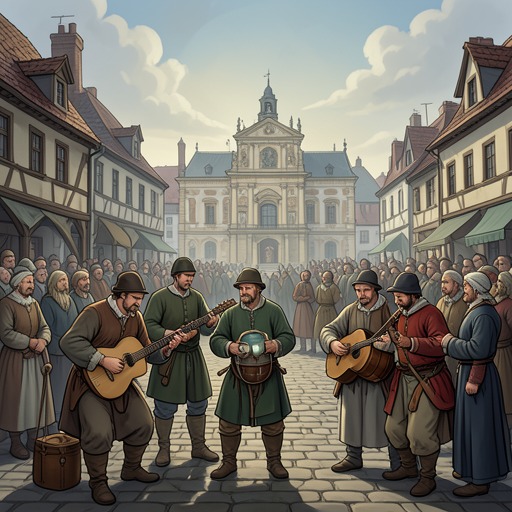
Vital art was displayed as a public and ceremonial enterprise. Annual and monthly shows took place at major centers of communication, where high priests judged the latest creations, awarded distinctions, and consecrated them in religious rites. The exhibits ranged from improved crops, cattle, and herding dogs to microorganisms designed for agricultural or digestive functions; alongside them appeared creations pursued for aesthetic ends alone. The shows joined practical invention to sacred judgment, making the evaluation of life a recurring civic occasion rather than a private activity confined to a laboratory.
A Living World and Its Contradictions
The envisioned planet resembled a vast arrangement of gardens, zoological grounds, and wild parks interspersed with agriculture and industry. Its inhabitants were small, ruddy, faun-like people who lived among the organisms they had created. The relationship between humans and animals was generally described as amicable; domesticated animals could be joined to people in an intense mutual attachment, while wild creatures were also part of this designed living environment. The account’s image of a young woman arriving with gigantic bears, then scolding onlookers who crowded too close, gives this world a human scale: expertise and care appear together in an ordinary act of guardianship.
Yet the period’s governing ideal never fully resolved the tension between stewardship and control. The harmonious school treated the living world as a shared work whose higher forms must not be harmed, while the rival school made biological power itself a spectacle. In that divide, the Third Men’s greatest cultural achievement also exposed its danger: reverence for life could organize a civilization around its preservation and beauty, but artistic mastery could turn living beings into material for the creator’s will.