ce soir
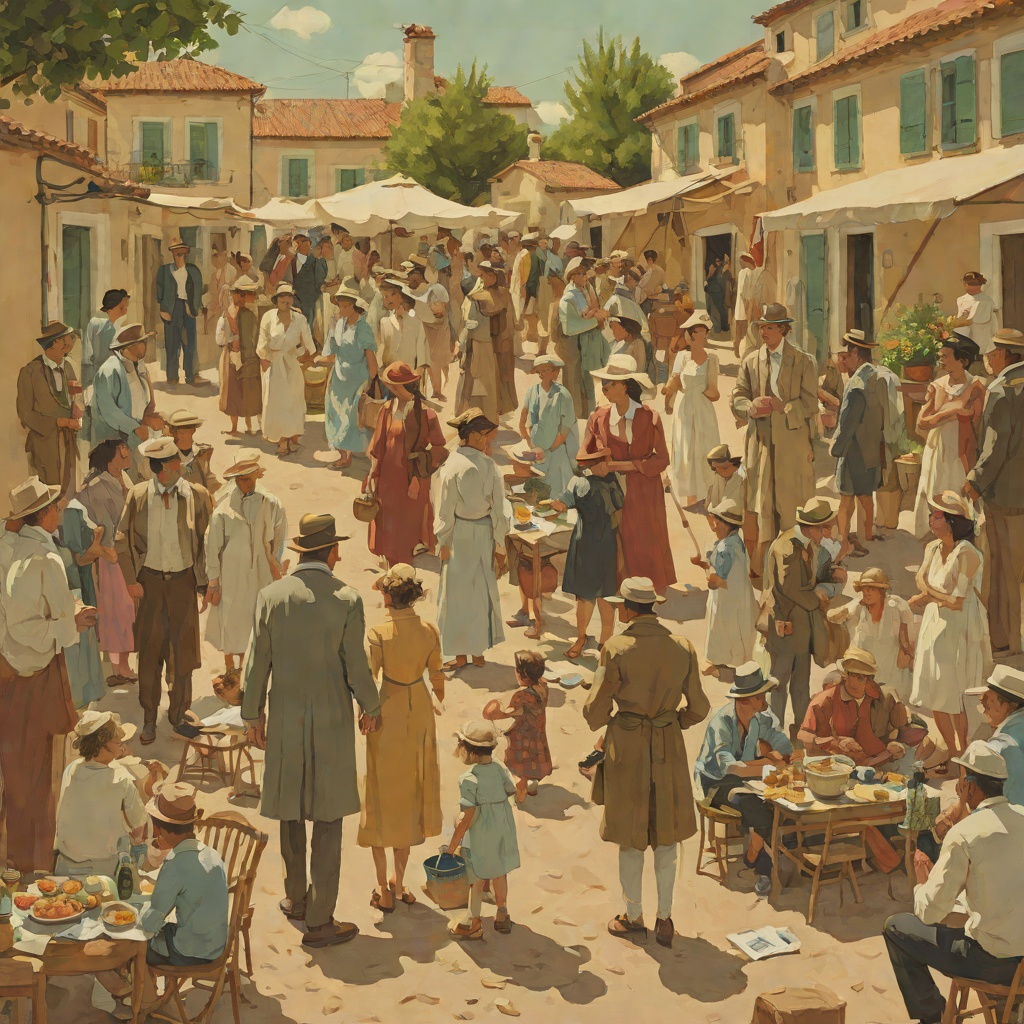
Le Pèrece soir is the evening set aside for Nisida’s fête, but it functions as more than a point on the calendar. It is the time when Arlequin intends to transform paternal affection into a public spectacle of couplets, music, fireworks, and illumination. At the same time, the approaching celebration gives Nérine a practical means of advancing the concealed love between Cléante and Nisida: while the household prepares for festivity, private feeling begins to acquire a voice, a written form, and finally an audible sign.
A Festive Deadline
ce soir first appears as a near-term occasion within a day already marked by Nisida’s fête. Nérine urges Cléante to write to his colonel and request a month’s delay, but she also orders him to return immediately to the work demanded by the celebration. He must attend to the bouquet and to the compliment he is expected to deliver to his mistress. The contrast is important: military duty threatens to remove him from the household, while the evening’s preparations keep him physically and emotionally close to Nisida. Nérine takes responsibility for the difficult explanations and arrangements, but insists that Cléante remain especially amiable, turning the celebration into a tactical interval in which his endangered love may still move forward.
The festival therefore has a double temporal character. Publicly, it is a fixed occasion for honoring a daughter; privately, it is a deadline before separation may become unavoidable. Nérine’s counsel makes the evening part of a larger effort to prevent Cléante from abandoning either his regiment or his love without first revealing the truth. The ordinary schedule of a fête becomes a pressure point where duty, concealment, and emotional risk meet.
Arlequin’s Planned Spectacle
For Arlequin, ce soir is an opportunity to display his identity as a devoted father. He tells Cléante that he has composed couplets for the celebration, though they are unfinished and liable to escape his memory before they are written down. He therefore orders the secretary to take the largest sheet of paper and record the heading, “Couplets à ma fille, le jour de sa fête.” The scene gives the celebration a material preparation: paternal feeling is first spoken, then dictated, and finally fixed by Cléante’s hand. Arlequin’s dependence on writing also makes the apparently spontaneous tribute into a carefully constructed performance.
The planned festivities extend beyond poetry. Arlequin promises music, fireworks, and illumination, presenting the evening as a surprise whose scale Nisida cannot yet anticipate. His language turns the fête into a theatrical event within the play, one in which he will occupy the roles of author, host, and affectionate father. The celebration is meant to confirm the family’s visible harmony, even though the household contains an undisclosed love and an identity concealed behind Cléante’s secretary’s position.
Song, Performance, and Hidden Feeling
The couplets are tested before the evening arrives. Arlequin asks Cléante to take the mandoline and sing what has just been composed so that the verses can be corrected. Cléante performs while accompanying himself, converting Arlequin’s paternal text into music. The first couplet praises Nisida’s youthful graces and the more dependable gifts that secure happiness; the next acknowledges that a father may flatter a beloved daughter and excuses that tenderness as a father’s natural sentiment. The verses thus present Nisida through Arlequin’s gaze, as both an admired young woman and the object of paternal love.
Yet the song does not remain under Arlequin’s control. Nérine recalls that, a month earlier, Cléante had written a tender song that Arlequin found charming, while Nisida had offered no reaction in public. Later, Nérine happened to reach the door of Nisida’s cabinet and heard her singing that same song softly and almost under her breath. Nisida was shut inside, playing the guitar, and her tender accent suggested that she took pleasure in the song. Nérine interprets the privacy of the performance as evidence that Nisida’s silence was not indifference: when an author means nothing to someone, that person need not hide away to sing the work alone.
This recollection changes the meaning of the celebration’s music. The public couplets are designed to express a father’s affection, but the earlier private song offers Cléante a possible sign of reciprocal love. Music moves from ceremonial praise to concealed communication. The fête’s soundscape consequently contains two competing emotional orders: Arlequin’s open, paternal performance and Nisida’s hidden, intimate response to Cléante’s composition.
The Evening’s Emotional Stakes
The celebration gathers people and feelings that Nérine has been trying to coordinate. She had introduced Cléante into the household and enabled him to speak with Nisida; he now has lived near the woman he adores for six months, seeing her daily and sometimes speaking with her while she remains unaware of his love and of his true worth. The approaching fête gives their proximity a socially acceptable occasion, allowing poetry, a bouquet, and music to serve as indirect forms of approach. Nérine’s labor is not ornamental: she manages information, encourages Cléante, and uses the household’s festive routine to create conditions in which the lovers might be understood.
At the same time, the evening’s promise of public joy is shadowed by the possibility of rupture. Cléante’s colonel’s letter has destroyed his illusion of stable happiness and may call him back to military service; without Nérine’s intervention, ce soir might become one of the last moments in which he can remain beside Nisida. The celebration thus intensifies rather than resolves uncertainty. Its ornaments promise continuity, while the military obligation threatens absence.
The time also acquires retrospective significance through Nérine’s later observation of Nisida. What begins as a scheduled fête becomes a measure of emotional disclosure: before the celebration, Nisida’s hidden singing makes her feeling perceptible to an attentive listener; within the celebratory framework, Cléante’s voice, Arlequin’s verses, and Nisida’s response are placed in relation. ce soir is therefore the moment when family ritual and romantic evidence occupy the same stage, allowing a father’s public devotion to coexist with a daughter’s private passion and a disguised man’s hope of being recognized.