Airbnb
Leave the World BehindAirbnb is the digital platform through which Amanda finds the vacation rental at the center of her family’s attempted escape from ordinary life. Its role is small but consequential: the platform makes the house available and frames the stay as a purchasable retreat, while the blackout later leaves the renters unable to readily consult the digital terms governing that stay.
Finding the Escape
Amanda discovers the house on Airbnb. Its listing calls it “The Ultimate Escape” and promises, “Step into our beautiful house and leave the world behind.” The jaunty advertising language suits her determination to arrange a family vacation: a promotion has brought her a raise, and she wants to seize a brief period before Rose grows more distant and Archie moves further into adolescence. The rental is therefore more than a place to sleep; it is the setting Amanda chooses for time with her children while they are still, in her eyes, mostly children.
The advertisement’s promise of leaving the world behind gains an unintended irony as the family’s stay coincides with a blackout. The house offers a temporary separation from ordinary routines, but the crisis makes the wider world impossible to ignore. The words belong to the listing, not to any demonstrated guarantee by Airbnb that the property or its guests will be insulated from events beyond it.
A Digital Agreement Under Strain
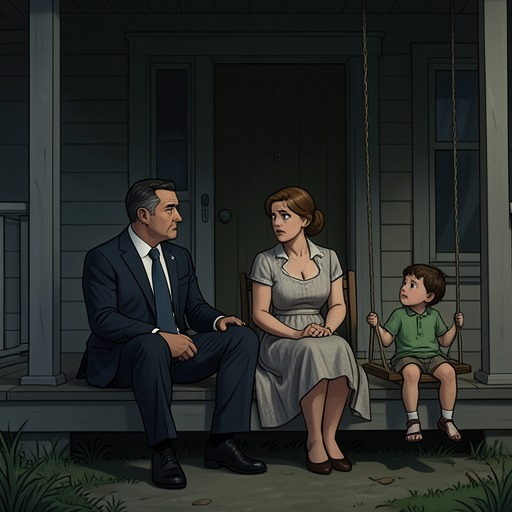
When the hosts discuss whether the family should leave, Amanda tries to consult the rental’s terms and conditions on a laptop. The computer is not connected to Wi-Fi, so she cannot check the agreement. She insists that they have a lease, but recognizes that the document is stored in cyberspace, effectively on a shelf they cannot reach. Her appeal to a formal contract remains intact in principle while becoming difficult to substantiate in practice.
The exchange makes the platform-mediated booking concrete through what the characters cannot retrieve. Airbnb has supplied the channel through which Amanda found the house, but the evidence does not show the platform intervening in the dispute or furnishing an offline copy of the agreement. The immediate negotiation instead takes place face to face: G. H. offers the family a refund of fifty percent, then proposes a thousand dollars for that night. The episode distinguishes the existence of a rental agreement from the renters’ ability to access its terms when their connection fails.
The Blackout and Everyday Infrastructure
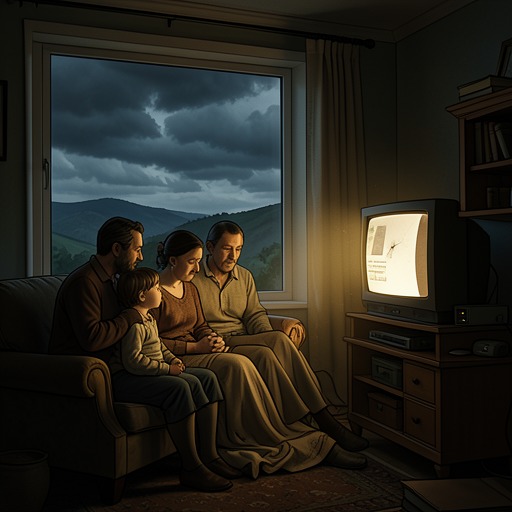
The disconnection is part of a broader failure of ordinary information systems. Amanda’s phone displays a news alert from The New York Times reporting a major blackout on the East Coast of the United States, but the application will not open. Later, the television shows the emergency broadcast system screen and repeats beeps without providing news. These failures do not establish that Airbnb itself has gone offline; they show the unstable conditions around the booking, in which a laptop, phone, and television each cease to provide the access their users expect.
The practical stakes extend beyond the rental. G. H. explains that water in Manhattan depends on an electric pump, so a power failure can also stop the water supply. At the house, the pool’s filtration system still runs on its scheduled cycle at 10:00 a.m., a small remnant of automated routine amid uncertainty. By the novel’s wider view, people in distant places are unable to communicate with satellites, while others continue jobs that will prove useless. Against this breakdown, Airbnb’s digital record is one instance of a larger dependence on connected systems—not the cause of the crisis, but a service whose usefulness cannot be separated from the infrastructure that sustains it.
Narrative Significance
Airbnb links private choice to the material systems that make contemporary convenience feel dependable. Amanda can select a rental, compare its promise with her family’s needs, and rely on a lease; yet when connectivity disappears, she cannot easily turn to the record of that transaction. The resulting vulnerability is specific rather than abstract: the document exists, but its digital location puts it beyond reach at the moment the parties are negotiating whether the family should stay.
The platform’s presence also sharpens the contrast between a marketed escape and the limits of what a rental can provide. The house may promise temporary distance from the world, but it cannot secure the family against a regional emergency or restore the channels through which the booking’s terms are accessed. Airbnb is thus part of the novel’s portrait of ordinary life resting on largely invisible infrastructure: convenient while it works, newly conspicuous when it does not.