Amanda
Leave the World BehindAmanda’s response to crisis is shaped by the ordinary work of keeping a family moving: managing her career, caring for her children, and making practical decisions when information fails. During the blackout, those routines cannot restore the world she knows, but they give her something to do. Her movement from distrust of the Washingtons to recognition of Ruth as an ally marks a crucial change: in a situation without reliable answers, survival depends less on possession or certainty than on people remaining together.
Identity and Everyday Responsibilities
Before the emergency, Amanda is an account director with a demanding office role and a life distinct from Clay’s. On the drive to the family vacation, she takes a call from Jocelyn, one of her direct reports. Amanda knows that Jocelyn wants her consent more than her advice, and she grants it while warning that mobile service may become unreliable farther out. Her work provides both an obligation and a familiar source of reassurance: she admits that the call is a relief because it lets her feel needed. She also recognizes the repetitiveness of office communication, where messages about work can seem like part of a performance even as the work sometimes feels urgent.
Amanda is alert to the assumptions embedded in her own judgments. She privately recognizes that her discomfort with Jocelyn’s accent, which she associates with Jocelyn’s Korean parentage and South Carolina upbringing, is racist. Later, when she sees the Washingtons, her first response is also shaped by an unexamined idea of who looks as though they belong in a beautiful house. The narrative places these recognitions beside her professional confidence: Amanda can read workplace hierarchies and remember clients, yet still misread people when race and property unsettle her expectations.
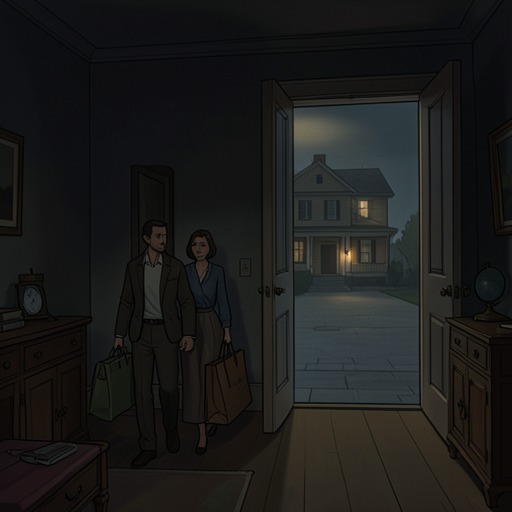
Family care is equally practical. Clay usually drives, partly because he takes pride in the useful tasks of daily life while Amanda has little patience for the rituals of parking rules and car maintenance. At the grocery store she stocks provisions across a wide range of needs, from sandwiches and coffee to sunscreen, cake mix, and fruit. The purchases exceed two hundred dollars, and their abundance reflects the familiar labor of anticipating children’s preferences and a vacation’s ordinary contingencies. Amanda remembers, for example, that Archie refuses cilantro, though she buys it anyway. Her attention to these details is not simply a background trait: as events become harder to interpret, household work remains one of the forms of care she can still perform.
The Washingtons and the Limits of Trust
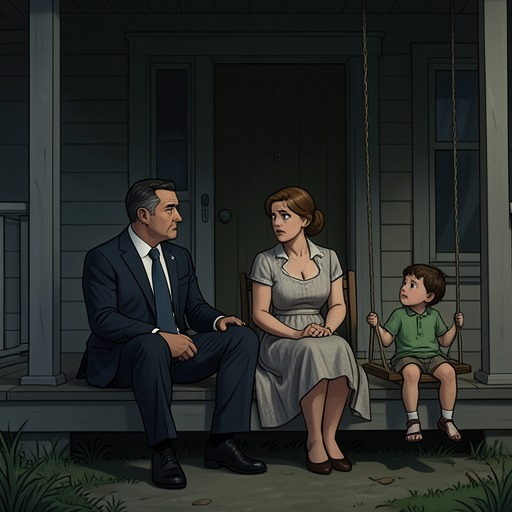
When George Herman Washington and Ruth arrive at the vacation house, Amanda does not recognize them. She is accustomed to remembering the people she meets through work, but she sees only a Black man she has never encountered. George Herman Washington explains that the house belongs to him and Ruth, and Amanda recalls the email correspondence about the rental. The recognition does not immediately settle her. She had treated the house as if it were theirs, despite renting it, and had not imagined its owners accurately.
Amanda’s suspicion persists after the Washingtons are admitted. She wonders whether George Herman Washington might be a handyman and Ruth a maid, or whether their claim to the house is a scam coinciding with the blackout. She offers possible explanations for the keys and an envelope, even while recognizing that her theory is conjecture. The doubt is bound up with the same assumptions she has just confronted in herself: the Washingtons do not match her picture of who owns such a house, so she questions their account despite evidence that they have access to it. Her unease is also intensified by the strangeness of sharing a home with people who were supposed to be its absent owners.
The blackout makes that uncertainty concrete. While listening from a dark hallway, Amanda tries to use her phone for light and finds that it will not function normally. A news alert reports a major blackout on the East Coast of the United States, but she cannot open the story. The fragment gives her a name for the emergency without an explanation of its extent or cause. In the same moment, her familiar device becomes an unreliable object: it can display the beginning of information but cannot deliver the rest.
Caretaking as the Crisis Deepens
Amanda attempts to preserve normality even as she understands that normality may be a performance. In the heat, she applies sunscreen and thinks of a film in which a father pretends that life is normal for his son. Her comparison makes the family’s leisure feel deliberate rather than secure. The children swim with improvised pool floats, while the adults wait for news and for the unexplained noise to return. The ordinary scene continues, but Amanda can no longer treat it as proof that all is well.
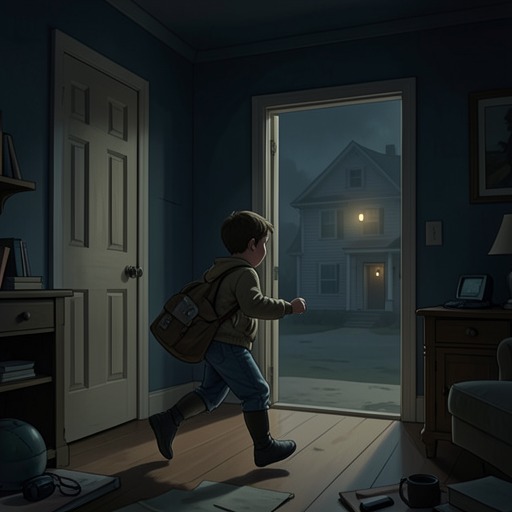
After a later burst of noise, Amanda finds Archie and Rose in the woods. She has gone into the trees looking for them, and their paths happen to converge as they run from the sound. When she reunites with Rose, she takes the girl’s hand as she used to when Rose misbehaved. Rose has scrapes and signs of having been in the woods, but Amanda sees that the children appear well. Her relief is inseparable from alarm: the clear sky offers no obvious explanation for the noise, and she cannot make the event fit the weather. When Clay is away, she asks Ruth where he is and becomes helpless with worry as the girl’s fear makes her seem younger to her mother.
The family’s emergency soon narrows around Archie’s health. Amanda insists that she cannot focus on what they do not know; Archie needs a doctor, and she intends to take him in the morning. This decision does not mean she believes the danger is contained. Ruth voices the possibility that the threat may affect everyone, while Amanda responds by concentrating on the immediate responsibility before her. When Archie loses a tooth, Amanda initially mistakes the situation for illness, then recognizes that something is wrong. Her reaction is that of a mother trying to interpret an alarming change without medical help or reliable information. The event sharpens her determination to seek a doctor rather than remain indefinitely in the house.
Ruth, Labor, and an Uneasy Alliance
The relationship between Amanda and Ruth develops through the work they share. When Amanda begins preparing lunch, Ruth offers to help. Amanda does not particularly want her company, but accepts it because the activity may distract Ruth from worrying about her husband. Their cooperation is hesitant rather than intimate. Ruth adjusts the temperature in the house, and Amanda understands that a later offer of reassurance is meant kindly, even when neither woman can make the circumstances reassuring.
Care takes a more concrete form when Archie is sick. Amanda rinses his soiled sheets in the shower and begins setting the bedroom in order, confronting the scattered objects that mark the family’s continued presence. Ruth arrives with a laundry basket and offers to wash clothes while the power is still on. Amanda accepts the practical help. The work does not answer what is happening outside, but it turns anxiety into a series of manageable tasks and gives the two women a way to assist one another without first resolving their differences.
At this point Amanda still resists staying. The Washingtons’ house feels to her like a possible trap or a delusion, and she argues that Archie needs a doctor. Yet the worsening emergency changes the meaning of the house. After an argument with Ruth about Rose, Amanda apologizes and understands that they cannot return to Brooklyn. She acknowledges that Ruth is no longer simply a stranger but the nearest ally she has. Amanda continues to want her daughter and does not abandon the plan to seek medical help, but she now recognizes that the family will need to return to the house and shelter with the Washingtons.
Change and Narrative Significance
Amanda’s priorities do not shift away from her children; rather, the crisis exposes the limits of what parental vigilance can secure. She searches the woods for Rose, insists that Archie needs a doctor, and keeps returning to the tasks of cleaning, washing, and preparing. Those actions express a determination to protect her family, but the blackout repeatedly denies her the information and control that would make protection straightforward. Her phone cannot open the news alert, the cause of the noise remains unknown, and the house that seemed to offer a temporary vacation becomes an uncertain refuge.
The ending of this portion of Amanda’s story remains unresolved. After accepting that the family must stay with Ruth and George Herman Washington, she goes back through the rooms, checks beneath Rose’s bed, and fills the bathtub with water. The gesture is practical and anticipatory, but it cannot make Rose present or establish what the family will face next. Amanda’s change is therefore not a triumph over fear. It is a narrowing toward what can still be done: search, prepare, care for Archie, and accept help from people she once suspected. Through her, the narrative shows how ordinary domestic labor persists inside catastrophe, while the meanings of home, safety, and trust are forced to change.