Danny
Leave the World BehindDanny is a neighbor, contractor, and friend of G. H. (George Washington), but when George arrives seeking help during the blackout, Danny draws a firm boundary around his household. He has gathered supplies, concluded that travel is unsafe, and decided to lock the doors and wait. His refusal to offer a solution turns a familiar neighbor into a measure of how quickly trust and ordinary expectations can fail under pressure.
Identity and Household
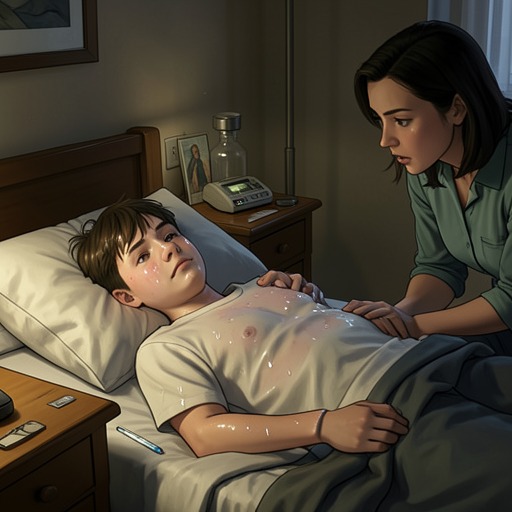
Danny is introduced through George’s expectations of him: when Archie is sick, Rose is missing, and the family fears the noises outside, George believes Danny will understand and devise a strategy. George cannot fully explain this confidence; he thinks of Danny as someone who might offer good health or safe passage, even if he has no definitive solution. The relationship is practical and personal at once: Danny has been the Washingtons’ contractor, and George also calls him a neighbor and friend.
Danny’s home is not untouched by the crisis. He and his wife, Karen, have spent the night uneasily with their four-year-old daughter, Emma, between them as the boom fades overhead. Karen is nearly catatonic with worry about her son, Henry, who is at his father’s place in Rockville Center. Their phones do not work, leaving her unable to reach him; she imagines him calling for her without getting through and hopes his father will drive him home. The uncertainty in Danny’s household gives context to his focus on his own family, even as it does not make him available to the visitors’ needs.
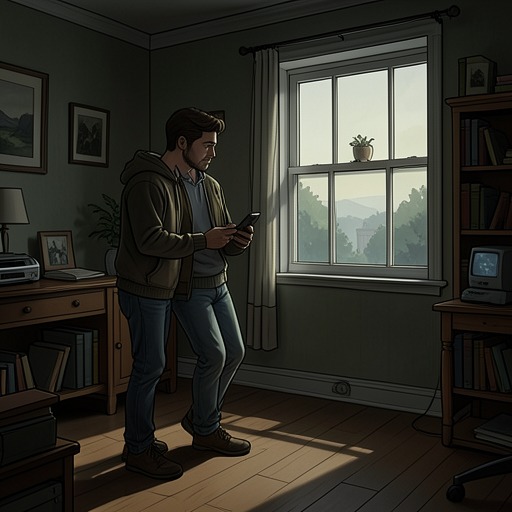
Danny’s first impression is emphatically physical. He is described as very handsome, with sun-golden skin and brown hair salted by genetics. He stands confidently, conscious of his appearance and accustomed to a receptive response from the world. That self-assurance sits alongside the irritation with which he opens the door: he has been taking stock of the household’s supplies, and the unexpected visit interrupts him.
Reading the Blackout
Danny’s account is practical rather than explanatory. He has seen Apple News report a blackout, but he has no phone service or cable. His house still has power, so he drives into town to buy supplies, expecting the store to be crowded. Instead, it is quiet—not like the bustle before a snowstorm, but like the stillness after a foot of snow has fallen. Nobody seems to know what is happening, and the day appears ordinary despite the absence of reliable information.
The noises change his assessment. After returning from the store, Danny hears one and decides that his family will not leave; during the night he hears the noise again, three times in all. He cannot tell whether they are bombs or missiles. Rather than claim certainty, he makes a provisional choice: he will remain where he is until he receives reason to do otherwise. The combination of functioning household power and failed communications narrows what he can know; his decision rests not on an explanation of the crisis but on his judgment about immediate risk.
Danny also reports seeing deer from the kitchen the previous day. The detail arrives at the end of his exchange with the group, as one of the few concrete observations he can offer beyond the blackout and the noises. It does not resolve what is happening, but it adds an unsettling sign from the ordinary landscape outside his home.
The Visit and the Refusal
G. H. brings the family to Danny’s house because he expects a friend to help interpret the emergency. Clay, however, needs medical help for Archie, and the urgency of the request collides with Danny’s settled intention to stay home. Danny says that what the visitors do is their business and that he is staying where he is. He regards the empty-looking landscape as unsafe even though it appears unchanged, reasoning that when events make little sense he can still choose what seems rational.
The disagreement is not simply about whether the blackout is dangerous. Clay is asking for an answer that could help his sick son; Danny insists that he cannot know what is safe beyond the house and will not risk going out. He acknowledges that the decision is difficult and says he would do anything required for his daughter. His own response is to lock the doors, get out his gun, and wait and watch. G. H. understands the mention of the gun as a threat, and his earlier expectation of human communion gives way to recognition that he had misjudged both Danny and people more generally.
Danny apologizes, but the apology is described as mostly an instinct remembered from ordinary life. He is sorry for the group, yet he does not change his decision or provide the medical solution Clay needs. The scene leaves care and assistance distinct: Danny can feel distress for the visitors and share what information he has, while still refusing to join their attempt to seek help.
Characterization and Significance
Danny’s conduct makes him neither an all-knowing guide nor a simple antagonist. His observations are limited, his fear is expressed as caution, and his chosen actions—stocking up, staying indoors, securing the house—follow from his belief that the road is unsafe. At the same time, the contrast between George’s expansive trust and Danny’s guarded self-protection gives the visit its force. George arrives expecting friendship to yield a plan; Danny offers fragments of information and a boundary.
That boundary is especially stark because Danny’s own household is also exposed to the breakdown in communication. Karen cannot contact Henry, and the family has endured the same noises that alarmed the visitors. Danny’s priority is nevertheless to protect the people inside his home rather than accompany a family seeking care for Archie. His practical certainty about staying put does not amount to knowledge of the cause or scale of the emergency. The encounter therefore shows how, in a crisis with no reliable explanation, a neighbor’s familiar role can persist in name while the expected exchange of help fails in practice.