Everyday Rituals as a Response to Catastrophe
Leave the World BehindEveryday Rituals as a Response to Catastrophe describes how familiar tasks help the characters continue living through a crisis they cannot understand. The routines offer structure, comfort, and moments of connection, but they are not reliable evidence that the danger has passed. As the blackout and unexplained noises unsettle the household, ordinary acts—buying groceries, making cake, serving dinner, and caring for children—become ways to endure uncertainty without being able to master it.
The routines that precede the crisis
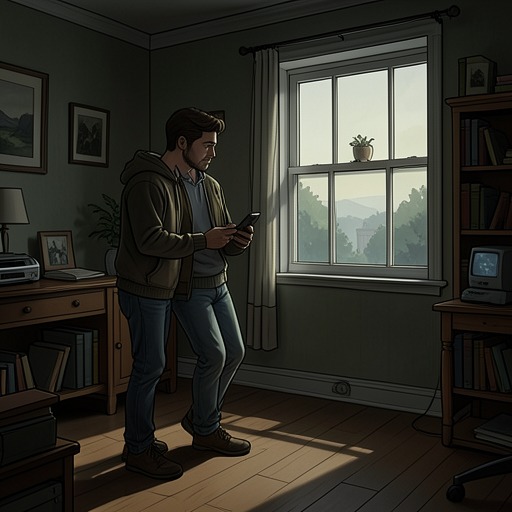
Before the crisis is fully legible, ordinary life is already organized through repeated practical habits. Clay usually drives, takes responsibility for the car, and relishes useful household tasks such as recycling newspapers, replacing lightbulbs, and unclogging sinks. Amanda has little patience for some of the associated errands, but the division of responsibilities is familiar to them. The family’s car, with its accumulated clutter and climate-controlled interior, provides a small, managed environment on the road. These details establish how daily life depends on routine maintenance and private conveniences that can seem dependable until a larger system fails.
Amanda’s grocery trip makes that dependence especially concrete. She returns to a store and buys food for meals and snacks, including yogurt, blueberries, bread, turkey, chips, pasta, coffee, produce, and ingredients for a cake. She also buys sunscreen and aloe for the children, along with wine and other provisions for the adults. The purchases cost more than two hundred dollars. The abundance is not presented as a carefully reasoned emergency plan; it is a broad act of provision, blending ordinary family preferences with the possibility of guests and future meals. Even the repeated purchase of cilantro, despite Archie’s dislike of it, carries the persistence of habit into a moment when habit’s usual context is beginning to disappear.
When familiar order stops reassuring
The blackout exposes the difference between keeping routines and knowing what is happening. G. H. and Ruth have driven from Manhattan to the vacation house after seeing the lights go out, but Amanda cannot make sense of why they came so far. Their arrival disrupts the hosts’ expectations, while the television offers no clear account of the emergency. When Ruth switches it on, the screen displays the Emergency Broadcast System; beeps continue without supplying news. A familiar communication device remains present, but it cannot perform its expected role of making events intelligible.
Ruth recognizes a deeper instability in the situation: order depends on people continuing to act as though it will hold. She is frightened, and the objects and habits that ordinarily make the vacation house feel like home are not immediately available as reassurance. Her usual arrival routine would involve opening cabinets, unpacking familiar possessions, and settling into the house. Instead, she is displaced from that pattern and admits that she is scared. Clay tells her they are there and that the house is safe, drawing comfort from its supplies, but his confidence does not answer the larger uncertainty. The contrast matters: familiar shelter and stored food can protect against some immediate needs, yet neither explains the blackout nor guarantees what comes next.
Food, care, and temporary fellowship
The household responds to uncertainty by returning to tasks with visible, limited outcomes. After the unexplained noise and the children’s return from the woods, the adults bring everyone inside. The noise has frightened them, but the sky is clear and no explanation is available. Later, television remains useless; rain can be heard outside, while Rose makes a boxed cake in the kitchen. The contrast between the silent screen and the activity in the kitchen makes domestic work a practical alternative to passive waiting. Rose’s determination to do the baking herself also recalls Amanda’s promise that they would make a cake when it rained, linking a new crisis to a familiar family plan.
Care continues through food and bedtime. Ruth produces chicken soup for Archie, who eats reluctantly, while Amanda settles him back into bed. Rose uses a movie already downloaded on Amanda’s laptop, and the adults gather for an evening meal. G. H. reads an old magazine, Ruth sets out carrots and hummus, Amanda drinks wine, and Clay improvises sausage pasta. These acts do not restore normal conditions: the television has not given them answers, and the woods still seem threatening. Yet preparing, serving, and sharing food gives the group a sequence of manageable actions and lets the adults spend time together while the children are in bed.
Hospitality also changes the relationship between the two households. Clay frames allowing G. H. and Ruth to stay as the right thing to do, though the decision is entangled with uncertainty about their circumstances and his own sense of what kind of person he wants to be. Later, Ruth treats the visitors as guests and clears the plates, setting aside her own preference for restoring order as a private routine. Her wish that they enjoy what may be their last night of vacation turns hospitality into more than housekeeping: it is a deliberate attempt to preserve pleasure and fellowship when the future cannot be confidently described. G. H. raises a glass to the enjoyment of a moment as a small victory. The meal offers temporary solidarity, not a solution.
The limits and meaning of ordinary life
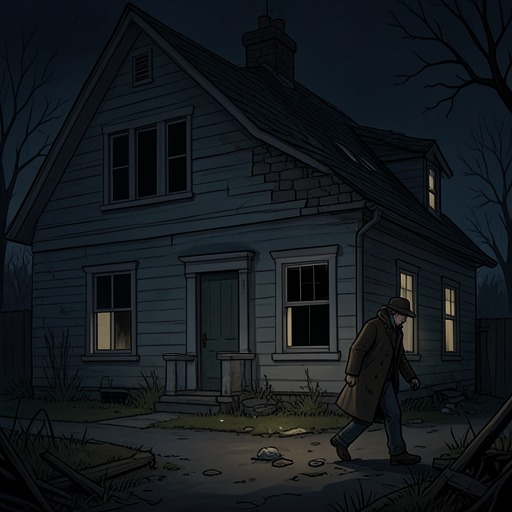
The impulse to resume ordinary activity is not confined to the house. Danny tells G. H. that news on his phone reported a blackout; he had power but no service or cable, drove into town expecting a crowded store, and found it quiet. After hearing the noise, he decided to stay put rather than leave without better information. His account underscores how little any one person knows and how daily decisions are made from partial reports, direct observation, and fear. By the next day, people have largely stopped expecting old radios to explain events. Some lock their doors and play board games with their families, while others respond to the crisis in far more consequential ways. Routine can buffer fear, but it does not produce a shared or reliable understanding of the emergency.
For the adults, maintaining ordinary life is also bound up with parenthood. Clay thinks about the children’s manners and dinner even while considering the possibility that something immense is unfolding. At night, he and Amanda attend to the sleeping children, and his awareness of Rose’s breathing leads him to consider how little parents can guarantee their children’s safety. Their care is real and immediate; their power to protect the children from a wider crisis is not. This is one reason domestic routine carries both tenderness and strain: it gives parents necessary things to do while making the limits of those actions harder to ignore.
Rose’s journey back toward the others offers a different, more open-ended form of continuity. She expects to show them a bag of supplies she has found in a neighboring house: camping equipment, canned food, a DVD player, and three bedrooms. She imagines familiar plans that could still be made, from lunch and swimming to a puzzle, without knowing how the day or the larger emergency will end. The ending does not certify that these comforts will last. Instead, it leaves ordinary life as a set of possible next actions. Across the household, routine is neither denial that nothing has changed nor proof of safety. It is a provisional shelter made from care, food, hospitality, and the decision to keep going while knowledge remains incomplete.