Parenthood and Protection
Leave the World BehindParenthood and Protection is the idea that caring for children means tending to their immediate needs while living with the knowledge that no parent can guarantee their safety. The crisis makes that tension concrete: Amanda and Clay respond to Archie’s illness with practiced care, but they cannot explain what has happened or shield their children from the larger danger. The novel presents parental protection as persistent work, not mastery over events.
Everyday Care and the Household
Before the crisis, Amanda and Clay had learned to divide childcare between them. When Archie and Rose were very young, they used what the narration describes as a one-to-one approach: Clay took Archie to the New York City Transit Museum while Amanda paced with Rose. Those different tasks make care visible as shared, ordinary labor, remembered through the specific routines of early parenthood. Years later, the bedding still needs attention and Archie still needs looking after; the setting has changed, but the work of attending to a child continues.
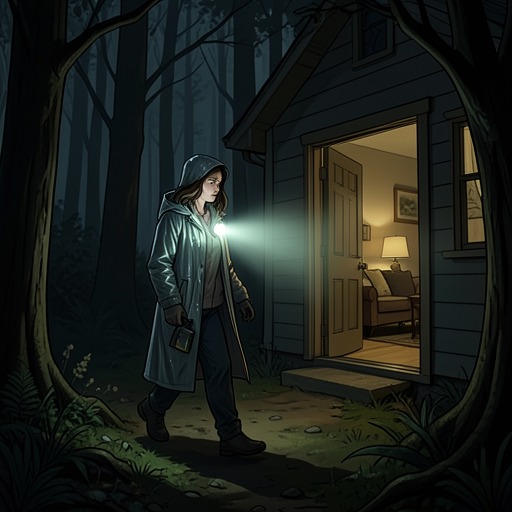
The family’s habits also give protection a domestic setting. At the countryside house, ordinary comforts and familiar possessions help its adults feel at home: swimsuits, sunscreen, a picnic blanket, and the stocked pantry belong to a routine of settling into the place. In the emergency, those habits no longer establish that everything is secure. Clay tries to reassure Ruth that they are safe and thinks of the canned food, while Ruth admits that she remains afraid. Shelter and supplies matter, but neither can answer what caused the crisis or ensure that the family will be untouched by it.
Archie’s Illness and the Work of Care
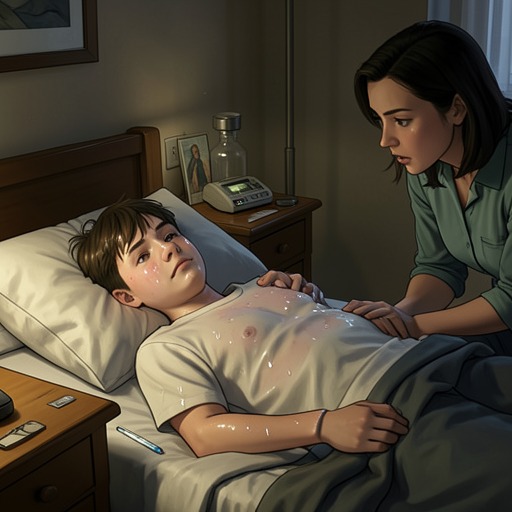
When Archie becomes sick, Amanda shifts from fear to action. She cleans him and cares for him as she once did when he was a small child. The episode recalls the bodily, unglamorous labor of raising children, but its importance lies in Amanda’s response: uncertainty about the cause does not delay her attention to what her son needs. Clay takes Archie to the living room, and Ruth points out that a thermometer and medical supplies are available. Her preparations include medicine for adults and children, bandages, iodine, saline, and petroleum jelly.
The illness also overturns the parents’ assumptions about what they had to guard against. Amanda and Clay had worried for years about the cost of Archie’s epinephrine autoinjector, a concrete safeguard they associated with a known danger. Now, as Amanda sees it, an unfamiliar noise has left him ill. The contrast does not establish the noise as a medical cause; it shows the limits of anticipating harm. Parenthood requires readiness, yet the threat that matters may fall outside the risks a family has learned to name and prepare for.
Protection Without Control
The crisis expands parental worry beyond immediate treatment. At night, Clay watches the children sleep and reflects on how concern has persisted through successive stages of growing up. In his understanding, each apparent milestone that might end a parent’s vigilance gives way to another reason to worry. He thinks of the central task of parenthood as protecting one’s child, while recognizing how little power that task confers against forces beyond the household.
Amanda’s care is similarly attentive and unsparing. She checks Archie’s warmth and tries to distinguish ordinary summer heat and adolescence from illness. The act is both intimate and limited: she can examine her son and respond to what she observes, but she cannot tell whether he is sick from the noise or whether the danger reaches further. Her thought that the family might all be sick widens the fear from one child to everyone, without providing an answer.
Shared Fear and the Larger World
Care in the household takes place alongside adult fear and uncertainty. Ruth wants both to leave and to stay, and cannot simply set aside the guilt she anticipates. Clay and Amanda have already chosen to let the older visitors remain because they believe it is the right thing to do, though they know neither they nor the others understand the full situation. These decisions offer no assurance of safety; they show people trying to act responsibly without possessing reliable knowledge.
The novel connects parents’ helplessness to a wider failure to reckon with danger. As Clay lies awake, he feels unable to keep his children safe and thinks about the older generation’s responsibility for a world shaped by plastic, petroleum, and money. The narration also points to environmental and political signs that people had been able to see but could still ignore. Parental protection cannot repair those larger conditions, and private fear does not automatically become public understanding.
Parenthood therefore remains active even when reassurance fails. Amanda tends to Archie; Clay listens and watches over the children; the adults rely on shelter, supplies, and one another while waiting for information. The children eventually sleep, but their rest does not settle the questions surrounding them. Protection persists as a form of attention and responsibility, even where parents cannot make the world safe.