Rose’s expedition to the empty neighboring house
Leave the World BehindRose’s expedition to the empty neighboring house is a small act of preparation inside a crisis too large for her family to understand. Convinced that the noise they heard means they should prepare rather than panic, she leaves alone, finds an apparently abandoned house, and enters it to collect what her family needs. Her search does not produce the people or answers she hopes for. Instead, food, medicine, batteries, and ordinary domestic comforts become a more immediate form of help: proof that, even as familiar systems fail, she can still do something for the people she loves.
The Decision to Prepare
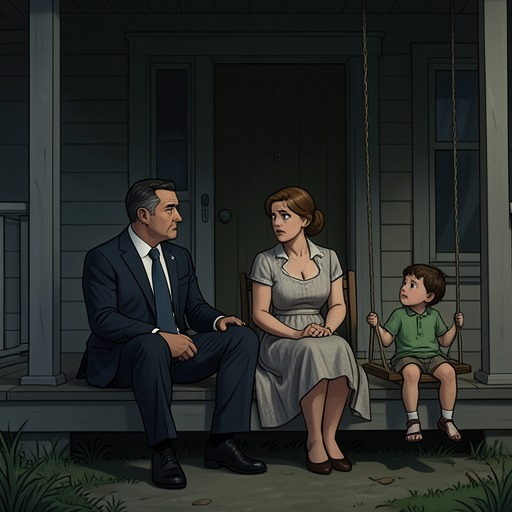
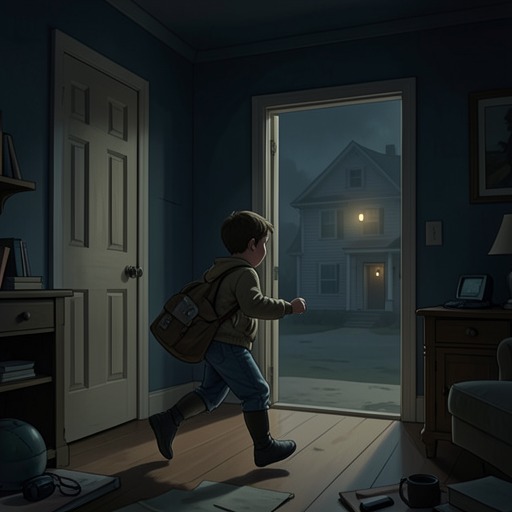
Rose wakes with conviction and a mission. She is the youngest child and is used to not being noticed; she leaves the family suite quietly because she does not want to wake anyone. Yet she believes she has understood what her parents have been reluctant to acknowledge: the previous night’s noise is a reason to prepare. Books and movies have given her a sense of how such stories proceed, and she distinguishes preparation from panic. The confidence is childlike in its certainty, but the decision it produces is practical and deliberate.
Before setting out, Rose washes, ties her shoes, applies insect repellent to her ankle, and fills a reusable bottle at the refrigerator dispenser. The family has almost nothing left to eat. She chews a banana, then packs a nectarine and a book in her bag; the book is included because she cannot know what she might need. These small choices make the outing less like a sudden flight than a child’s attempt to equip herself for an uncertain journey. Rose understands that the family needs more than food: they need people. She expects the house in the woods to offer both.
Finding Her Way Through the Woods
Rose follows a remembered route by its particular landmarks: a rise in the ground, a decaying log, and fallen branches. Her sense of direction is bodily and attentive; she moves lightly over the leaves and trusts her instinct that no predator is nearby. The forest is not simply an obstacle between houses. Its contours and markers let her navigate, while the cool morning and damp ground place her journey in a living landscape rather than an abstract emergency.
As she walks, Rose sings a One Direction song, first silently and then aloud. She imagines that reaching the other house will answer the questions troubling the adults, or at least keep her family from feeling alone. The optimism is not a belief in certain rescue: she understands that her family has little by itself, and thinks that finding something will matter. On the way, she eats the nectarine she packed, counting fourteen bites before the flesh comes away from its stone. She drops the stone, hoping it might eventually grow into a tree—an unassuming gesture that carries her attention beyond the immediate journey.
The woods also open onto a wider picture of the emergency, much of which Rose cannot see. Elsewhere, people are trying to flee, unaware that borders cannot guarantee safety; some do not yet know anything is wrong, while others keep going to jobs that will prove useless. States of emergency have been declared without an effective means of telling people. Against that dispersed disorder, Rose’s route remains local and concrete: she can remember the trees and find the roof she expects through them.
The Empty House and Its Supplies
The house resembles the one Rose knows, and that likeness heartens her. She knocks at the front door, then looks through the windows at floral wallpaper, an oil painting of a brown horse, a brass sconce, and her own reflected face. The house belongs to the Thornes, who are not there. They are stranded at the San Diego airport because domestic flights have stopped amid a nationwide emergency. Rose cannot know their circumstances; from her perspective, the unanswered door leaves open the possibility that the occupants are hiding, armed, or have hurried away.
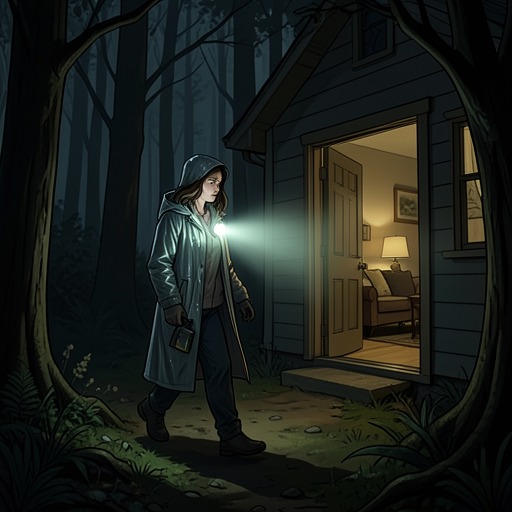
At the rear of the property, Rose knocks on the sliding glass door and rings the bell. She finds boxes and tools in the detached garage, and a boat under dirty canvas, but no car and no people. Determined not to return empty-handed, she notices that panes beside the front door are already cracked. She throws an ornamental stone through one, covers her hand with her hoodie sleeve, knocks away the remaining sharp pieces, and reaches inside to open the dead bolt. Her entry is forceful but calculated: the damaged window supplies a way in, and the lock proves simple to release.
The house smells of cat, though Rose never finds the animal. She turns on the lights to manage her fear and searches every room, opening closets, pulling back shower curtains, and looking beneath beds. Its details distinguish this lived-in home from a bare cache: a pink-carpeted bedroom, a den crowded with board games and puzzles, a large television, and a dining room whose blue carpet still shows the vacuum’s tracks. In the refrigerator she finds more food than her family has at home, including dressings, ketchup, cornichons, soy sauce, biscuit dough, butter, and white cranberry juice. A dish rack holds clean glasses, and Rose helps herself.
The kitchen’s telephone, lemons, scattered papers, and familiar drawer of rubber bands, coins, an old battery, scissors, coupons, and a wrench give the house the texture of an ordinary household. Rose also notices little soaps shaped like seashells. These objects do not provide the explanation or companionship she came looking for, but they make the empty home useful in precise ways. In the den, she switches on the television; the screen is blue. She finds a PlayStation and a collection of DVDs, then selects the complete set of Friends and plays the episode in which Ross fantasizes about Princess Leia. The television’s sound comforts her as she searches. She gathers Band-Aids, Advil, and batteries, regarding them not only as treasure but as proof that the family can obtain things it needs.
What Rose Brings Back
A sparsely furnished blue bedroom suggests to Rose that its teenage occupant has left home. She thinks it could belong to Archie and decides she would not mind staying in the guest room. Her thought that home is where one finds oneself makes the empty house momentarily more than a supply depot: its rooms can be imagined as shelter, and its provisions as a way to extend the family’s capacity to endure.
Rose knows the way back, retracing the rise and familiar trees to a clearing marked by a beam of light. She recalls an account of trees keeping space from their neighbors, and imagines their restraint and generosity as a possible model for survival. She means to return with her bag and tell her family about the house, its DVD player, three bedrooms, camping supplies in the basement, and pantry of canned food. She feels some guilt for not leaving a note and suspects she may already have been missed. The passage establishes her intention to go back; its importance lies in what she plans to carry and tell, not in depicting a reunion during the expedition itself.
Rose’s initiative does not resolve the emergency, and she does not find the people she hoped might explain it. What she does find is material help, along with a reason to imagine her family continuing together: they might cry over what they cannot know, but they are still with one another. The expedition narrows a vast collapse to a child’s manageable tasks—navigate, enter, search, gather, return. Its quiet achievement is neither salvation nor certainty, but the discovery that useful action remains possible even when the larger world offers no answers.