Ruth
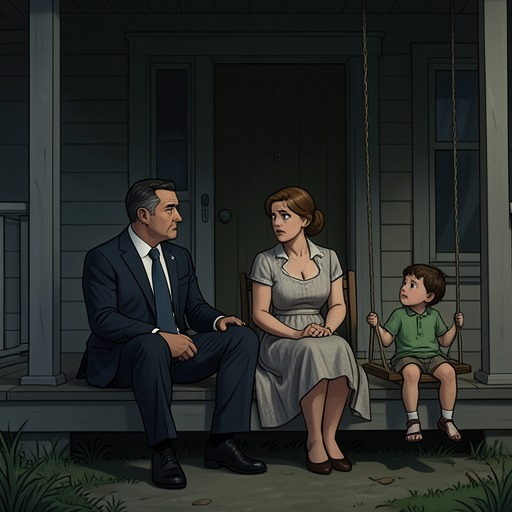
Leave the World BehindRuth’s arc during the blackout turns on a conflict between guarding her own household and making room for people whose need is as urgent as her fear. At first she meets Amanda and Clay with practiced courtesy and private suspicion; as the crisis deepens, her concern for Maya and her grandsons exposes how little control her home or resources can provide. Her eventual alliance with Amanda is not effortless warmth but a choice made in the face of uncertainty.
Identity and Background
Ruth is sixty-three and married to G. H. (George Washington). She is a mother to Maya and a grandmother to Maya’s children, Beckett and Otto. Before the blackout, she had also cared for her own mother, who moved into the Washingtons’ home at ninety because the Chicago winters were severe and there was no one left there to keep a close watch on her. Ruth managed the sale of her mother’s house and distributed the proceeds among her siblings before moving her mother into the guest room. Her mother has since died; Ruth thinks of the dark apartment on the fourteenth floor where she otherwise would have been stranded, and regards her absence from it as a small mercy.
Ruth’s care is practical and particular. She remembers her mother’s silk scarves and coordinated suits, her walks to the Met to look at Impressionist paintings, and her habit of stopping at a diner for tea and Manhattan clam chowder. The details frame caregiving as accumulated knowledge of another person’s habits, not just a duty. They also give Ruth a point of comparison for the abrupt threat now confronting her own family: she has spent years arranging for vulnerable relatives, but cannot arrange away a crisis whose scope she does not understand.
Her understanding of gender and influence is similarly rooted in experience. Ruth reflects that she was not raised to do what was expected so much as to convince men to do what she wanted; in her mother’s view, persuasion was how women made their way in the world. Ruth puts that training to work in social encounters, smoothing tensions and making requests. The skill is useful, but it is not the same as authority or certainty, and the blackout steadily exposes the limits of both.
Fear and the Household
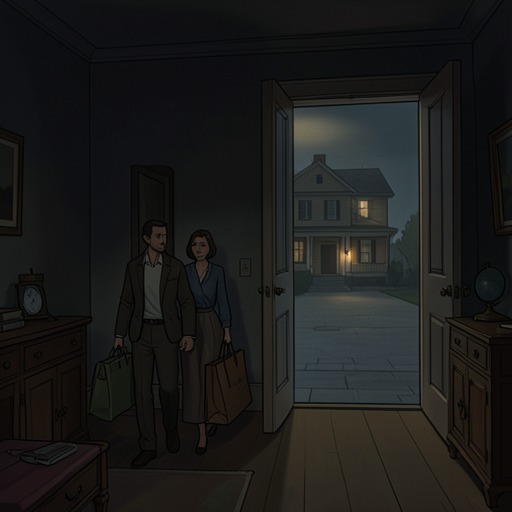
When Ruth first appears at Amanda and Clay’s door with her husband, she corrects the way he apologizes, speaking for them both in a practiced, inclusive manner. She extends her hand to Clay and identifies herself, then greets Amanda by name. Ruth understands this as her part in the couple’s division of labor: to shake hands, make nice, and put the visitors at ease. Her fluency in hospitality contrasts with Amanda’s guardedness. The courtesy is real, but Ruth also knows it is a way of managing what the visitors might want.
The blackout changes the meaning of ordinary domestic scenes. Ruth associates a lit building with life and a dark one with disappearance, and the sudden absence of light prompts her to wonder what has been extinguished or changed. She admits that she is scared, although embarrassment accompanies the admission. She fears a bomb or missile and recalls the false missile alert in Hawaii, imagining how people might spend the short time before an attack. Her thoughts range from basements and family to phones, television coverage, and ordinary programming; the range registers both the enormity of the threat and the mind’s inability to hold it steadily.
Ruth’s fear becomes more concrete when she and G. H. go downstairs. The basement had been finished for her mother, and the Washingtons rarely went there. G. H. switches on the lights as they descend and cautions Ruth to watch her step. The light makes the space feel safer, a response that surprises him because he had not feared darkness as a boy. Ruth, holding tight to the railing, insists on the fact that it is her house. The declaration is an assertion of belonging and a small attempt to restore control, but it cannot make the surrounding uncertainty disappear.
Maya and the Failure of Contact
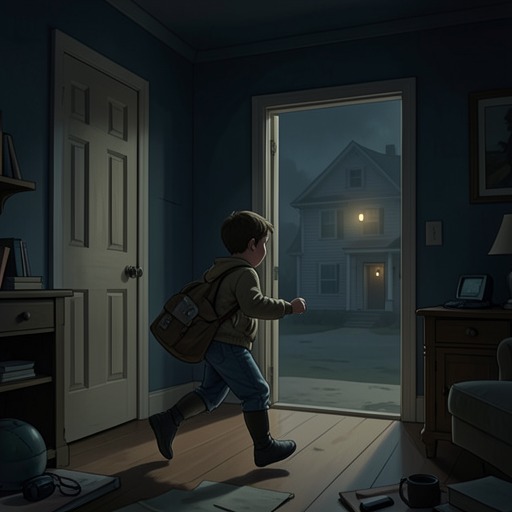
One morning Ruth wakes with an urgent memory of Maya. Images of her daughter at different ages crowd together: the baby at Ruth’s breast, the toddler on her lap, the girl with box braids, the teenager in flannel, and the adult who became a wife and mother. The generations overlap in Ruth’s mind precisely when she cannot reach the person who connects them. A green light on the cable box shows that power is still flowing, but Ruth’s cell phone still cannot reach the world.
She tries the telephone that Danny had suggested installing. The line is already dead. The failed call makes Maya’s absence more intimate: for a moment, Ruth cannot quite recall what her daughter’s voice sounds like now. She remembers that Maya as an adult remains mostly bemused by her parents, wears long dresses in vivid patterns, and has named her children Beckett and Otto. Ruth does not understand the boys’ names or their uncircumcised bodies, but keeps her opinions to herself. Her affection therefore includes difference and private bewilderment; it does not depend on Maya resembling her or making choices Ruth would have made.
Ruth’s fear for Maya and the boys is not abstract. When she confesses that she is scared, G. H. places a hand on her shoulder and names Maya as their daughter. Ruth tries to hold the larger crisis at bay by concentrating on her own family and then turns to a memory of a trip to Italy. The shift is a way of staying within what she can bear, not evidence that the outside danger has passed. Her longing for contact continues even while the household’s ordinary routines and memories offer brief shelter from it.
From Hospitality to Alliance
After the sudden noise, Ruth is among those shaken by its force. She has been filling the coffeepot when it startles her, and afterward a sense of vibration seems to linger. When Amanda and the children emerge from the woods, Ruth puts an arm around Archie’s bare shoulders; G. H. squeezes Amanda’s forearm in relief. Their families had been strangers, but the reunion produces genuine joy. The blue sky does not make the outdoors feel trustworthy, and Ruth recognizes that the house’s walls have not kept the noise away. She asks whether it was a bomb, still trying to fit an unexplained event into a familiar account of danger.
Ruth’s care later takes the form of work. Although she has wine and substantial provisions, she is not comforted by the cans, bars, and containers in the closet. Instead, she gathers laundry, straightens pillows, returns the useless television remote to the dresser, turns off unused lamps, and collects damp towels. These acts restore order to the rooms without restoring certainty to the world. She invites Amanda to add her clothes to a load, reasoning that using power and water while they remain available will be efficient. The offer is practical and neighborly, but Ruth knows the invitation crosses a boundary between strangers and recognizes that their relationship has no easy name.
The offer grows into a more consequential one. Ruth and Amanda regard each other as if they might duel; Ruth pities Amanda and resents the effort of pretending to be a better person than she feels. Yet she also thinks of Maya and the boys, and asks Amanda to stay. Amanda resists the safety Ruth’s house appears to offer, partly because she needs medical help for Archie and partly because she cannot trust that the crisis is contained. Ruth warns that the danger could be inside them or could mean that everything is ending. The fear is not resolved by the supplies or the walls; it is one reason the offer of shelter matters.
When Amanda and Clay consider leaving, Ruth refuses to go with them. Her whole body shakes as she insists that she will remain until they hear something and know something. She is willing to let the visitors stay, but does not initially accept the risk of leaving her home. Then she makes the offer explicit: Amanda and the children can all stay there. The change is a measured one. Ruth does not stop being afraid or suddenly acquire answers; she makes room for the family within the limits she can bear.
What Remains
The alliance is tested again when Rose disappears. Ruth wants Amanda to understand that, however unlucky they are, the visitors are also fortunate to have shelter. She wants to sleep in her own bed, but also wants them to remain. Amanda, frantic for her daughter, apologizes for yelling and recognizes that she cannot simply leave the house and return to ordinary life; in this moment she understands Ruth as a possible source of salvation rather than merely a suspicious host.
Ruth answers from her own maternal fear. She, too, wants her daughter, and can hear Maya’s childhood voice in memory. She cannot make peace with the demand for reassurance because she knows she will never be certain that Maya and her grandchildren are safe. The thought that follows is the crisis’s starkest measure: comfort and safety are illusions, and money has no power to settle the question. What remains valuable is people being together in the same place. At this point the disappearance of Rose and the separation from Maya are still unresolved, but Ruth’s role has changed: the house is no longer only a possession to defend. It is a refuge she can share, while solidarity—not certainty—is the form of protection she can offer.