Ruth and Maya’s mother–daughter relationship
Leave the World BehindRuth and Maya’s mother–daughter relationship connects the ordinary work of family life to the fear of being cut off from loved ones during the blackout. Ruth remembers Maya across many stages, from infancy to motherhood, and longs to see her daughter and grandsons; Maya, meanwhile, protects her own children and questions the world her parents helped make. Their bond holds affection and difference together, and the communications failure makes the distance between them feel newly consequential.
Family History and Generations
Ruth’s experience of motherhood stretches across three generations. Her own mother came to live with Ruth and G. H. (George Washington) at ninety, after the winters and lack of close family oversight made remaining in Chicago impractical. Ruth arranged the sale of her mother’s house and moved her into the guest room. The basement was later finished with her in mind, including an exterior ramp that would have made it easier to enter than the stairs. Her mother died before she could visit. Ruth’s recollection of that unfinished welcome places care for an aging parent beside her current worry about her adult daughter: in both cases, family love is expressed through practical preparations, though circumstances can prevent those preparations from becoming the shared life intended.
Ruth also sees herself changing into a pale imitation of her mother. She notices that she has begun to hold back judgments about the choices of younger family members, as her own mother might have done. The comparison makes age more than a matter of years; it is a shift in how Ruth understands her place in the family. She is now the older generation, watching Maya make decisions about her children and trying to remain close without turning concern into criticism.
Maya’s Family and Ruth’s Grandmotherhood
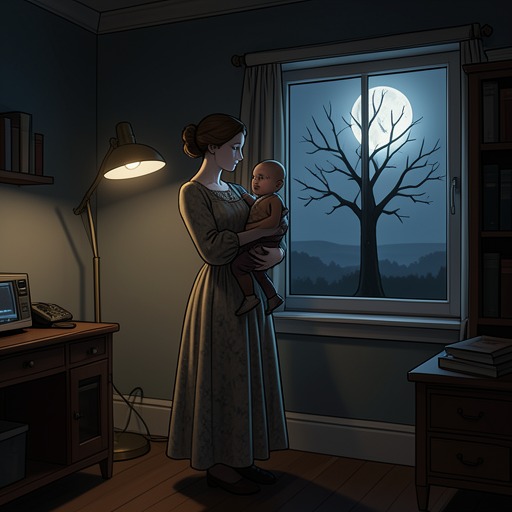
Ruth’s memories of Maya gather the daughter’s life into overlapping images: a baby nursing, a toddler on Ruth’s lap, a ten-year-old with box braids, a teenager in flannel and many earrings, a college student, a blushing bride, and a radiant mother. The sequence conveys how completely Ruth’s sense of Maya contains both the child she raised and the adult she cannot control. In the present, Maya is married to Clara, and their sons Beckett and Otto toddle naked on the back lawn. Ruth does not understand every choice the couple has made, including their sons’ names and the parents’ decisions about them, but she keeps those doubts to herself.
The grandparents’ relationship with Maya’s family is affectionate but not uncomplicated. Maya guards Beckett and Otto, believing her parents to be feeble or conservative and unable to understand the principles she and Clara share. Ruth brings books from Books of Wonder, while Maya examines them closely for what she considers their failings. Ruth also buys the boys small gingham shirts, hoping to be indulged in this pleasure even when Maya’s disapproval is apparent. Ruth understands that Maya’s distrust is directed less at her parents personally than at the society they have made. Still, holding the boys close makes Ruth feel powerful and secure, and her desire to see them is inseparable from her desire to see Maya.
The Blackout and the Unreachable Daughter
When Ruth wakes during the crisis, she is seized by the need for Maya. The morning sounds and the green light on the cable box offer evidence that parts of the house still function, but Ruth’s cell phone cannot reach the outside world. She goes upstairs while G. H. sleeps and tries a telephone that had been installed on Danny’s suggestion. Instead of a dial tone, she hears the sound of a line already dead. For a moment, she cannot summon the sound of Maya’s present-day voice. The failure is not simply technical: it interrupts the ordinary assurance that her daughter can be contacted and makes Ruth confront how little she knows about Maya’s immediate safety.
Ruth tells G. H. that she is frightened for Maya and the boys, who may be trying to call them. She is sixty-three and, though she learned to persuade men to act rather than to act directly herself, this fear comes out as a confession. G. H. puts a hand on her shoulder and tries to set the concern aside for the moment, but the reassurance cannot reconnect the family. Ruth’s attention returns to the daughter whose voice she cannot hear and whose condition she cannot verify.
Memory, Fear, and the Wish to Reunite
Unable to know what is happening beyond the house, Ruth turns toward memory. She recalls a family trip to Italy: Maya in pigtails, the rented car, the villa with a swimming pool, and the child’s question about why they had come to see the ruined Forum. Maya could not yet imagine historical time; Ruth wonders whether, at sixty-three, she can either. In the blackout, the past offers a vivid account of shared life, but no answer about the present. Ruth explains that she does not know what else to think about, making memory a way to remain near Maya when communication has failed.
A later conversation over sandwiches brings the same longing into sharper focus. Ruth says that she and G. H. spoil the boys when they have the chance; what she wants is the chance to see her family. The remark gathers her relationship with Maya into a concrete hope: not to settle every difference about parenting or the world, but to be present with her daughter and grandchildren. The blackout reveals the vulnerability beneath Ruth’s everyday acts of grandmotherly affection. The books and clothes she buys, and the children she wants to hold, are forms of closeness whose continuation depends on being able to reach one another.