The Noise
Leave the World BehindThe Noise is a recurring sound whose force lies as much in what it leaves unexplained as in the damage and fear that accompany it. It interrupts domestic life, sends Amanda searching the woods for her children, unsettles Clay alone on the road and in a crowd, and returns with enough force to crack windows. Only near its final recurrence does the narration identify its source as American planes speeding toward an American future. That revelation narrows the mystery without making the event intelligible to the people living through it: they still do not know what the planes are doing, why the sound has its particular effects, or what larger consequences follow.
First Encounter and Bodily Aftermath
For Amanda, the first encounter is registered not as a comprehensible signal but as a rupture in perception. In its wake, the world seems quiet, with only an afterglow or void where the sound had been. She wonders whether her ears or brain have been damaged and recalls a story about consular employees in Havana who developed neurological symptoms believed to be linked to noise. The association does not explain what has happened; it makes the possibility of sound as a weapon newly imaginable to her.
The fear takes on a physical texture. Amanda shakes and tastes something sharp, as if a Kennedy half dollar were resting on her tongue. She is afraid that moving might make the sound recur, and doubts she could bear hearing it again. Her questions range among possible causes: something confined to the house, a weather phenomenon, something interstellar, or a sign from heaven. Even as she searches for an explanation, she understands that none will satisfy her. The sound has pushed beyond the logic by which she ordinarily makes events manageable.
A Sound That Divides and Connects
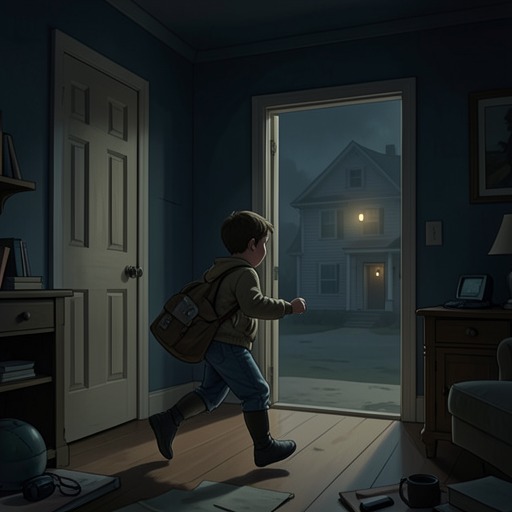
The Noise turns private spaces into uncertain shelters. It sends Amanda into the yard and woods without a working voice; she moves from the house past the pool and through a gate, checks an empty shed, and keeps running toward the place where she believes her children may be. The children, too, have run, and their paths happen to meet. When Amanda finds them, Rose is scraped and dirty but appears otherwise unharmed. The reunion brings real joy, yet the adults remain unsettled: a hum or vibration seems to linger, and the blue, pleasant sky no longer makes the outdoors feel trustworthy.
The sound also crosses the boundaries between separate lives. Clay stops his car and looks toward the sky; Ruth drops a spoon while filling the coffeepot; more than a thousand Deer stampede through gardens, heedless of human property lines. The episode places human confusion beside animal movement without claiming that either group understands the cause. Homeowners are distracted by shattered windows, frightened children, and lasting damage to infant eardrums, leaving the extraordinary herd largely unwitnessed. The Noise is therefore both an intimate shock and part of a wider disturbance whose scale exceeds the people’s attention.
Recurrence, Panic, and Fragile Shelter
Clay’s encounter emphasizes how the sound alters the meaning of responsibility. He recognizes that his wish to save his family is bound up with a wish to be protected himself. When the Noise comes, he is turned around and feels lost; he waits eight minutes, sure it will return. It does, over Queens, but at a distance he cannot hear. Neither distance nor company offers a stable refuge: solitude makes the sound unbearable, while in Queens crowds gather, panic spreads, people run and weep, and the police scarcely pretend to intervene.
The later recurrence reaches into the house. The sound comes once, then again, then a third time. The window over the sink and the pendant light crack, while the electricity stays on; no one can say precisely why. The ordinary expectation that a house provides protection is unsettled by damage that appears alongside the sound but does not follow an understandable pattern. In the wider scene, Amanda and Clay scream, as do G. H. (George Washington) and Rose. The children leave their beds and press against Amanda, who holds them and tries to cover their ears with her hands. She cannot cover all four of their ears. The scene makes parental protection urgent and finite: care is present, but it cannot keep the sound out.
Revelation and Unresolved Meaning
At the final recurrence, the narration supplies information withheld from the characters. The noises are identified as the sound of American planes in the American sky, moving toward an American future; one plane is of a kind most people do not know exists, designed to do unspeakable things. This disclosure ties the sound to human action and military technology rather than leaving it solely among Amanda’s possibilities of weather, the heavens, or the interstellar. It does not, however, provide a full account of the aircraft’s mission or explain exactly how its passage produces each consequence.
The return of the sound also joins domestic terror to distant decisions. The narration frames political action as the choices of a handful of men and sets those choices against consequences that multiply beyond any simple reckoning. In the house, people crouch, cry, gather children, and wonder what they have heard; outside, insects fall silent, some bats drop from the sky, and the Flamingos barely react. The contrasts do not turn the animals into interpreters of the event. They sharpen the limits of human knowledge: the same world contains radically different responses, while the people most directly frightened cannot see the causes unfolding above them.
The Noise consequently functions as both a recurring event and a boundary of understanding. Its returns make the first shock impossible to file away as an isolated disturbance, while its eventual identification leaves the central human questions open. The reader learns that planes are involved, but the characters are still left with broken glass, frightened children, a lingering vibration, and no reliable explanation of what is happening. The sound makes the familiar house and sky newly uncertain, exposing how little control protection, information, and ordinary routines can provide when the world’s larger machinery becomes audible.