
Evil, Influence, and Human Responsibility
Legado en los huesosThis flow examines the novel’s debate over whether evil is an external force or a human choice, tracing how spiritual language, psychiatric authority, and criminal manipulation compete to explain violence.
increasing Bearing strength in each event
 decreasing
Bearing strength in each eventdecreasingA Name for Evil
Naming the Darkness
Sarasola’s Claim
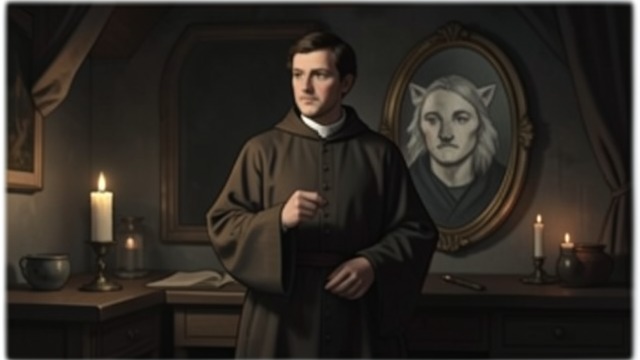
Padre Sarasola argues that some acts cannot be explained by illness alone: in certain people, he suggests, evil creates the conditions in which mental disorder flourishes. His account gives religious language to a possibility Amaia has long sensed but never comfortably named.
The claim is compelling partly because it resonates with her memories of Rosario’s calculated cruelty. Amaia recognizes the difference between a person who loses control and a person who appears to choose when and where to inflict fear.
A Dangerous Certainty
Yet Sarasola’s authority and confidence also make him difficult to trust. His framework risks turning moral interpretation into institutional power, especially when the Church and its psychiatric clinic claim special expertise in identifying evil.
The scene does not settle whether evil exists independently of human beings. Instead, it asks what happens when an explanation that feels emotionally true is offered by someone whose motives remain uncertain.
The Inducer’s Power

Power Through Consent
A Different Kind of Control
The investigators conclude that the violent men were not the true authors of the repeated pattern. Someone guided them toward murder, took the severed arms, and in several cases led them toward suicide, exerting control without appearing to force anyone directly.
This form of influence unsettles ordinary ideas of responsibility. The offenders still commit the crimes, but the repeated signature suggests an unseen person has made their violence serve a broader design.
Desire as a Leash
Amaia’s profile of the inducer emphasizes seduction rather than command. He identifies people whose anger or appetite can be redirected, then makes service feel like the follower’s own desire.
The novel’s account does not excuse the followers. It instead shows how responsibility can be layered: the killer acts, the manipulator shapes the circumstances, and each person’s choices contribute to the harm.
The Clinic’s Blind Spot

Expertise and Access
Treatment as a Pathway
The investigation finds that several offenders received therapy connected to the University Clinic of Navarra. What should have been a route to care may also have provided an expert with repeated access to men whose violence, shame, and desperation made them vulnerable to influence.
The clinic’s volunteer work and case-selection policies complicate the distinction between public service and professional opportunity. Attention to unusual cases can support research, but it can also create access that demands oversight.
Institutions Under Scrutiny
Doctor Berasategui’s role shows how professional authority can conceal predatory behavior rather than prevent it. His credentials and apparent discipline help him move through institutions while obscuring the private pattern of manipulation.
The novel therefore treats institutional accountability as part of the moral inquiry. Good intentions or prestigious titles cannot substitute for checking who receives access, what interventions occur, and whether apparently separate cases share a hidden hand.
The False Sacrifice
Ritual as Criminal Theater
A Child Cast as Offering
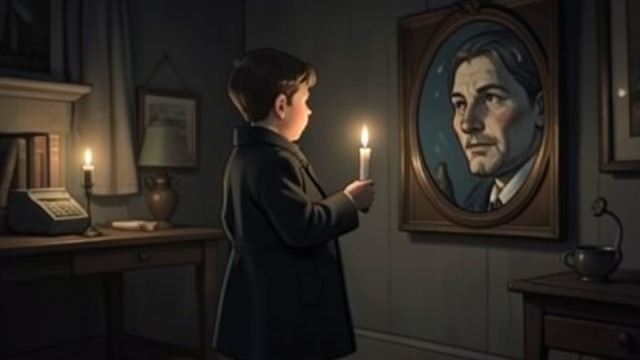
At the cave, Rosario and Doctor Berasategui place Ibai within a ritual scene that echoes the doctrine of “The Sacrifice.” The arrangement turns the child into a symbol within an imagined religious drama, obscuring the simple fact that he is a living person in immediate danger.
Amaia’s confrontation breaks through that theater by naming Ibai as her son and refusing the role imposed upon him. The ritual’s symbolic language cannot erase the concrete responsibility of the adults holding the knife and directing the scene.
Belief and Manipulation
The episode draws on folk and occult imagery without suggesting that ritual beliefs themselves cause violence. Rather, the criminal uses those beliefs as a framework through which fear, family history, and the desire for power can be organized.
The distinction matters: the supernatural language may shape how the characters interpret events, but the human choices remain visible. The danger comes from people who turn belief into permission to harm others.
What the Evidence Can Say
Justice Without Omniscience
Proof and Interpretation
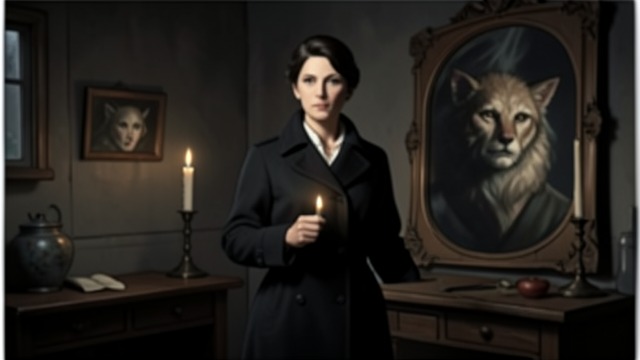
Amaia confronts Doctor Berasategui with the pattern of signatures, victims, trophies, and his connection to the men who carried out the murders. Some parts of her account are supported by forensic evidence; others, including the full history of his childhood and his mother’s death, remain an interpretive reconstruction.
That distinction prevents the investigation from becoming omniscient. Amaia may perceive the emotional origin of the crimes, but a persuasive explanation is not identical to proof, and the legal process must establish what can be demonstrated.
Responsibility After the Arrest
Berasategui’s arrest stops the immediate ritual and exposes his collection, but it does not erase Rosario’s violence or recover every victim’s lost life. Nor does the closing burial resolve every uncertainty surrounding Amaia’s twin.
The novel leaves justice as an incomplete human practice: evidence can identify perpetrators, institutions can be challenged, and the dead can be returned to kinship, yet suffering cannot be undone. The refusal to confuse explanation with absolution is central to its moral vision.
During the first meeting about Rosario’s transfer to the Opus Dei clinic
As the investigation identifies a hidden organizer behind the suicides
After the discovery that multiple prison offenders received psychiatric treatment
During the attempted ritual at Arri Zahar Cave
During Berasategui’s interrogation and the final reburial
