Amaia Reburies Her Sister's Remains
Legado en los huesosAmaia Reburies Her Sister's Remains is the closing act of Amaia Salazar’s investigation into the sister whose birth and death her mother kept from the family. After collecting the bones from the Navarre Institute of Legal Medicine, Amaia kneels beside an open grave and covers them herself. The act does not resolve every uncertainty surrounding the infant’s death; it gives the sister a burial grounded in the truth Amaia has managed to uncover and the family had long been denied.
Records and the concealed birth
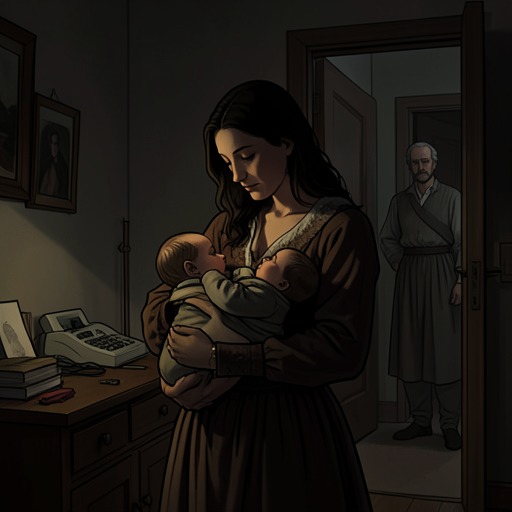
The archive establishes that Rosario Iturzaeta had a natural twin birth in 1980: two girls, apparently healthy, with no names recorded. The ease with which the clerk reads this entry makes the discovery intimate and abrupt for Amaia: the records show another sister where the family had known none. The absence of names, however, leaves the entry incomplete rather than explanatory.
A separate death certificate identifies a newborn daughter of Juan Salazar and Rosario Iturzaeta and gives the cause as crib death, the common name for sudden infant death syndrome. The certificate offers an official cause, but it does not settle what happened. The infant’s birth had been concealed from the family, the birth documentation contained irregularities, and bones discovered in strange circumstances appeared to belong to the missing sister. Amaia therefore approaches the burial with a powerful identification, but against a background of unresolved discrepancies.
The family’s own account deepens the gap between paperwork and lived knowledge. Amaia’s relatives say they saw the infant buried, but the coffin was closed; they had not seen the child’s body. One relative recalls that relations with Rosario continued as before at first, then suggests that the change came after the baby died. The testimony supplies a possible turning point in the family history without explaining the inconsistencies in the records or establishing precisely how the infant died.
Collecting the remains
Two days after the rain, with the sun appearing between the clouds, Amaia visits the Navarre Institute of Legal Medicine early in the morning. She insists on going inside alone while James and her sisters wait in the car. Doctor San Martín greets her and briefly embraces her before taking her to his official office, a room filled with bronze sculptures that he does not use; he prefers a crowded table downstairs.
San Martín presents the paperwork as a formality and tells her that he can release the remains once she has signed. Amaia makes quick marks on the documents and leaves in haste, escaping the doctor’s kindly attention. The signatures are the easy part of the day. The transfer of the bones makes the investigation’s archival and forensic clues into something she can carry to a grave and lay to rest.
The reburial
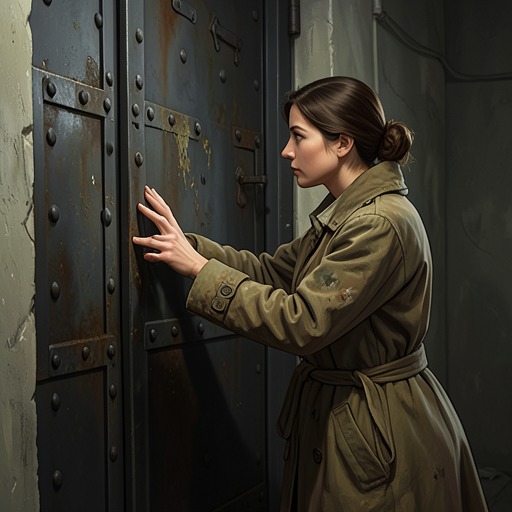
At the open grave, Amaia almost regrets that the rain has stopped. In her perception, sunlight makes a burial more vivid and therefore more unbearable: its warmth exposes the horror rather than softening it. The soil still holds the moisture of the heavy rains, and Amaia kneels in it. She carefully pushes the small bones into the grave, covers them, and flattens the earth with her hands.
James is there holding Ibai, alongside Amaia’s sisters and Engrasi. Even Engrasi’s appearance registers in the scene: she wears a hat coquettishly over the bandage covering half her head. The family gathers around a grave whose meaning differs from the one they had once been given. This time Amaia has collected the remains herself, and the burial recognizes the sister whose birth had been kept from her.
Significance and limits
The reburial turns a sequence of fragments—a twin-birth entry, a death certificate, family recollections, and disputed remains—into a deliberate act of care. Its physical simplicity matters: Amaia, rather than a document or another relative, places the bones in the earth and smooths the soil over them. The scene gives the concealed child a place in the family’s present without pretending that the evidence has answered every question about her death.
The ending also holds grief and recognition together. Sunlight makes the burial feel harsher, not consoling; the earth remains wet, and the family stands close enough to witness Amaia’s work. What changes is not the past’s uncertainty but the family’s relation to it: Amaia can now bury the remains as those of the sister whose existence the records revealed and whose loss had been hidden.