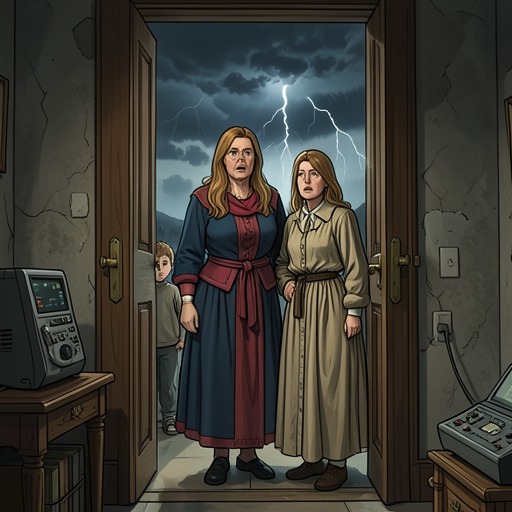
Amaia Salazar—Rosaura: sisters
Legado en los huesosAmaia Salazar’s bond with her sister Rosaura Salazar is shaped by a contrast between childhood vulnerability and adult care. As a child, Amaia sought the safety of sleeping beside her sisters to avoid their mother; later, she offers Ros Salazar comfort and watches closely for signs of distress. In both periods, the sisters’ shared home and presence matter as sources of refuge.
Childhood Refuge
When their parents had gone to bed, Amaia would plead with her sisters to let her sleep with them, promising to serve them in return. Flora rarely agreed, and when she did, she demanded Amaia’s labor the following day. Rosaura, by contrast, softened when she saw Amaia crying. Amaia’s fear made tears easy, and Rosaura’s compassion could secure the protection she needed. The episode presents their sisterhood not as uncomplicated solidarity but as a fragile, practical shelter: Rosaura’s response could make the difference between facing the night alone and having company.
A Shared Home in Adulthood
Years later, Amaia describes the family home as a refuge for everyone, including Ros Salazar. Though Ros often visits her own house, she continues to return to the family home to sleep. That pattern gives the childhood idea of shelter an adult counterpart: the house remains a place to come back to, even when a sister’s life elsewhere has become difficult.
Amaia’s Care for Ros
When Ros arrives, Amaia notices that she has lost considerable weight and that her familiar smile lacks its brightness. She connects Ros’s subdued state with recent hardships, including her separation from Freddy and Víctor’s death, while also recognizing how persistent sadness seems to have become in her sister’s life. Ros’s success managing the bakery has not erased that distress. Amaia takes her by the hand, notices the white marks on her nails, asks whether she has been painting, and hugs her, feeling how thin she has become. She urges Ros to sit by the fire because she is cold. The gestures are small and immediate, but they show Amaia responding to what she sees rather than treating the family home’s refuge as an abstraction.