Amaia Salazar’s childhood trauma and fear of Rosario
Legado en los huesosAmaia Salazar’s childhood trauma and fear of Rosario are organized around a threat that never felt confined to a single act of violence: Amaia remembers her mother as a presence that watched and menaced her, while remaining unable to offer ordinary care. Revisiting the family bakery brings that fear back with force, but also changes its meaning. Amaia begins to trace it beyond the night Rosario struck her and buried her in flour, toward a childhood-long separation, an ominous pattern around her birthday, and the unresolved memory of an identical twin. Later, Ros’s confession gives the terror a witness; becoming a mother, in turn, sharpens Amaia’s judgment of the adults who failed to protect her.
The Workroom and the Earlier Wound
At the bakery, Amaia returns to the workroom to retrieve money her father had given her for her birthday and that she had hidden from Rosario. The space carries the remembered aftermath of an assault: Rosario waited for her there, hit her, and buried her in the kneading trough, believing her dead. Yet Amaia understands that night as the moment when the horror erupted, not where it began. The distinction matters: the attack was a culmination of a much older fear, not an isolated break in an otherwise safe childhood.
The trough makes that history physically present. Its flour is enclosed beneath a sheet of methacrylate, white and smooth to Amaia like a coffin. She looks at it, then forces herself to turn away from the thought. The birthday money, the hiding place, and Rosario’s supposed knowledge of where Amaia was all belong to a childhood in which concealment offered little security. Amaia remembers feeling that her mother could sense her even when she was elsewhere, as though no private space could keep her beyond Rosario’s reach.
A Bond That Also Kept Them Apart
Amaia recalls her relationship with Rosario through the image of an invisible cord: something that connected mother and daughter while holding them at a fixed distance. She remembers Rosario neither touching nor comforting her. Her father or sisters helped her dress and comb her hair; her father took her to the doctor and checked her temperature when she was ill. Rosario, in Amaia’s account, did not take her hand. The separation was not a lack of connection so much as its disturbing opposite: Amaia felt watched and bound to her mother, yet denied the gestures through which a child might ordinarily experience maternal care.
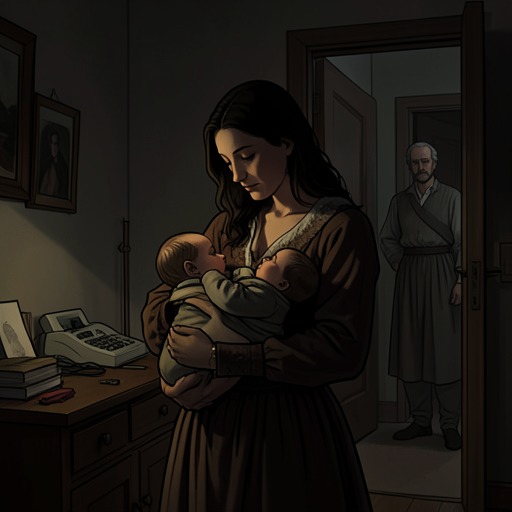
That bond could become threatening at night. Amaia remembers Rosario coming to her bed while the others slept to remind her that she was in danger. The words carried the shape of a lullaby, but their reassurance was conditional and menacing: for that night, her mother would not eat her. Amaia remembers another voice answering that the threat would eventually be fulfilled. Her fear therefore became a nightly practice of vigilance. She waited until she believed Rosario was asleep, then sought refuge in her sisters’ beds, pleading and promising to behave. Even the comfort of sleeping beside them existed within a routine organized around anticipating danger.
The Birthday Pattern and the Twin
Amaia’s recollection connects the threat to the approach of her birthday. Each year, Rosario’s usual distance gave way to hostility as the date drew nearer. Amaia remembers feeling watched and assessed, and describes the danger as gathering until it seemed almost tangible and kept her awake. After the birthday passed, the household returned to its tense pattern of avoidance and mutual watchfulness. A date that brought celebration for her sisters became, for Amaia, the most frightening period of the year.
As she revisits these memories, Amaia considers whether Rosario’s behavior might have been grief over the death of another child. She rejects that explanation as an account of what she herself experienced: she did not read Rosario’s conduct as mourning, but as a postponed intention that intensified around the birthday the two identical girls shared. Amaia associates this interpretation with a belief about a Mairu and a dead child, and with the recurring twin who had cried in her dreams for as long as she could remember. In the bakery, the possibility that the danger began at her birth reframes her childhood memories without resolving every question about them.
The present investigation adds pressure to this private understanding. Amaia doubts that the case will yield the answer others hope for, and believes that her colleagues do not know how Rosario’s threat intensified as her birthday approached. Their incomplete knowledge deepens her isolation: what appears to them as an unresolved case is entangled, for Amaia, with a history she has scarcely been able to name. Her fear is not simply recalled; it shapes what she thinks the investigation may uncover and how she reads the danger surrounding her.
Ros’s Memory and the Family’s Silence
When Amaia speaks with Ros, her sister reveals that she too had seen enough to understand that something was wrong. Ros recalls one night when Amaia had insisted on sleeping beside her. After Amaia fell asleep, Ros moved to Amaia’s bed. Rosario came in, apparently believing that the child there was Amaia, and repeated the threat that Amaia would not be eaten that night. Ros says she was already nearly asleep, but heard the words clearly. When Rosario left, Ros climbed back beside Amaia, frightened, and from then on allowed her sister to sleep with her.
Ros had never told anyone. She had watched Rosario watching Amaia, and understood that her own vigilance mattered, but she and Amaia were children with little power to intervene. Amaia tells her not to torment herself: the responsibility belonged to the adults. The exchange turns an intensely private memory into something shared, while establishing that the silence around Rosario’s behavior did not mean that no one else had sensed the danger. Ros had witnessed it, but her childhood fear and lack of authority left her unable to stop it.
Exile, Parenthood, and Reassessment
Amaia directs her anger not at Ros but at their father, whom she regards as the responsible adult who should have protected her. Ros remembers him as a good man who wanted the family to function. Amaia’s answer is that keeping the family together was not the same as protecting a child: at nine, she was made to leave her home, her father, and her sisters. She remembers this as exile. The contrast between her father’s presumed intention and the consequence for Amaia exposes a defining wound: the child was removed, while the mother who frightened her remained protected within the family.
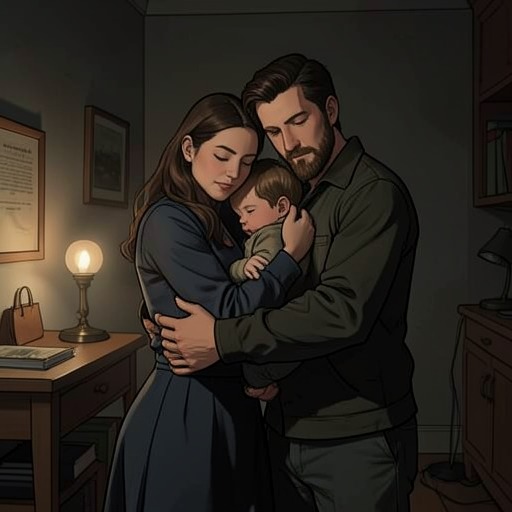
Motherhood changes Amaia’s judgment from an abstract argument into a test of responsibility. She knows that she would protect Ibai above James and above herself, and hopes James would make the same choice. That conviction does not erase her fear or undo the childhood separation; it makes the earlier failure harder to excuse. Her memories of Rosario remain marked by vigilance, threat, and the absence of care, but Ros’s testimony and Amaia’s own experience as a mother let her distinguish a child’s helplessness from an adult’s duty. The trauma’s force lies in that distinction as much as in the violence itself: Amaia survived the attack, but the fear had already shaped her sense of home, family, and protection.