Arizkun Church
Legado en los huesosArizkun Church is a place where the investigation into desecration meets a longer history of exclusion. The damaged baptismal font draws Amaia Salazar and her colleagues into a case involving infant remains and folk belief; the church’s former barriers, meanwhile, testify to the way religious practice was used to segregate the Agotes. Its significance lies in that tension: a sacred building can preserve both communal worship and the memory of unequal treatment.
Setting and Historical Meaning
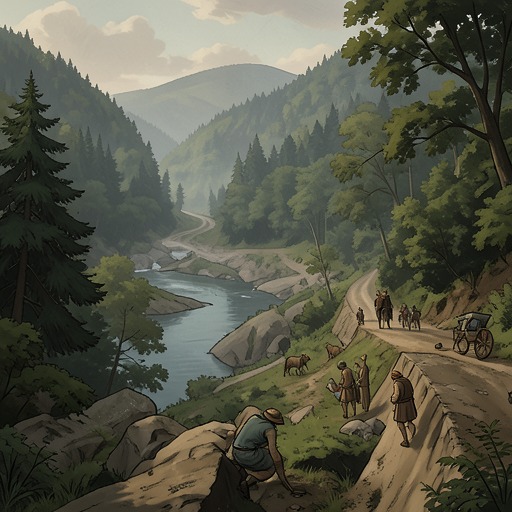
The church stands within a history shaped by the Agotes’ centuries-long exclusion in Bozate. Accounts of their origins differ: they may have arrived in Navarra fleeing medieval war, famine, plague, or religious persecution; one widely supported theory identifies them as Cathars pursued by the Inquisition. Other explanations describe deserters who contracted leprosy in southern French lazarettos, or a mixture of outcasts brought to serve the feudal lord Pedro de Ursua. His fortress-palace survives in Arizkun, while the Agotes settled largely in Bozate.
Whatever their origins, the Agotes were treated as an inferior group and prevented from integrating into society. They could not live outside Bozate, run businesses, or marry people outside their group. Restricted to crafts associated with supposedly unclean work, such as woodworking and leatherworking, they were also made to wear an identifying mark and, like people thought to have leprosy, to ring a bell announcing their presence. They were Christians who observed Catholic rites, yet the Church’s practices kept them apart rather than welcoming them as fellow worshippers.
At Arizkun Church, segregation was built into the arrangement of worship. The Agotes had a separate baptismal font, and holy water used for them was discarded. They could not approach the altar; they were often kept at the back of the nave and made to enter through a smaller, separate door. A grille in the church divided them from other worshippers. Local residents later removed it as a rejection of the shame that this history still caused in Arizkun. The building thus carries evidence not only of religious ceremony but also of the boundaries imposed within it.
Desecration and Investigation
The damaged baptismal font brought the church into the present-day investigation. The priest showed Amaia and Iriarte the remains in the sacristy: the font had been broken into two pieces. Nearby, an old wooden bench was visibly aged, its splintered wood and the smell of very old timber reminding Amaia of her grandmother Juanita’s furniture. The priest, who was severely hard of hearing, hurried through the temple in short, wavering steps, repeatedly crossing himself before showing them the damage. He was overcome by the sight of the font and wept as he tried to express his distress.
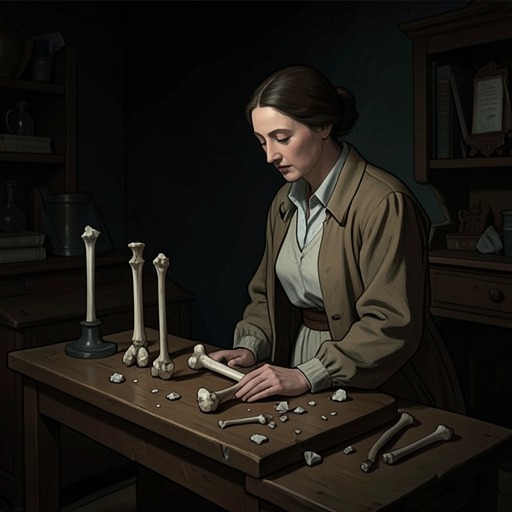
Iriarte established that the first attack, which destroyed the font, had taken place seventeen days earlier. The inquiry also considered the desecration of a cemetery. Jonan Etxaide identified the recovered burned bones as a mairu-beso, an infant bone arm believed to have magical properties only if it came from an unbaptized child. In traditional belief, such bones could be carried like torches; their smoke was said to put the inhabitants of a house or even a whole village to sleep. The investigators’ discussion therefore connected the church’s violation with a second sacred boundary: the treatment of the dead.
Belief, Ritual, and Evidence
The folklore surrounding the mairu-beso gives the desecration a specific religious and social meaning. Its power was said to depend on the child’s condition and age: an infant who died before baptism, including a fetus or a child who died at birth or in the first months of life. The belief placed such a child’s soul in transit between worlds. Since the Church generally did not baptize the sick or dying, families sought baptism quickly, fearing that an unbaptized child might be buried outside the cemetery wall or at the foot of a wayside cross.
Folklore also imagined these dead children as protective presences in their parents’ homes. Some families reportedly kept a cradle for the child or set a place for it at the table. The story could therefore give a domestic role to the child whom church practice had left outside its sacramental and burial boundaries. At Arizkun Church, the contrast is especially sharp: formal rites excluded the Agotes, while popular belief assigned a particular spiritual status to the unbaptized dead. The investigation treats such beliefs as cultural explanations attached to the remains, not as proof that the supernatural claims are true.
Surveillance and Significance
After the attack, a patrol remained stationed outside the church, and the investigators noted that no further incident had occurred at the time of their discussion. Iriarte returned the patrol officers’ greeting as he passed the building. With the first reports and forensic results still pending, Amaia advised against confronting a suspected individual without stronger grounds; the inquiry would instead continue through information-gathering, including interviews with the catechists who might have noticed something the priest had missed.
Arizkun Church is consequently more than the damaged setting of a crime. The broken font makes the current desecration visible, while the removed grille and remembered separate entrances reveal older forms of exclusion that were once built into ordinary worship. The investigation moves between those layers: from physical damage and burned infant bones to the histories and beliefs that give them meaning. The church’s past does not identify the perpetrator, but it shapes what the desecration signifies and why the building’s sacred space is also a record of contested belonging.