Arizkun, Baztán
Legado en los huesosArizkun, Baztán, is a village whose present-day investigation is shadowed by the history of its marginalized Agote community. A church desecration there brings the investigators to a burned infant-bone amulet and raises the possibility that the crime speaks not only to individual vandalism but also to a history of religious and social exclusion.
Setting and Church
Arizkun lies five kilometers from Elizondo, Amaia's hometown. The Iglesia de San Juan Bautista de Arizkun becomes the immediate focus of the investigation: on a winter night, its interior shines with light while its slender bell tower remains dark. Uniformed officers gather at the southern entrance, illuminating the lock with their flashlights. Amaia arrives with Jonan Etxaide, crosses the low wall around the church, and enters to find two startled priests looking toward the altar as officers and the forensic doctor arrive.
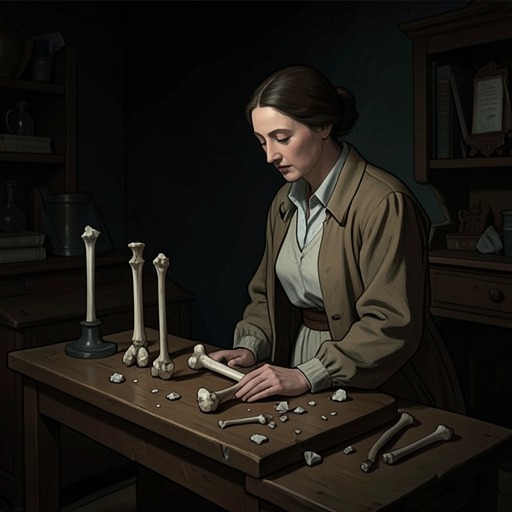
Inside, the smell of burning interrupts Amaia's instinctive reach toward the holy-water font. Burned infant bones are found, and Jonan identifies them as a mairu-beso: according to the belief he explains, the object had to come from an unbaptized infant who had died. It was once thought to protect its bearer and to produce smoke that could narcotize the people in a house or even a whole village. The discovery turns the church from a place of worship into a crime scene where local religious history and a bodily relic meet.
Bozate and the Agotes
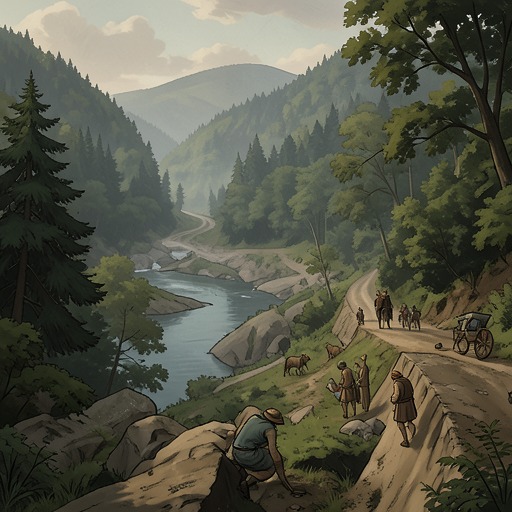
Arizkun is also associated with Bozate, the neighborhood where the Agotes became concentrated. Jonan explains that they lived across the Baztán Valley and Roncal, but were confined in Arizkun to what is now Bozate. Their origins remain disputed: one theory identifies them as Cathars fleeing religious persecution; others suggest Visigoth deserters who contracted leprosy in southern French lazarets, or a mixture of outcasts brought to serve the local feudal lord, Pedro de Ursua. A preserved palace-fortress in Arizkun is linked to that lord, and his presence is offered as a possible reason the group settled largely in Bozate.
The exclusion itself is presented less ambiguously. For centuries, the Agotes were treated as an inferior group and barred from living outside Bozate, running businesses, or marrying anyone who was not an Agote. They were pushed toward woodworking and leatherworking, trades considered unhealthy, and required to wear an identifying mark sewn onto their clothes; they were also made to ring a bell to announce their presence, as if they were lepers. Though Christian and observant of Catholic rites, they encountered exclusion within the Church as well: they had a separate baptismal font, and the holy water used for them was discarded.
Desecration and Historical Meaning
The investigation considers whether the desecration is merely vandalism or an attack with a social motive. Amaia initially leans toward vandalism and does not dismiss it, but the history of Arizkun prevents the team from ruling out a social attack, perhaps at an early stage. The Agotes' treatment by the Church gives that possibility a specific local context: the crime occurs in a community whose religious history includes the exclusion of people who nevertheless practiced the faith.
That context does not settle who committed the desecration or why. Instead, it changes what the investigators must consider. The burned mairu-beso carries a history of belief about protection, sleep, and wrongdoing, while the church itself recalls the unequal religious treatment of the Agotes. Arizkun's significance lies in this unresolved overlap: the site is at once a concrete crime scene and a place where the past makes a social interpretation possible, without proving it.