Beñat Zaldúa
Legado en los huesosBeñat Zaldúa is a gifted teenager from Arizkun whose efforts to draw attention to the history of the Agotes make him a target for an adult manipulator. His involvement in the desecrations of the local church is real, but the investigation distinguishes his role from that of the adult who recruits and directs him: Beñat helps enable the attacks, then gives investigators the information that points toward the principal perpetrator. His story brings together historical grievance, adolescent vulnerability, and the difference between being implicated in a crime and being its chief instigator.
Identity and Background
Beñat is known locally as a bright, well-behaved young person with a strong interest in history. A local priest tells Amaia Salazar that Beñat earns good grades and had once spoken of wanting to study the subject. Although he had not attended church since his first communion, he was familiar to the priest from visits to the library. He began coming to church again a couple of months before the investigation, a change that draws notice because of his family’s connection to the community and the church.
His mother had regularly attended church and died of cancer six months before the priest speaks with Amaia. His father, by contrast, does not attend mass and is described as a rough man. Later, Subinspector Zabalza explains that since his mother’s death the father has subjected Beñat to severe physical abuse. In the police station, Beñat’s injuries and guarded manner make that vulnerability visible without diminishing the seriousness of the investigators’ questions. Zabalza sees a teenager living under pressure at home, with school achievement and an interest in his people’s history among the few things that sustain him.
The Blog and the Church Attacks
The investigation first identifies Beñat through a blog about the Agotes. Most online writing on the subject, Jonan Etxaide reports, repeats familiar historical accounts and expresses outrage at the injustices the group suffered, but does not extend that grievance into the present. One exception, titled La hora de los perros, is written as a diary by a young Agote who describes persecution as though living in the seventeenth century. The blog’s writer signs himself Juan Agote. Investigators trace its internet address to Arizkun, and Amaia recognizes Beñat as the person behind it.
The blog establishes both Beñat’s investment in Agote history and the channel through which the adult reaches him. In his statement, Beñat explains that the man contacted him through the blog and, at first, seemed to share and defend the same ideas. Beñat thought their collaboration might bring visibility to his historical claims. His political and historical interest is therefore not merely a cover invented by the police: it is the point of connection the recruiter exploits, and the stated reason Beñat initially accepts his approach.
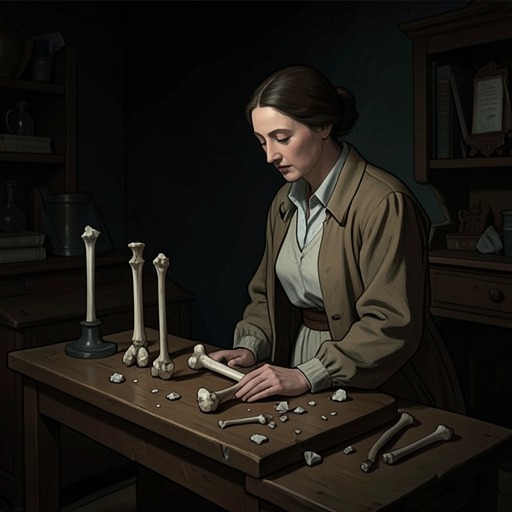
As the church attacks continue, however, Beñat becomes frightened by their escalation. Human bones are left near the altar, a development he says has nothing to do with the ideas he had wanted to defend. The later investigation reviews a further desecration involving damage to the church façade and the abandonment of human remains. A fire at an old medieval palace in the area draws a patrol away, creating an opportunity for the attack. Beñat is suspected because of his role in the sequence, but the police come to believe that he did not carry out the desecrations himself.
Interrogation and Disclosure
When Beñat is brought to the station with his father, the contrast between their positions is immediate: the father’s manner is affected by alcohol, while Beñat is quiet and physically guarded. Zabalza recognizes signs of abuse and argues that the boy is too insecure and dominated at home to fit the role of the principal offender. Amaia does not dismiss that assessment, but she also considers whether a teenager’s suppressed anger could find an outlet in conspicuous acts against the church. The investigation must hold both possibilities in view: Beñat may be a victim of violence and still have taken part in conduct that requires an account.
Amaia interviews him as a suspect in a serious offense and makes clear that his age does not erase his responsibility. At the same time, she offers to speak to the judge about his circumstances and tells him she can help if he is truthful. Beñat agrees. His account is less a guarded exchange than a sustained confession of what he knows: the adult contacted him through the blog, encouraged him to act, and initially appeared to share his convictions. As the desecrations went further than Beñat expected, and the bones appeared, he began to understand that the other man’s purpose was not simply to publicize Agote history.
Beñat describes the man he saw during the desecrations as someone who called himself Cagot and was missing half the fingers on his right hand. He denies involvement with the human bones and with the latest attack, in which an electric cart was driven into the church wall. His disclosure supplies investigators with a way to distinguish his own participation from the adult’s responsibility and to identify a suspect. The relief that follows his account marks a turning point: speaking gives the police a lead and gives Beñat a chance to stop carrying the secret alone.
Responsibility, Protection, and Narrative Role
At a briefing, Amaia characterizes Beñat as an adolescent consumed by an unhealthy fixation on Agote history and still grieving his mother, but says the team believes that, even if he facilitated the attacks, he was not the desecrator. The distinction becomes explicit when Padre Sarasola suggests the diocese may bring charges against the boy. Amaia rejects treating him as the responsible offender, describing him instead as confused and manipulated by a criminal. Her position does not erase his involvement; it locates it within the adult’s recruitment and the boy’s limited power to understand how far the acts would go.
The adult’s identity is later connected to Antonio Garrido. During a confrontation, Garrido admits to using a maltreated child to damage the church and says Beñat should have killed his father. Amaia immediately recognizes that the remark creates a separate, urgent danger. She calls Zabalza and directs him to take a patrol to Beñat’s home so that the boy can be removed before the threat has consequences. Garrido’s words confirm the coercive and exploitative character of the relationship: his interest in Beñat extends beyond using the blog as a route into the desecrations.
Zabalza reports that Beñat is taken from the house with the help of social services. A cousin in Pamplona appears ready to take responsibility for him. This outcome shifts the focus from interrogation to safety: Beñat’s next step is removal from the home where Zabalza says he has been abused, not punishment framed as though he were the adult directing the crimes. As a character, Beñat links an authentic interest in a persecuted history to a present-day crime shaped by manipulation. The narrative keeps his culpability and victimization in view at once, while showing how his eventual cooperation helps expose the person who exploited both.