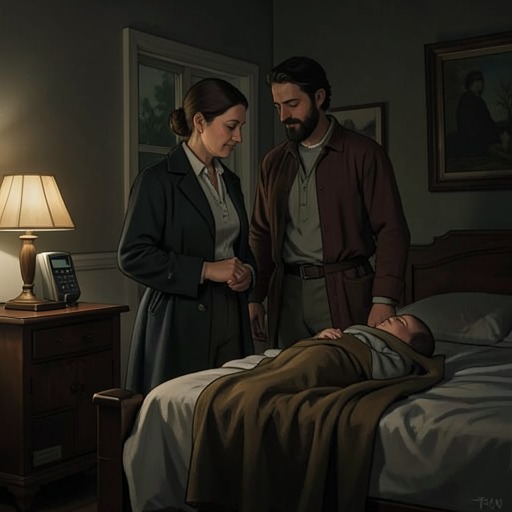
Ibai's Birth
Legado en los huesosIbai's birth is a scene of bodily ordeal, startling reversal, and sudden joy: Amaia Salazar gives birth while struggling to return her attention to the delivery room, then learns that the child she and James expected to be a girl is a boy. The name she gives him, Ibai, means river, carrying into the child's arrival the river that has filled her mind during labor.
Labor and the Voices
The midwife calls Amaia back to the present and tells her that the birth is ready to happen. Amaia, however, is still hearing other voices over the midwife's instructions. They demand that she cleanse the river and the valley and wash away an offense; their cries merge with the cry that rises from Amaia as another contraction takes hold. Her brief refusal does not stop them, and the scene sets two forms of urgency against one another: the immediate physical work of childbirth and the insistent voices that occupy her attention.
The midwife makes the next task concrete. Amaia must push with the next contraction, she explains, and the labor could take two contractions or ten depending on how effectively Amaia works. Amaia nods, sits up, and grips the bars. James positions himself behind her, supporting her silently. His face is pale and bewildered, but he remains steady; the midwife's practical focus and James's physical presence give Amaia support while she is still contending with the voices in her head.
The Effort of Birth
As the contraction comes, the midwife urges Amaia to push. Amaia commits all her strength to the effort, holding her breath and bearing down until she feels something inside her break. Once the contraction passes, the midwife tells her she has done well, but instructs her to breathe for herself and the baby before the next one. The exchange keeps the birth grounded in its physical demands: Amaia's effort matters, but so does the instruction to pace that effort and breathe.
The choice between two contractions and ten stays with Amaia as a phrase she repeats inwardly. She whispers that it will not take ten, then concentrates on breathing and pushes repeatedly. The effort brings a profound sensation of abandonment, as if her soul were spilling out of her body. She wonders whether she is bleeding to death and finds the thought strangely calm rather than frightening. That association recalls what Aloisius Dupree told her after being shot in the chest: the gunshot had hurt terribly, but bleeding had felt peaceful and sweet. In the extremity of labor, Amaia understands her own bodily experience through that remembered account.
A Reversal in the Delivery Room
The baby's cry breaks into the scene as a strong, forceful announcement. A nurse exclaims over the newborn's beauty, and the midwife remarks that he is blond like Amaia. Amaia turns to James and finds him as confused as she is. She asks whether the baby is a boy; the nurse confirms that he is, and gives his weight as three kilograms and two hundred grams.
The news contradicts what Amaia and James had been told: they had expected a girl. The nurse explains that the person who told them had been mistaken, adding that such errors sometimes happen, though more often the mistake runs in the opposite direction, with girls appearing to be boys because of the position of the umbilical cord. James, still supporting Amaia from behind, asks whether the nurse is sure. She removes the towel enough to show the baby's body and confirms that there is no doubt. The reversal is resolved by sight and confirmation, but the parents' astonishment remains part of the moment; Amaia is amazed by the child and by the unexpected news.
Ibai, the River
The nurse places the warm, moving baby on Amaia, wrapped in a towel. The infant is vigorous, and Amaia looks toward James before returning her attention to their son. The midwife then reveals that Amaia had been repeating a name throughout the labor: Ibai. She asks whether that is what they intend to call the child, and Amaia softly connects the name with the river. James smiles, and Amaia confirms that Ibai is his name before bursting into laughter. James watches her happiness with amusement and asks what has made her laugh.
The name makes the river motif present in the birth itself. During labor, the river had been part of the voices' demands to cleanse the valley and wash away an offense; at the child's arrival, it becomes the meaning Amaia recognizes in the name she has been saying. The scene does not explain the voices, but it places their urgent language beside an intimate, ordinary act of naming. Amaia's laughter and James's smile close the delivery on a change in feeling: after pain, confusion, and the strange calm she associates with bleeding, the new parents meet their son with surprise and joy.