Mantecadas Salazar
Legado en los huesosMantecadas Salazar, the Salazar family’s bakery and pastry workshop in Txokoto, Elizondo, Amaia’s hometown, holds two sharply opposed kinds of memory. It is a place of daily labor, family continuity, and the sweet smell of syrup; it is also the site where Rosario beat Amaia and buried her in a kneading trough, leaving the workshop inseparable from the terror of her childhood.
Setting and Work
The bakery stands in Txokoto, among the early neighborhoods of Elizondo, Amaia’s hometown. At night, the wooden shutters cover its windows, while the sparse orange streetlights leave much of the neighborhood in shadow. The contrast between the old streets and the brightly lit workshop makes the building seem to shelter a distinct world: the surrounding darkness recalls the neighborhood’s medieval past, while the lights inside disclose a modern place of work.
The workshop’s ordinary details are specific and sensorial. Its white facade can be seen even in weak light; inside, the last batch of the day leaves the room pleasantly warm. Syrup lends the air a fresh sweetness that softens the raw, vegetal smell of flour. Metal shelving holds bottles of essences, and a steel table gives Amaia somewhere to rest when she comes in at night. The flour-filled kneading trough, covered with a sheet of methacrylate, is another fixed feature of the room—but for Amaia, it cannot be seen as merely a piece of bakery equipment.
The Workshop and Amaia’s Childhood
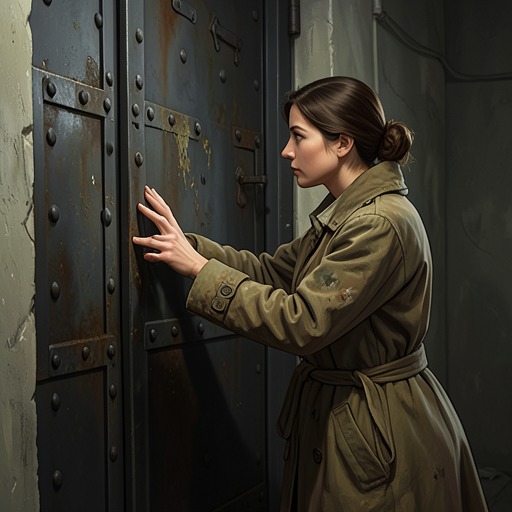
One night, Amaia returns to the workshop to retrieve money her father had given her for her birthday. She had hidden it so that Rosario would not find it, but Rosario, Amaia remembers, seemed to sense her presence even when they were not in the same room. Amaia enters using a key her father had once put on a cord so she could wear it around her neck. Finding the lock by touch, as she had often done as a child, she crosses a familiar threshold into a place whose memories are anything but reassuring.
The kneading trough brings back the night Rosario waited for her in the workshop, struck her, and buried her in the flour-filled trough, believing her dead. Amaia recognizes that this was not the beginning of the harm: she recalls a childhood marked by distance from her mother, who did not dress or care for her, touch her, or take her by the hand. Her father and sisters performed those acts instead. The workshop thus concentrates a larger history of fear and separation in one brutally concrete image: a child hidden under flour in the very place where the family made its living.
Returning to the room, Amaia notices the arrangement of the ingredients and the familiar smells, but sensory recognition does not make the past benign. The syrup recalls good days, while the flour and trough summon the nightmare she tries to suppress. When she switches on all the lights, the shadows retreat to the corners; the scene gives the room a temporary, visible order without undoing what happened there. The workshop’s working surfaces remain part of the present, even as its most ordinary object carries the weight of a near-fatal childhood assault.
Family Business and Home
The bakery is also part of the family’s changing practical life. After Víctor’s death and the upheaval that follows Amaia’s return to Elizondo, Flora moves hurriedly to Zarautz, ostensibly to film her television baking programs, and hands control of Mantecadas Salazar to Rosaura. Rosaura proves to be an unexpectedly capable manager, although she is initially overwhelmed. Amaia offers help, and for a time she spends most weekends in Elizondo, but she comes to see that Rosaura no longer needs her support to run the business.
Amaia nevertheless continues to return: to eat with her sisters and sleep at Engrasi’s house. The bakery belongs to that wider pattern of renewed connection. Her visits cease to be simply an extension of work or a duty to Rosaura; alongside her pregnancy and the fear she has finally dared to share with James, they help restore a sense of home, roots, and belonging that she had thought lost. Mantecadas Salazar is not itself her home, but its place in the family’s livelihood helps make return to the valley part of her life again.
A Continuing Place of Work
The workshop remains an active business rather than a space preserved only for Amaia’s memories. On a rainy morning, she drives to its back entrance and finds Rosaura already at work. The early start belongs to the bakery and pastry trade; several employees are in the brightly lit interior when Amaia comes in. Rosaura greets her as an early riser and jokes about whether she is a police officer or a pastry chef. Amaia answers that she is a police officer who wants coffee and a pastry.
That brief exchange places Amaia back inside the family’s everyday world without erasing the workshop’s darker history. The same room that carries the memory of Rosario’s violence is again filled with workers preparing for the day, and Amaia arrives not to flee or investigate but to share a small ordinary moment with Rosaura. Mantecadas Salazar’s significance lies in that coexistence: the building is a workplace, a family institution, a repository of childhood terror, and one of the places through which Amaia gradually recognizes a homecoming.