Subinspector Zabalza
Legado en los huesosSubinspector Zabalza is a police investigator involved in the inquiry into the desecrations at the church in Arizkun. Though the novel gives him a limited role, his interventions bring two strands of the investigation together: the examination of human remains and the difficulty of investigating a history that residents have long been reluctant to discuss.
Role in the Investigation
At the church, Zabalza is among the officers examining the scene. Amaia Salazar listens to his observations alongside the explanations of Doctor San Martín, while Iriarte speaks privately with Jonan Etxaide nearby. The scene places Zabalza within the working investigation, but does not specify the content of his observations.
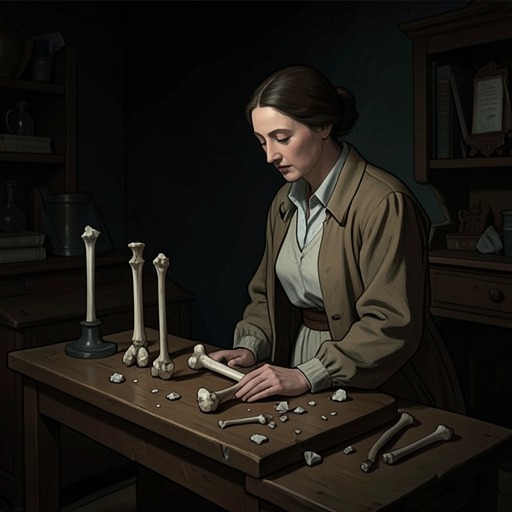
He also attends a strategy meeting convened to address the repeated desecrations. The preliminary analysis establishes that the bones are human and belong to a child under one year old; the inquiry must therefore consider both the use of human remains and the violation of a place of worship. Zabalza is present with Iriarte and the other officers as they consider how to proceed.
The Agotes and Local Silence
Zabalza’s most substantial contribution comes when the officers discuss how residents might respond to questions about the Agotes. He describes accounts of a writer who went to Arizkun hoping to write about them but gave up after people answered as if they had not understood, denied knowing anything about the subject, or treated it as legend. He adds that Camilo José Cela reportedly encountered much the same response when he took an interest in the topic.
The anecdote makes silence itself part of the investigative setting: local reluctance is not simply an obstacle to questioning witnesses, but a recurring way the community has kept a difficult history at a distance. Amaia answers that younger people may feel more pride in their roots and less burdened by what their elders carry, while also stressing the need to handle the subject carefully. Zabalza’s intervention thus helps frame the Agotes’ history as sensitive material that the investigation must approach without alienating the community.
Working Relationships and Narrative Function
Zabalza appears alongside Iriarte in the investigation, sitting beside him at the meeting and contributing to the discussion when local knowledge becomes relevant. He also engages with Amaia’s perspective: she responds to his account by distinguishing the attitudes of younger residents from those of their elders and by warning against wounding local sensitivities.
His role is modest but useful. Rather than supplying a solution to the desecrations, he identifies a social condition that shapes the inquiry: in Arizkun, asking about the past may meet denial or silence before it yields information. That observation links the police work to the community’s historical memory and clarifies why investigative tact matters.