Teniente Padua
Legado en los huesosTeniente Padua is the lieutenant investigating the circumstances around Jasón Medina’s suicide, whose apparently straightforward conclusion is unsettled by evidence that another person may have supplied the cutter. Unable to persuade his superiors to reopen the case, he turns to Amaia Salazar, both because she is connected to the matter and because a letter found among Medina’s belongings is addressed to her.
Identity and Introduction
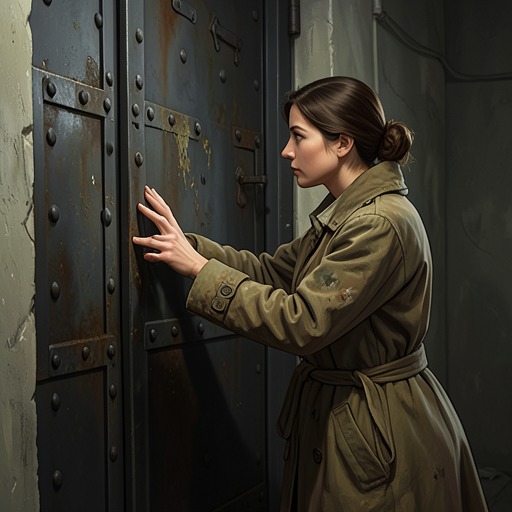
Padua is introduced at a crowded courthouse, where rain-soaked coats and the press of people fill the corridors outside the courtrooms. He has been speaking with a woman accompanying him and has urged her to go into the courtroom before making his way through the crowd to Amaia. His first concern is her condition: seeing her in the late stages of pregnancy, he asks how she is and admits he was unsure she would be able to attend. Amaia puts a hand on her visibly enlarged belly and says the pregnancy is holding for now. Their exchange establishes an attentive, familiar professional manner, while the courthouse setting ties Padua’s work to a case already drawing Amaia into its orbit.
The Question Raised by Medina’s Suicide
Several months later, Padua meets Amaia at the Iruña bar on Plaza del Castillo, near her home. He is easy to identify by the water stains on his coat, carrying the rain of Baztán into the meeting. Amaia orders decaffeinated coffee and a small bottle of water and asks what he wants to discuss. Padua goes directly to the case of Johana Márquez, or, as he reframes it, the case of Jasón Medina: they agree that Medina alone murdered the girl.
The case seemed to have reached its end when Medina killed himself in the courthouse bathrooms on the day his trial was due to begin. Padua describes the ensuing inquiry as routine until Luis Rodríguez, the prison officer who had escorted Medina from prison and was present at the courthouse, came to see him. Rodríguez was deeply shaken and wanted the investigation to state clearly that a third person must have brought the cutter into the courthouse, leaving him free of responsibility. The distinction matters: if the weapon had been brought in by someone else, Medina’s suicide was not simply an act made possible by a lapse in the officer’s custody.
A Pattern the Authorities Will Not Pursue
Rodríguez’s alarm was sharpened by his history. This was the second time a prisoner under his custody had died by suicide. Three years earlier, a prisoner had hanged himself in his cell overnight; the prison administration had accepted that staff should have activated suicide-prevention procedures by placing a cellmate with him. With a second death now associated with his watch, Rodríguez feared a sanction or suspension. Padua reassured him, then asked about the earlier prisoner. That conversation supplied the lead from which Padua began looking, on his own, for a possible connection between the cases.
His inquiries uncover a contrast between what the evidence suggests and what the institutions are willing to do with it. The earlier Logroño case belongs to the Policía Nacional and is officially closed; the Johana Márquez case is also closed now that her confessed murderer is dead. Padua has taken his findings to his superiors, but they consider the indications insufficient to open an investigation. He is therefore not presenting Amaia with an authorized case so much as with a troubling possibility he cannot formally pursue.
The Letter and Amaia’s Involvement
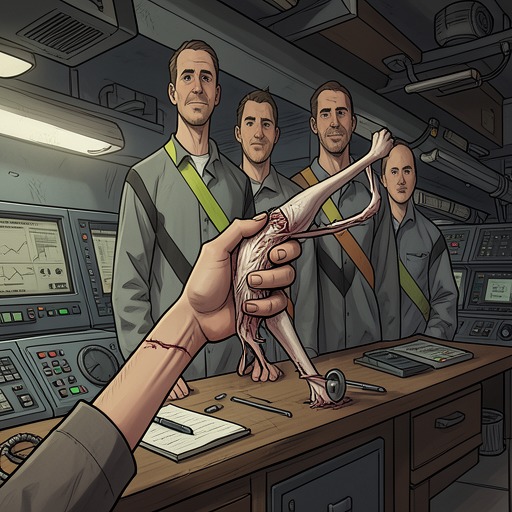
The physical evidence makes that possibility personal. At the courthouse, Padua points out that a piece of duct tape is stuck to the handle of the cutter. Someone took considerable trouble to leave the weapon there, probably behind the cistern, where Medina needed only to retrieve it. Padua also produces a white envelope taken from Medina’s jacket. Amaia suggests it is a suicide letter, but Padua corrects her: it is not exactly that, and it is addressed to her. He gives her gloves and the paper. As she examines the smooth plastic and the neat, straight lettering of her name, the note becomes a link between Medina’s death and the investigator Padua has chosen to consult.
Padua’s position is defined by that unresolved link. He wants to be sure the two deaths are unrelated, yet says his hands are tied; Amaia, unlike the officially disengaged authorities, is connected to the matter, and the letter belongs to her. His role is not to deliver a solved conspiracy but to make a closed case newly uncertain: a hidden cutter, a prisoner officer haunted by repeated deaths, and a message bearing Amaia’s name converge in the evidence he places before her.