University Clinic of Navarra
Legado en los huesosThe University Clinic of Navarra is a psychiatric institution whose prison outreach places it at the center of Amaia Salazar’s inquiry into a possible link between seemingly separate killers. Its role is consequential not simply because offenders received treatment there, but because the clinic’s procedures for assigning prison psychiatrists may have offered a route for identifying and targeting particular cases.
Institutional Role and Prison Outreach
The clinic provided psychiatric services to prisoners, described as an altruistic undertaking, and its university clinic was responsible for sending a therapist to work with inmates in Pamplona. Amaia asked whether the Logroño prisoner who died by suicide had received therapy, and whether Jasón Medina and Ramón Quiralte had been treated while imprisoned. The answers established that both Pamplona prisoners had attended therapy under the clinic’s supervision; the Logroño record also indicated contact with a psychiatrist, although it named no individual and bore an illegible signature. The different records left a practical question unresolved: who had actually seen the prisoners, and under whose authority?
Records, Authority, and Suspicion
The prison records turned the clinic’s outreach into a question of accountability. Reports associated with the prisoners’ psychiatric care carried the signature of Doctor Sarasola, the clinic’s head of psychiatry, but left the assigned psychiatrist’s name blank. Amaia regarded these as phantom reports: their senior signatory had lent them institutional legitimacy, while the missing names obscured who had conducted the sessions. The omission had passed without challenge in the prison system precisely because the signature belonged to a department chief, a procedural irregularity that ordinary deference had helped conceal.
Amaia’s concern was not limited to incomplete paperwork. As head of psychiatry, Sarasola was responsible for assigning clinicians to prison services; if a therapist had encouraged violent inmates toward further violence or suicide, the clinic’s benevolent description of the work would not settle the question of responsibility. The judge cautioned that the evidence would be difficult to prove and that the reports alone did not justify questioning a prominent figure. Amaia countered that the pattern warranted scrutiny: the men had received therapy, at least two had been treated through the clinic, and she believed links to the others could also be established.
Other details sharpened her suspicion without yet proving it. Doctor Franz had objected to the procedure by which Rosario was transferred to the clinic, and had told several people that morning that he intended to resolve matters with Sarasola. Amaia also recalled that Sarasola himself had asked her to take charge of the Arizkun church desecrations, then appeared when Rosario needed to be moved. To her, those interventions made his connection to the investigation look less accidental; to the judge, they still fell short of grounds for action.
The Clinic as a Network of Selection
When Amaia Salazar and Iriarte confronted Doctor Sarasola at the University Clinic of Navarra, he appeared unsurprised by their arrival and spoke first of the violence in the clinic’s parking lot. The investigation soon turned to whether Doctor Franz had met him there: Sarasola denied knowing of any such meeting, but Amaia considered the answer too elaborate. Security footage then showed Doctor Franz taking Rosario downstairs and leaving with her through a rear exit. Sarasola was visibly stunned by the discovery, which established that the clinic’s own premises and staff had been involved in Rosario’s departure, even if it did not by itself establish what Sarasola knew beforehand.
Amaia’s broader accusation was that the clinic’s prison work functioned as more than an act of charity. She argued that the head of psychiatry’s policy directed staff to seek unusually “special” cases, inmates whose violence carried what she called an extra dimension of evil, and that this search could have enabled the clinic to identify and cultivate violent offenders. She linked the accusation to the staff’s connection with Rosario and to Doctor Berasategui’s continuing search for similarly selected patients, suggesting that he had been given broad latitude to pursue it. Sarasola remained outwardly impassive, but Amaia judged that her suggestion that his subordinates were operating beyond his control had struck a nerve. The scene leaves the clinic’s institutional responsibility under suspicion: its outreach, assignment system, and case selection may have connected prison inmates to a wider design, but the evidence presented remains an investigative charge rather than a confirmed finding.
The Clinic and the Shared Criminal Signature
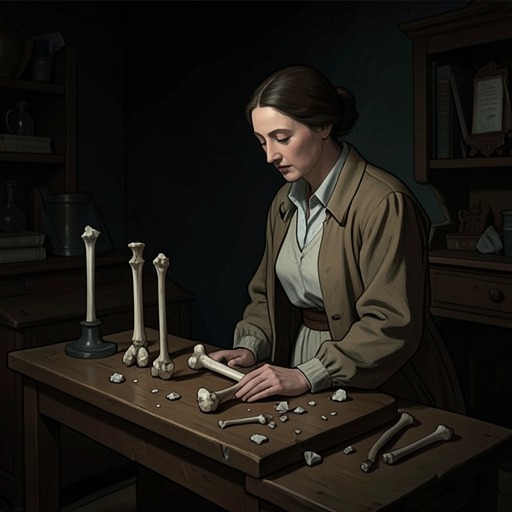
The clinic’s possible importance emerges against a pattern that joined distinct murders through details unlikely to have circulated publicly. In the cases of Lucía Aguirre and Johana Márquez, the victims’ forearms had been cut off at the elbow after death, and the missing limb was absent from each scene. Both killers confessed to the murders but disclaimed responsibility for the amputations. The repeated inscription “TARTTALO,” including its unusual spelling with two t’s, further suggested to Amaia Salazar that a single person might be leaving a signature across crimes committed by different men.
Jasón Medina complicates that theory in a revealing way. Unlike the other offenders, he did not fit the pattern of a violent, frustrated abuser: he had no known history of violence, and Johana was the only victim living in the valley when she was killed. Medina confessed to abusing and strangling her, then sexually assaulting her after death, but was bewildered when asked about the missing arm. He said he had left to fetch a rope, intending to imitate a crime he had read about; when he returned, the arm was gone. Amaia’s question was therefore not only whether the offenders shared a psychiatric service, but whether someone who could identify and follow them had intervened at the moment of murder. The clinic’s connection to prison therapy made it relevant to that inquiry, but the evidence presented establishes a line of investigation, not proof that the institution or its staff arranged the amputations or directed the killers.