
Claire’s Fierce Maternal Loyalty
Les Choses humainesThis thread traces Claire Farel’s maternal attachment as it moves from guilt and protectiveness through denial and moral conflict to a final, costly decision to remain beside her son.
increasing Bearing strength in each event
 decreasing
Bearing strength in each eventdecreasingA Mother Afraid of Failing

Love Without Ease
An early burden
Claire Farel is young when she becomes a mother. After Alexandre’s birth, she is overwhelmed by the knowledge that she is responsible for another life, and the demands of motherhood repeatedly unsettle her commitment to freedom and independence.
Protection as a lasting instinct
She loves her son intensely and wants to protect him, but she does not experience maternal devotion as effortless or uncomplicated. Her own childhood includes the sudden departure of her mother, and that history makes her wary of repeating a form of abandonment even as she struggles with the constant availability expected of a parent.
Claire’s later choices are shaped by this tension. Her care for Alexandre is sincere, but it is also bound up with guilt about whether she has been present enough, and fear that any failure of protection could expose him to lasting harm.
A Son’s Crisis
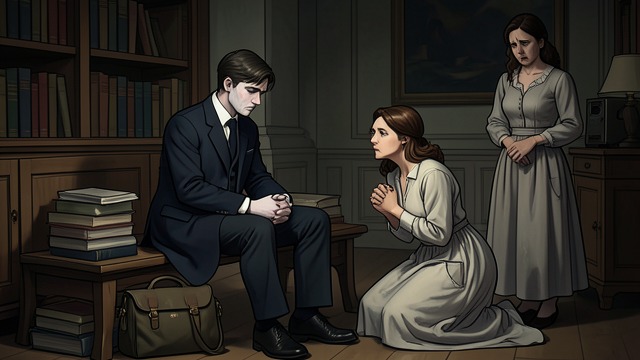
Protection After a Near-Collapse
The family confronts fragility
Alexandre’s suicide attempt at the beginning of his time at École polytechnique breaks the appearance of a life proceeding smoothly toward achievement. Claire and Jean Farel respond with intense concern, aware that their son’s academic success has not protected him from psychological distress.
Anxiety becomes a family habit
Claire fears that Alexandre may hurt himself again. His vulnerability makes ordinary setbacks feel potentially catastrophic, and her instinct is to guard him from pressure and humiliation. Over time, the crisis becomes a frame through which she interprets later danger: she sees the fragile young man beneath the ambitious student.
That protective perspective will make the coming accusation difficult to hear without defensiveness. Claire knows that her son can suffer, but the intensity of her fear for him also narrows her ability to imagine what he may have done to someone else.
Denial at the First Accusation

A Mother Rejects the Possibility
A shocking report
When Claire learns that Mila Wizman has accused Alexandre of rape, she struggles to accept the account. She argues that her son was happy in the United States and had no reason to use violence, treating his apparent stability and intelligence as evidence against the accusation.
Adam’s challenge
Adam tells Claire that Mila is in severe distress and insists that his daughter’s report must be taken seriously. Claire asks whether Valérie Berdah may be using the complaint to harm her, a question Adam hears as an accusation that Mila is lying. The exchange ends their shared life together.
Claire’s first response is driven by love and fear, but it also exposes a painful asymmetry: she is more immediately focused on what the accusation may do to Alexandre’s future than on what Mila may have experienced. Her loyalty protects her son from judgment before she has understood the facts.
The Hearing Changes Her Certainty

Love Meets the Testimony
Listening to Mila
Claire attends the trial while continuing to stand by Alexandre. As she hears Mila’s account and the evidence about the young woman’s distress, the certainty that protected her from doubt begins to weaken. She recognizes that the testimony sounds credible even as she remains unable to relinquish her maternal attachment.
Seeing her own compromises
Claire reflects on her public commitment to women’s equality and the ways she has previously tolerated sexist behavior or avoided difficult confrontations. She wonders whether her own parenting has helped raise a son who believes that desire can override another person’s hesitation. The question is not merely whether Alexandre is guilty, but whether she has participated in the conditions that made his behavior possible.
The trial turns maternal love into a moral conflict. Claire cannot undo what happened by condemning or defending her son, but she can no longer claim that supporting him requires denying the possibility of harm.
Loyalty After Conviction

Staying Without Resolution
A costly outcome
Alexandre is convicted of rape and sentenced to five years in prison with a suspended term. Claire has supported him through the trial, despite growing doubt and the public scrutiny surrounding the case. At the verdict, she signals to her son and rushes to speak with him as he waits to be released from custody.
An attachment that remains unfinished
Outside the courthouse, Claire sees Adam and shares with him the grief of the lives their choices have altered. She does not seek to restart their relationship; her immediate focus remains Alexandre and the consequences he must now face. Her love has not vanished, but it no longer offers a return to the family arrangement she once imagined.
Claire leaves the courthouse weeping, conscious that her life has been reshaped by choices she could not control. Her maternal bond remains an anchor, though not a vindication: staying beside her son does not erase the harm at the heart of the case or settle her private doubts.
After Alexandre’s birth
After Alexandre’s suicide attempt
The day Alexandre is arrested
During the trial’s opening days
After the guilty verdict
