Assistance in suicide data of DIGNITÉ association
Les Choses humainesThe DIGNITÉ assisted-suicide brochure is both an informational document and a recurring object in Jean Farel’s relationship with Françoise Merle. It explains the association’s process for helping a member die, while placing that process beside the practical, tender work of caring for Françoise as Alzheimer’s disease advances. Jean first takes the brochure after she asks him to help her die; later, he reads it again beside her sleeping form, confronting the promises and rituals its language attaches to death.
The Request and the Brochure
Françoise tells Jean that preparations for going to Switzerland must begin years in advance, asks him to look after Claude, and insists that if he loves her he must help her die. She directs him to documents in her drawer. Jean initially refuses, then opens it, takes the brochure from an organization offering assisted suicide in Switzerland, and slips it into his pocket. His hesitation remains explicit: he does not know whether he is ready for what she is asking. The brochure thus enters their relationship not as an abstract statement of policy but as something Françoise has placed in Jean’s hands, making her wish materially difficult to ignore.
What the Association Promises
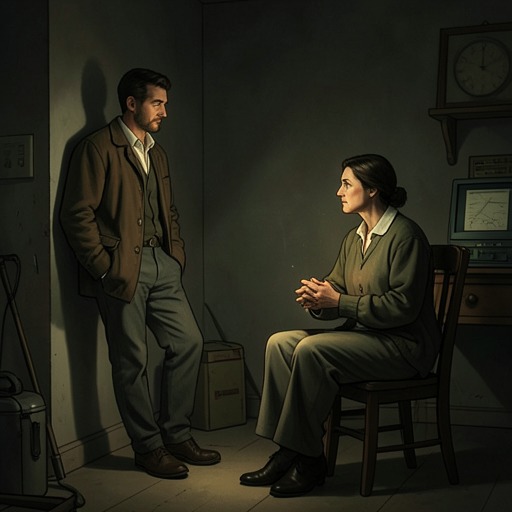
When Jean later finds the brochure in the living-room commode, beside the documents Françoise signed after her illness abruptly worsened, the object has acquired a second setting and a different weight. He has just helped her eat dinner: she bites into a tomato, its juice running over her lips and chin and staining her pink blouse, and he gently wipes her mouth with a napkin. After helping her back into her chair, he lies on the sofa a metre away while Claude curls at their feet. The brochure sits amid this ordinary care, where Françoise’s needs are immediate and bodily and the document describes a planned end to them.
Procedure and Its Language
The brochure presents DIGNITÉ’s assisted-suicide process as a safeguard against being left unconscious in hospital or kept alive for a prolonged period by machines. A person with an incurable illness or an intolerable disability who wishes to end their life may ask the association for help; DIGNITÉ obtains a soluble barbiturate said to act quickly and without pain. After taking it, the patient falls asleep within minutes and, the brochure promises, passes peacefully from sleep to death. These assurances are not merely medical claims: they frame the choice as an escape from a dehumanizing medicine and give it the language of dignity and control.
Jean reads the claims repeatedly, lingering over the promise of a peaceful death without suffering. The brochure also requires at least two people to witness the process and urges members to involve loved ones early, treating departure as a journey requiring careful preparation and formal farewells. Its euphemism of a “great journey” jars against Jean’s own memories: the only journey he and Françoise had taken together was five days in Cambodia in the winter of 2000, and he rejects the brochure’s phrase as ridiculous. For him, its planned itinerary cannot soften the finality of death.
The Brochure’s Place in Their Shared Life
The document also exposes a divide between Françoise’s understanding of what must be arranged and Jean’s readiness to participate. She presents the decision as something that requires advance planning and asks him to assume responsibility for Claude; Jean’s refusal and uncertainty do not resolve the request, but the brochure makes it concrete. By the time he reads it again, Françoise’s Alzheimer’s has worsened, she has withdrawn from public life, and Jean remains among the few people who visit and care for her. Her signed papers and the association’s instructions preserve a plan whose language of preparation sits uneasily beside the daily dependence he witnesses.
The brochure’s effect is sharpened by its small, intimate surroundings. Jean has just helped Françoise eat and settle into her chair; he lies on the sofa nearby as she falls asleep before the television, with Claude curled at their feet. He puts on Dvořák’s Eighth Symphony, murmurs a farewell, and leaves a note for her care worker asking to be told when she returns. The brochure cannot settle what Jean will do, and the passage does not show him carrying out its procedure. Instead, it remains an object between Françoise’s expressed wish and Jean’s unresolved response, its promise of a carefully arranged death set against the continuing acts of care that bind them.