Hishaku Hospital
Les Choses humainesBichat Hospital is a Paris medical institution whose brief but consequential appearances place illness and vulnerability against the privileges and pressures of public life. Its psychiatric ward receives Françoise Merle after a suicide attempt; Jean Farel reaches her there late at night, bringing flowers from a presidential ceremony and an apology that cannot undo the crisis. The hospital also belongs to a wider medical landscape in which Claire Farel’s cancer surveillance and Françoise’s later diagnosis make examination, care, and bodily dependence central to the novel’s account of private life.
Setting and First Appearance
The hospital enters the story as the destination Jean must reach after receiving news that Françoise has attempted suicide. The message identifies her location as Bichat and specifies that she is in psychiatry. Jean is attending a ceremony at the Élysée Palace, where he is being honored, when the news arrives; the hospital therefore stands in immediate contrast to the public celebration of his achievement. He cannot leave during the formal proceedings, and the knowledge that Françoise is hospitalized follows him through the ceremony and its obligations.
Afterward, Jean takes a taxi to Bichat. His passage into the psychiatric ward is not presented as ordinary access: visiting hours have long ended, but a smile and an autograph secure his entry. The episode makes celebrity function as a practical form of privilege, a pass that lets him cross a boundary unavailable to an ordinary visitor. He carries the bouquet presented at the ceremony, so the symbols of public recognition accompany him into a place of acute private distress.
Françoise’s Hospitalization
Jean remembers the news as a painful return to the earlier crisis when he learned that his son, Alexandre Farel, had attempted suicide. The repetition links Françoise’s hospitalization to a family history of suicidal crisis, while making Jean once again the person who receives alarming news and rushes toward the injured person. The nurse permits only a brief visit because Françoise is very weak, imposing a limit on the care Jean can offer even after his celebrity has gained him admission.
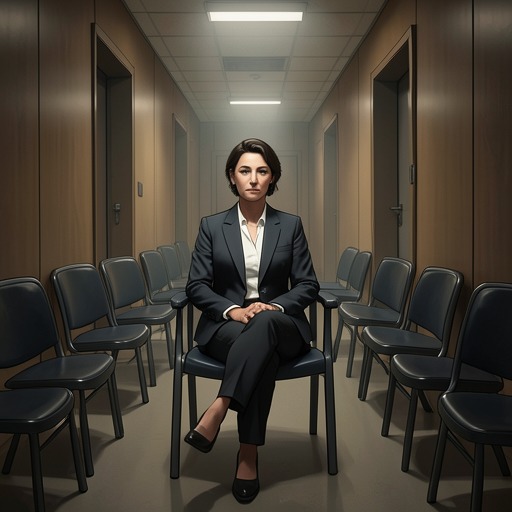
The hospital corridor intensifies the contrast between Jean’s public standing and the distress within the ward. He hears cries through the walls as he searches for Françoise’s room. The room he finds is small, dark, and overheated; he dislikes the prospect of her being treated in a public institution and wishes he could place her in a private clinic. That reaction exposes both his concern for her and his class-inflected instinct to seek a more protected setting.
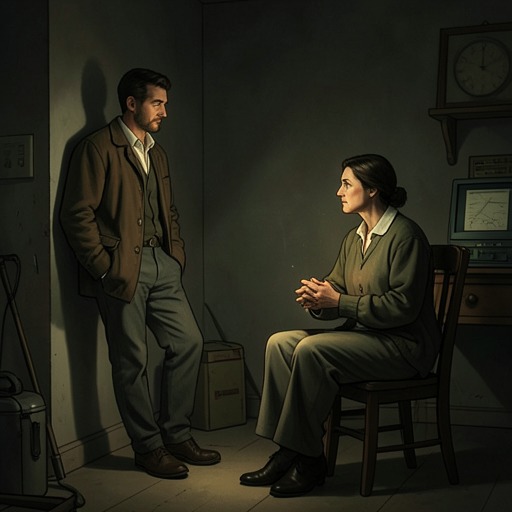
Françoise lies beneath a white sheet, her unmade hair, bare face, and dry skin making her appear far older than she is. Jean kisses her forehead and asks how she is. Her wry reply that she is doing well, since she has failed in her attempt, refuses the consoling language of recovery. When he asks what happened, his tone is deliberately cheerful, but the anger between them has disappeared into the immediate fact of her condition.
Jean takes her hand and apologizes for having been brutal and foolish, saying he loves her and is sometimes too reactive. Françoise turns her face away rather than answering. Her silence is not simply a pause in their conversation: she has built her life around independence and knows she must leave him for the sake of her mental and physical survival. The hospital brings them together at a moment of bodily crisis, but it does not resolve the deeper conflict that has brought her to the brink.
Jean’s Return and the Hospital as a Threshold
Jean later asks his brother, Léo Farel, to drive him to Bichat. In the car, Charles Aznavour’s song Il faut savoir plays on the radio; Jean opens the window to the cold wind and asks Léo to hurry. At the entrance, Léo offers to return in an hour because he does not want to leave Jean alone. Jean declines, insisting that he can manage. The exchange makes the hospital a threshold Jean approaches under family escort but crosses alone.
That arrival follows Jean’s effort to appear composed in public. At the ceremony he has hidden his distress and continued through the honors and reception, even as he fears for Françoise and regrets how he treated her. The bouquet and the journey to Bichat carry the public occasion into the hospital, but there the language of status gives way to the limited realities of access, weakness, and a short visit. Jean can get through the door; he cannot command Françoise’s response or reverse what has happened.
Medical Vulnerability Across the Novel
Bichat’s role resonates with other scenes of illness in the novel, although those experiences are not all located at the hospital. Claire undergoes recurring examinations after breast cancer: blood tests, radiological images, ultrasounds, and mammograms. She was thirty-eight when the disease appeared, underwent two operations, and received radiotherapy and chemotherapy. The years of follow-up do not end her fear; the prospect of recurrence can trigger panic, and she takes medication to get through the examinations.
The mammogram renders that vulnerability through the physical procedure itself. Claire arrives late, apologizes to the receptionist, and feels stripped of her usual confidence: in the clinic she is a frightened patient dependent on other people. A technician compresses her breast against the machine, and the pain seems to Claire to bear down on her whole being. She holds her breath when instructed, counts to ten, then must be repositioned with her arm raised while a cramp seizes her muscle. The examination lasts only minutes, but its brief duration does not lessen the force of her fear or the exposure she feels under medical authority and chance.
Françoise’s later illness extends the novel’s attention from acute crisis to progressive cognitive decline. She tells Jean that she is ill and explains that memory problems led her to seek examinations. An MRI and lumbar puncture, together with the test results, confirm the diagnosis; she understands this as a threat to her memories and mental and physical independence. Her wish to organize an assisted death in Switzerland follows from that fear of decline. The medical encounter supplies a diagnosis, but it cannot settle the ethical question of how she should live with it or Jean’s difficulty in accepting her decision.
In a later scene of care at home, Jean helps Françoise rise and sit at the table while their dog, Claude, waits for food. After she eats a tomato, he gently wipes the juice from her lips, then helps her back to her chair. The intimate routine gives bodily care a different register from the clinical examination or psychiatric ward: assistance becomes part of daily life, even as Françoise’s illness has advanced. Jean keeps the assisted-suicide brochure and the documents she signed, evidence that her request remains part of their shared life rather than a crisis erased by time.
Narrative Significance
Bichat Hospital concentrates several tensions the novel develops through illness: celebrity can open doors but cannot restore another person’s will; medical procedures can offer information while leaving fear and uncertainty intact; and care may bring people physically close without reconciling them. Jean’s access to the psychiatric ward is unusually easy, but the visit is still bounded by the nurse’s warning and Françoise’s refusal to answer him. The hospital is therefore neither a place of simple rescue nor a backdrop to a completed reconciliation. It marks the point where public image meets private consequence, and where the limits of power become visible in the presence of another person’s suffering.