Valérie Berdah
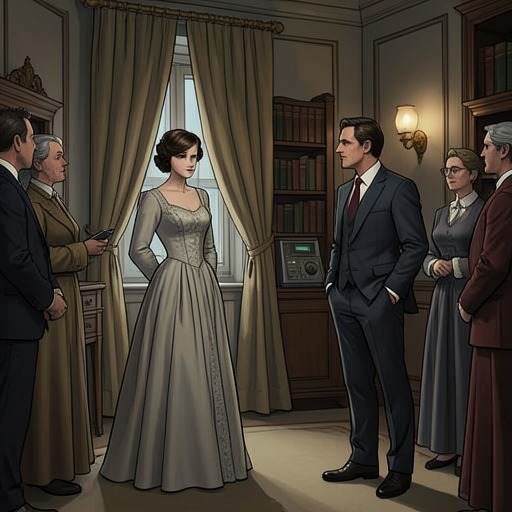
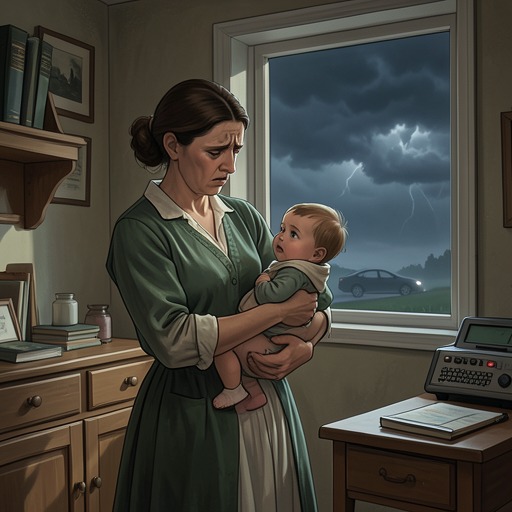
Les Choses humainesValérie Berdah, later known as Sarah, is Adam Wizman’s wife and the mother of Mila and Noa. Her life is marked by successive attempts to secure safety and belonging: first through flight from France after an antisemitic attack, then through increasingly strict religious observance, and finally through a new life in Brooklyn. When Adam leaves her for Claire Farel, the separation divides the family across countries and exposes the cost of choices made in the name of protection, faith, and desire.
Marriage and family
Valérie is introduced as a young dental prosthetist whom Adam meets in Toulouse after completing a master’s degree in modern literature at the Sorbonne and taking a teaching post. Six months after they meet, they marry. She is described as a smiling, affectionate, understanding partner, and the couple have two daughters, Mila and Noa. At Valérie’s request, the girls attend a Jewish school, a decision that becomes inseparable from the family’s later fear and upheaval.
On 19 March 2012, an Islamist extremist attacks the school, killing three children and a father. Adam and Valérie withdraw their daughters from school immediately. Like many relatives and friends shaken by the attack, they decide to leave France, convinced that European Jews can no longer treat lethal antisemitism as something to be ignored. The move is an effort to protect the family, but it also begins a period of dislocation that will affect each member differently.
Flight and religious change
The family moves in haste to Ra’anana, Israel, where they rent an apartment for six months. Adam feels a deep attachment to the country but cannot settle there: he experiences everyday life as aggressive, feels uncomfortable in the constant familiarity of a Jewish-majority environment, and is troubled by the indifference he perceives toward the Israeli-Palestinian conflict among people who emigrated for the same reasons he did. He and his family return to France disappointed by the failed attempt to begin again.
After their return, Adam teaches French at a Jewish school, and the family lives largely within a close communal world. It is in this period that Valérie becomes much more observant and adopts the name Sarah. She exchanges trousers for long skirts and low-cut shirts for loose, long-sleeved sweaters, begins covering her hair with a scarf, and seeks stricter observance of dietary rules, Shabbat, and the laws of family purity. These rules separate her from Adam physically during menstruation and for the prescribed period afterward; she sleeps on a mattress on the floor, a practice Adam cannot bear to see. Her religious turn changes the texture of their home and contributes to Adam’s growing sense that he is living with a stranger.
For nearly twenty years, Adam remains faithful to Valérie. He supports her as she raises their daughters, and at her request he celebrates her each Friday evening with the traditional song “The Virtuous Woman.” But by forty-two he feels that their marriage has become a life without desire or a future. His relationship with Claire begins while both adults still appear to others to be models of stable family life. The affair is not initially a plan to abandon their families, and Adam’s attachment to the responsibilities and identity of a Jewish home delays his decision to leave.
Separation and its aftermath
Adam is especially reluctant to make a new household with Claire because his daughters have grown up within the religious framework Valérie has embraced. He worries about the effect of a new partner—modern, secular, and atheist—on Mila, who remains psychologically vulnerable after the school attack. Mila is repeating her final year, sees a psychiatrist, has nightmares of gunfire, and wakes in tears. Adam’s fear for her helps sustain his indecision, while Claire’s desire for openness makes the unresolved arrangement increasingly painful. The couple repeatedly separate and reunite before Adam finally tells Claire he has chosen to divorce.
Valérie’s response is not the confrontation Adam anticipates. He imagines tears, anger, threats, or appeals from a rabbi, relatives, and friends, but she refuses to speak to him or look at him. As he moves around the apartment, she treats him as if he has become invisible and no longer exists. The next day, she informs the head of Adam’s school that he has left her for a non-Jewish woman with whom he has long been having an adulterous affair. Adam is dismissed. He packs a suitcase, joins Claire in a Paris hotel room, and, a few days later, they move into a furnished apartment in the thirteenth arrondissement.
The separation soon becomes a transatlantic family rupture. A few weeks later, Valérie tells Adam that she is moving with the girls to Brooklyn, to Crown Heights, an ultra-religious Jewish neighborhood. Adam does not oppose the move; he would rather have the girls far away than have the old family arrangement intrude on his life with Claire. Claire, who no longer has her own son living with her, also does not imagine sharing a week-on, week-off household with Adam’s daughters. Their passionate retreat into one another thus coincides with a retreat from their families and responsibilities.
Mila’s return and Valérie’s lasting role
The new life in Brooklyn becomes intolerable for Mila. She objects to restrictions on how she dresses, walks, and thinks, including pressure to wear increasingly long skirts and black stockings in every season. She describes a neighborhood where even toy shops sort their wares into cooking sets for girls and prayer sets for boys. When Valérie says that, at eighteen, Mila is old enough to marry and that she may ask the community rabbi to introduce her to a prospective husband, Mila decides to return to France. She is legally an adult, is preparing to retake her baccalaureate exams as an independent candidate, and Adam tells her she can live with him.
Valérie’s move to Brooklyn is followed by a new family there: she makes a life with a man from the Orthodox Jewish community, has a son with him, and lives with Noa. Mila has almost no contact with her mother. At trial, a psychologist reports that Mila feels guilty because Valérie repeatedly tells her that if she had stayed in the United States, nothing would have happened to her. Valérie had been in Paris to see Mila when the assault occurred. The account does not reduce their estrangement to a single cause: it is bound up with the parents’ bitter separation, Mila’s decision to return to France, the religious pressures she resists, and the devastating events that follow.
Valérie’s story is therefore present chiefly through the consequences of her choices and the way others describe them. The attack that prompts the family’s flight does not lead to lasting security; the return to France does not restore the marriage; and the stricter religious life that offers structure to Valérie becomes, for Mila, a source of pressure and flight. Her absence from much of the later action does not lessen her importance: the family’s geography, loyalties, and wounds are all reorganized around the choices she and Adam make, and around the distance that remains between mother and daughter.