
Little Gavroche’s Brief Freedom
Les MisérablesThis thread follows Little Gavroche’s life as an abandoned child whose humor and courage persist into his fatal work at the barricade.
increasing Bearing strength in each event
 decreasing
Bearing strength in each eventdecreasingA Son in the Street
A Son in the Street
Rejected at home
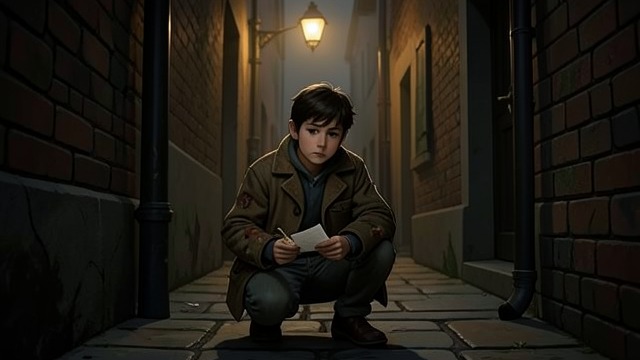
Little Gavroche’s parents neglect him even though they are alive. He learns to find shelter and food in the streets rather than expect affection at home.
His independence looks like cheerfulness, but it grows from abandonment. He has no secure adult care and little reason to trust the family that should protect him.
A city as refuge
The streets offer more freedom than the family lodging, and Little Gavroche makes a life through quickness, humor, and small thefts. He remains exposed to hunger and danger.
His lively manner does not cancel the injustice of his circumstances. It shows how a child adapts when ordinary childhood is unavailable.
An Unwanted Homecoming
An Unwanted Homecoming
Brief returns
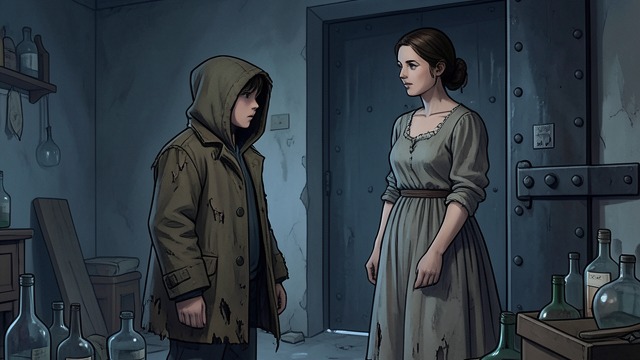
Little Gavroche sometimes visits his family at Gorbeau House, but the room offers neither warmth nor welcome. His mother asks what he is doing there, and he answers that he comes from the street and will return to it.
He does not understand what a loving parent should be. The family’s indifference has become normal to him.
A child’s resilience
Little Gavroche does not openly blame his parents. He survives by making jokes and refusing to let rejection erase his liveliness.
That resilience is admirable but precarious. His life depends on remaining nimble enough to escape the dangers adults leave around him.
The Spy at the Barricade
The Spy at the Barricade
Recognition in the crowd
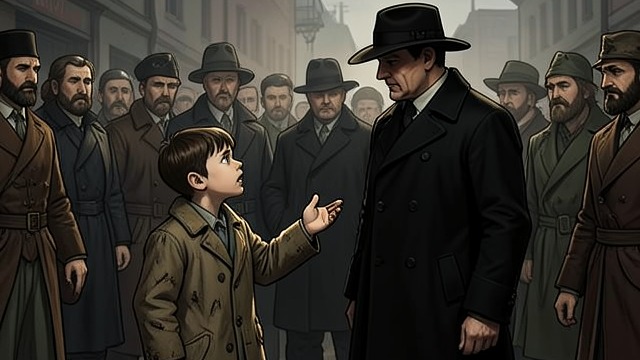
Little Gavroche notices Inspector Javert among the insurgents and recognizes him from an earlier encounter. He tells Enjolras that the supposed recruit is an agent.
The boy’s street knowledge helps expose a serious threat to the barricade. His small size and sharp attention make him useful where adult suspicion has failed.
Wit under threat
After Javert is captured, Little Gavroche jokes that the mouse has caught the cat. He then accepts Enjolras’s request to scout outside.
His humor prevents fear from controlling him. Yet the mission sends him into the open streets as government forces gather.
Ammunition Under Fire
Ammunition Under Fire
A dangerous errand
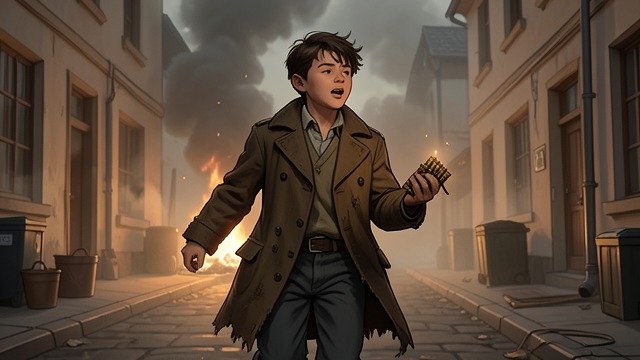
The barricade runs low on cartridges, and Little Gavroche leaves its protection to collect ammunition from dead soldiers. He treats the mission with the bravado of a game.
His movements are quick and unpredictable, allowing him to evade several shots. From the barricade, the insurgents watch without being able to call attention to him.
Courage without armor
Little Gavroche sings as the soldiers fire, mocking their misses and returning to his work. His defiance makes the scene at once comic and frightening.
Each near miss increases the danger rather than reducing it. The child’s smallness helps him move through smoke but cannot protect him indefinitely.
The Last Verse
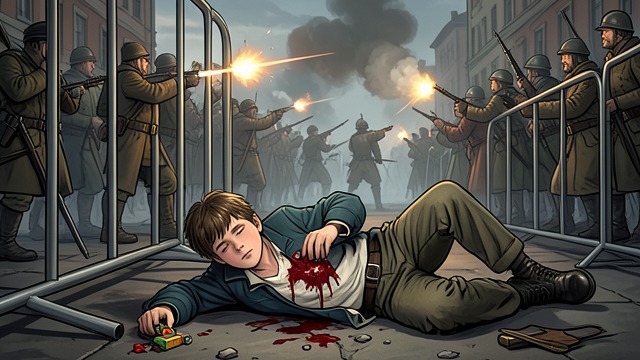
The Last Verse
A bullet lands
A shot strikes Little Gavroche, and he falls before the barricade. He rises briefly and continues the song that has accompanied his dangerous work.
The soldiers fire again, ending the child’s defiance. The final interrupted verse makes the suddenness of his death impossible to soften.
A child remembered
The narrator presents Little Gavroche as both tiny and immense: a street child whose courage outgrows his body. His death is not a distant military statistic but the loss of a vulnerable child.
His song carries humor into the final moment, while the second bullet reveals the violence behind that humor. The barricade loses a fighter; the story insists on the human cost.
Around 1829, in Paris
During his visits to Gorbeau House
June 5, 1832, at Corinthe Tavern
June 6, 1832, outside the barricade
June 6, 1832, near the barricade’s fall
