
The Price of Hidden Identity
Les MisérablesThis thread traces the ways Jean Valjean’s aliases protect him from arrest but gradually threaten his honesty and relationships.
increasing Bearing strength in each event
 decreasing
Bearing strength in each eventdecreasingThe Yellow Passport’s Mark
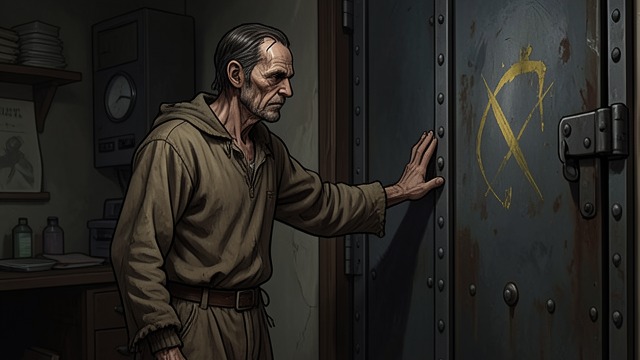
The Yellow Passport’s Mark
A public label
Jean Valjean leaves prison carrying a yellow passport that announces his past to officials and innkeepers. His legal freedom cannot protect him from social rejection.
Each refusal strengthens the identity imposed on him. People encounter the document before they encounter the person.
Survival through concealment
Valjean reaches Bishop Myriel’s home as a man expecting hostility. The bishop’s welcome offers a rare pause in the cycle, but the passport remains a threat if he is recognized.
The label begins the novel’s conflict between public identity and moral character. A person’s record can both describe the past and obstruct change.
Madeleine’s Public Life

Madeleine’s Public Life
A useful alias
Jean Valjean becomes Monsieur Madeleine, prospers through a manufacturing innovation, and serves as mayor. The assumed identity allows him to work, help others, and live beyond the reach of his convict label.
His public reputation is built on real generosity rather than empty performance. Yet the truth remains hidden from the people who trust him.
The risk of recognition
Inspector Javert suspects that Madeleine is the former convict. The rescue of Old Fauchelevent nearly confirms the connection.
The alias offers protection but cannot remove the past. Each act that makes Valjean visible as a good man also increases the chance that he will be identified.
A Name Revealed in Court

A Name Revealed in Court
An alias becomes a moral trap
Jean Valjean’s identity as Monsieur Madeleine could preserve the life he has built if he remains silent while Champmathieu is tried. The court’s mistaken identity turns concealment into complicity.
He recognizes that a respected alias cannot justify leaving an innocent man to punishment. His hidden name has become a danger to someone else.
Public disclosure
Valjean reveals that he is Jean Valjean and ends the false accusation. He loses his office and freedom, but prevents the law from condemning Champmathieu in his place.
The moment makes truth more important than the protection offered by a respectable name. It also sends him back into the life his alias had helped him escape.
Fauchelevent as Refuge

Fauchelevent as Refuge
A borrowed identity
With help from Old Fauchelevent, Jean Valjean hides with Cosette at the Petit-Picpus Convent. He uses a family connection and a religious setting to remain outside the police’s reach.
The name offers safety for both a fugitive and a child needing protection. It allows Valjean to remain near Cosette while avoiding immediate arrest.
A life of aliases
Outside the convent, Valjean continues using related assumed identities and keeps several residences. The concealment protects their household but requires constant vigilance.
What began as survival becomes an ethical burden. Valjean must decide whether a borrowed name can remain acceptable once it shapes other people’s trust.
The Name He Will Not Keep

The Name He Will Not Keep
The cost of secrecy
Jean Valjean confesses that he is a former convict and that the injury he claimed before the wedding was fabricated. He refuses to let the Fauchelevent identity remain the basis of Marius and Cosette’s trust.
He describes a false name as a false self. Even when concealment might preserve his place in the family, he cannot accept the deception.
Honesty becomes isolation
Marius initially recoils, and Valjean withdraws from the newly married couple. His demand for integrity creates the loneliness that contributes to his decline.
The story does not make truth painless. It presents honest self-disclosure as a moral choice that can still wound the person who makes it.
October 1815, after release from Toulon
1815–1823, at Montreuil-sur-Mer
1823, at Arras
After the escape from Gorbeau House
After the wedding, February 1833
