
Jean Valjean’s Conscience
Les MisérablesThis thread traces the repeated moral tests that force Jean Valjean to choose truth and self-sacrifice over safety and possession.
increasing Bearing strength in each event
 decreasing
Bearing strength in each eventdecreasingThe Silver in the Dark
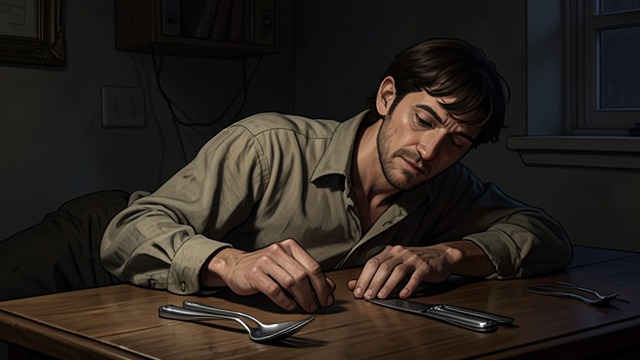
The Silver in the Dark
Temptation after shelter
Though Bishop Myriel has welcomed him, Jean Valjean lies awake thinking about the silverware. Years of deprivation and resentment make the valuables seem like compensation for a life stolen by the authorities.
He rises in the night and takes the silver. The theft shows that kindness has not yet undone the habits formed by prison and exclusion.
A conscience awakened
Bishop Myriel refuses to accuse him when the gendarmes return him. The gift of the candlesticks turns the theft into a moment of moral reckoning rather than a return to punishment.
Jean Valjean’s transformation begins as an obligation he has not yet learned how to fulfill.
The Child’s Coin
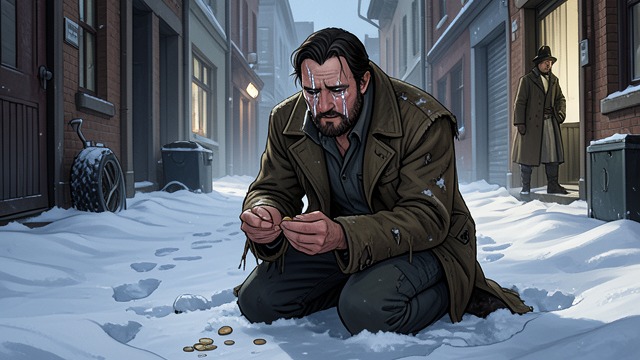
The Child’s Coin
A relapse after pardon
Jean Valjean steals a coin from Petit-Gervais, repeating the old pattern even after Bishop Myriel’s extraordinary forgiveness. He first treats the act as trivial, then realizes that the victim is a child.
His attempt to find Petit-Gervais and return the money fails. The failure makes the theft impossible to dismiss as harmless.
Recognition of the self
Jean Valjean breaks down and sees the horror of his past with a clarity he has never known. He kneels in prayer outside the bishop’s house.
The episode makes his conversion inward: he must recognize that mercy has given him a choice, not merely an escape from prison.
The Innocent at Arras

The Innocent at Arras
Reputation versus duty
Jean Valjean learns that Champmathieu may be condemned in his place. Keeping silent would preserve his mayoral work and his ability to help Fantine.
He imagines losing freedom, respect, and the ordinary comforts he has earned. The prospect of renewed imprisonment makes the choice physically and morally terrifying.
Choosing accountability
Valjean goes to court and identifies himself. The court releases Champmathieu, and Valjean accepts the consequences of telling the truth.
The decision proves that the bishop’s mercy has become an active principle. Valjean refuses to build his virtue on another person’s suffering.
The Enemy Released

The Enemy Released
Power without revenge
Jean Valjean is given the chance to execute Inspector Javert, his relentless pursuer, while the officer is a prisoner at the barricade. The old logic of vengeance and fear would make killing him seem convenient.
Valjean instead cuts Javert free and gives him information that could lead to his own recapture. The choice turns mercy into a concrete risk.
A changed relation
Javert cannot absorb the gift into his belief that a convict is irredeemable. Valjean’s action has moral force precisely because it is directed toward an enemy.
The episode extends the bishop’s original lesson beyond private gratitude. Compassion becomes a refusal to reproduce the violence that shaped Valjean’s life.
The Confession to Marius

The Confession to Marius
Refusing the borrowed identity
Jean Valjean tells Marius that he was imprisoned and remains a fugitive. He explains that the money given to Cosette is hers, and admits that his injury before the wedding was feigned.
He believes that remaining silently in the family would spread the stigma he carries into their happiness. For him, honesty requires surrendering the role of father and protector.
The painful consequence
Marius initially accepts the confession as evidence that Valjean is dangerous and undeserving of trust. Valjean leaves rather than argue for the place he has earned through years of care.
His moral victory is inward and costly: he preserves his integrity even when it seems to cost him the people he loves most.
October 1815, after midnight at Digne
The day after leaving Digne
1823, during the Champmathieu trial
June 5, 1832, at Corinthe Tavern
After the wedding, February 1833
