
Fantine’s Sacrifice for Cosette
Les MisérablesThis thread follows Fantine’s attempt to secure her daughter’s future as poverty and social judgment consume her own life.
increasing Bearing strength in each event
 decreasing
Bearing strength in each eventdecreasingA Mother’s Trust
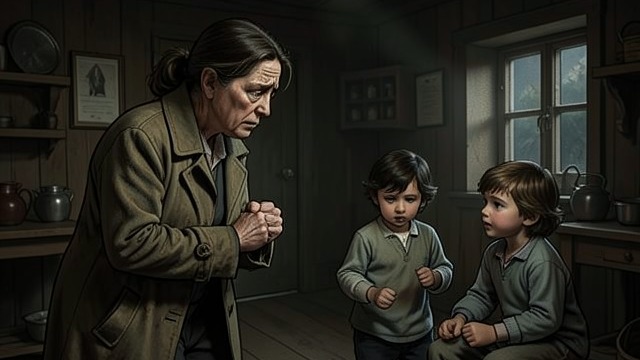
A Mother’s Trust
The child entrusted
Fantine meets the Thénardier family while traveling with Cosette. Seeing their daughters playing, she imagines that the innkeeper’s wife is a loving mother.
Unable to find work while caring for a child, Fantine asks the couple to take Cosette in. The decision is made under economic pressure and with very little evidence about the family.
Love at a distance
Fantine leaves her daughter at the inn and continues toward Montreuil-sur-Mer. She believes the arrangement is temporary and sends payments and letters as she can.
The separation becomes the foundation of both women’s hardship: Fantine sacrifices proximity, while Cosette grows up without knowing her mother.
The Dismissed Worker
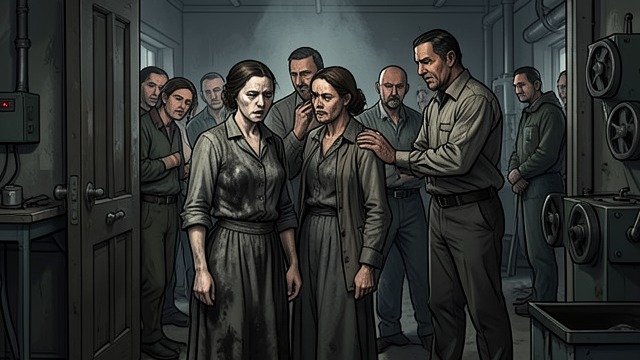
The Dismissed Worker
Private life exposed
Fantine finds work at Monsieur Madeleine’s factory, where she can earn enough to support herself and pay for Cosette. Other workers discover that she has a child born outside marriage.
A supervisor dismisses her without consulting Madeleine. Social judgment turns motherhood into an offense that costs Fantine her livelihood.
The descent begins
Fantine cannot pay both her debts and the increasing demands from the Thénardiers. Shame and poverty leave her without secure work or a way to reclaim Cosette.
The dismissal shows how an apparently respectable community can deepen a woman’s distress while claiming to defend morality.
Hair for a Winter Skirt
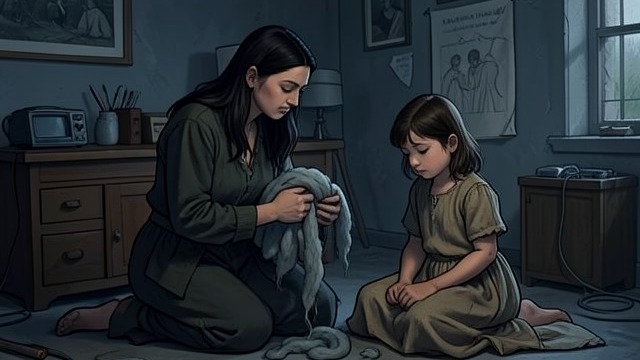
Hair for a Winter Skirt
A sacrifice for warmth
The Thénardiers claim that Cosette needs a wool skirt. Fantine cannot pay them from her scant wages, so she sells her beautiful hair to raise the money.
She tells herself that her daughter will no longer be cold. The Thénardiers give the skirt to their own child, leaving Cosette still exposed.
Love exploited
Fantine’s sacrifice is genuine, but the people receiving her money manipulate it for their own benefit. Her tenderness becomes a resource that others repeatedly extract.
The episode shows how maternal love can sustain hope even when the social arrangement meant to protect a child is corrupt.
The Price of Teeth
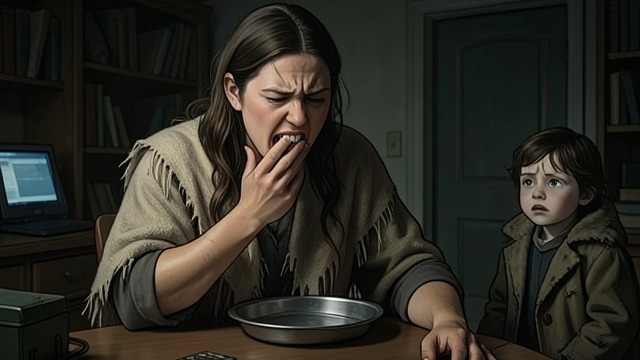
The Price of Teeth
A false emergency
The Thénardiers send a letter claiming that Cosette is dangerously ill and needs expensive medicine. Fantine initially laughs at the demand, unable to imagine where the money could come from.
Then she sells her two front teeth for forty francs. The painful transaction turns her body into the last available source of support.
Exploitation revealed
Cosette is not sick; the supposed emergency is a lie meant to secure payment. Fantine has suffered for a need that never existed.
The lie accelerates her physical and financial ruin. It also exposes the cruelty of treating a poor mother’s desperation as an opportunity for profit.
A Promise Left Behind
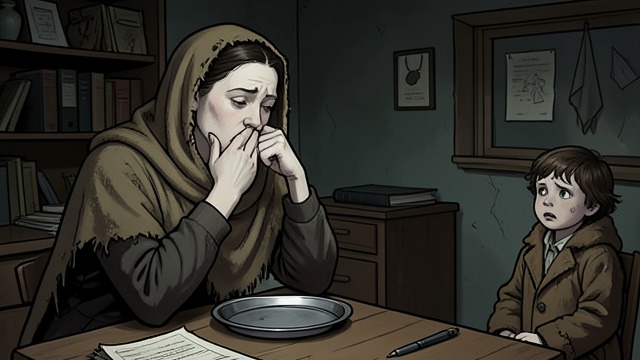
A Promise Left Behind
A last hope
Jean Valjean tells the dying Fantine that Cosette will be brought to her. Fantine believes the promise and imagines their reunion with happiness.
Inspector Javert arrives to arrest Valjean, and Fantine learns that her daughter is not there. The shock breaks the fragile comfort of her final hours.
Love beyond death
Fantine dies before she can see Cosette again. Jean Valjean promises to fulfill the duty she entrusted to him and later rescues the child.
Her maternal love continues to shape the central action even after her death. Cosette’s safety becomes both Valjean’s promise and the inheritance of Fantine’s sacrifice.
Spring 1818, at Montfermeil
Around 1820, at Montreuil-sur-Mer
After Fantine’s dismissal, at Montreuil-sur-Mer
Late in Fantine’s decline
1823, at Fantine’s deathbed
