
Cosette’s Passage from Abuse to Love
Les MisérablesThis thread traces Cosette’s development from an exploited child into a young woman able to choose love and a future.
increasing Bearing strength in each event
 decreasing
Bearing strength in each eventdecreasingA Child Sent Away
A Child Sent Away
A temporary arrangement
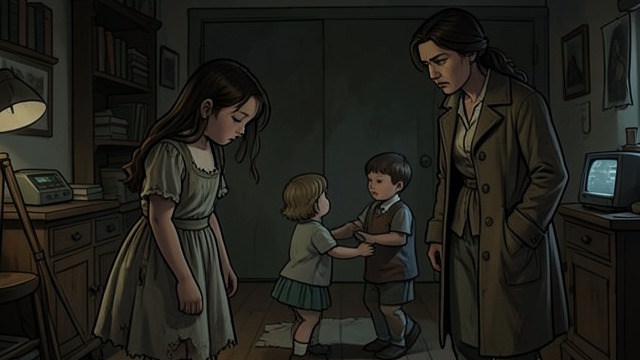
Cosette is left with the Thénardiers while Fantine seeks work. She is too young to understand why her mother is leaving or how uncertain the arrangement is.
At first, the inn’s daughters and their mother seem to offer the possibility of a family. That appearance soon gives way to a sharp division between the favored children and Cosette.
A childhood of labor
The Thénardiers make Cosette work and treat her as a servant. Their cruelty deprives her of the ordinary security and affection children need.
The separation from Fantine is not a failure of love: it is a choice made under poverty and then exploited by the adults who take her in.
Water in the Winter Woods
Water in the Winter Woods
A fearful errand
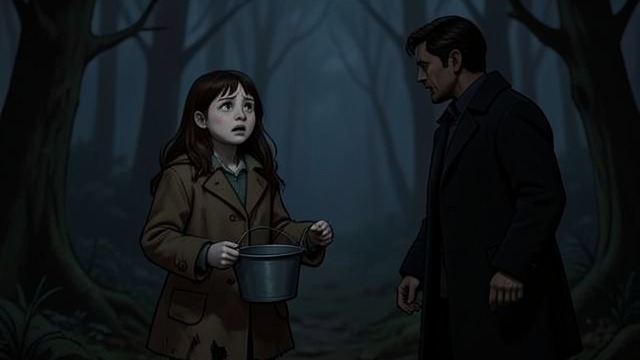
The Thénardiers send eight-year-old Cosette through a dark winter forest to fetch water. She is exhausted, cold, and more afraid of returning without the full bucket than of the wilderness.
Her fear shows how completely punishment has shaped her habits. Even alone in the woods, she imagines her abuser watching.
Rescue and recognition
Jean Valjean appears and carries the bucket for her. When he asks whether she has a mother, Cosette can only say she does not think so.
His attention offers the child something she has rarely known: help without a demand. Her encounter with him begins a new life before she can understand what has changed.
The Doll and the Departure
The Doll and the Departure
A brief childhood joy
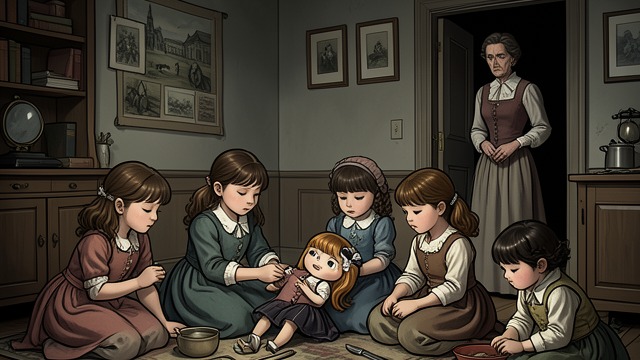
Cosette watches the Thénardier girls play with their doll and secretly holds it when no one is looking. The small act of play expresses a childhood desire she has been denied.
The innkeeper’s wife prepares to punish her. Jean Valjean intervenes and gives Cosette a beautiful doll of her own.
Leaving the inn
By morning, Jean Valjean has arranged to take Cosette away. She leaves without understanding where they are going, but she knows she is escaping the inn.
For the first time, an adult’s power is used to protect rather than exploit her. The doll becomes a sign of a future in which she may possess joy without fear.
A Childhood Restored
A Childhood Restored
Safety in hiding
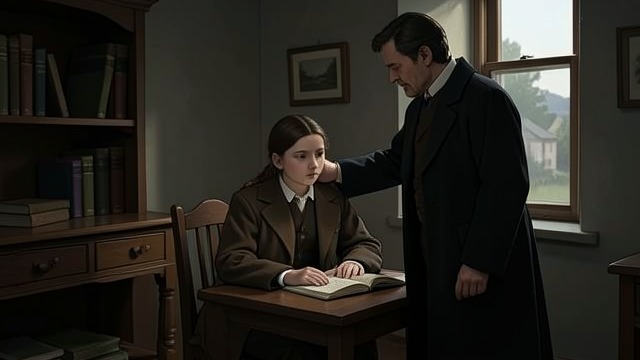
Jean Valjean and Cosette flee from the police and take refuge at the Petit-Picpus Convent with help from Old Fauchelevent. Cosette receives education and a protected place to grow.
Jean Valjean’s attachment deepens into fatherly love. Cosette, who has struggled to love anyone, begins to trust him and calls him father.
Freedom beyond the convent
Jean Valjean worries that a life enclosed by the convent would deprive Cosette of ordinary choices. He takes her away and settles with her at the Rue Plumet Residence.
The move is a further act of care: he must protect her without making her world smaller than it needs to be. Her future begins to include both safety and independence.
The Name Cosette Chooses
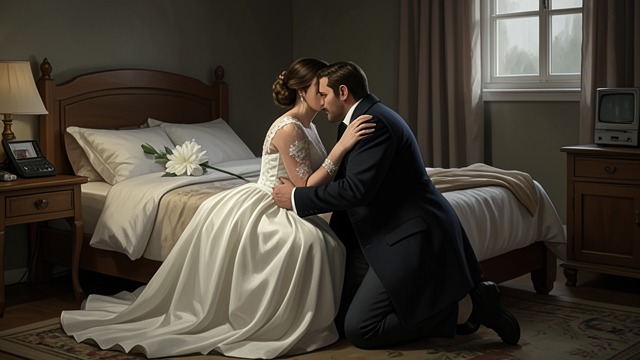
The Name Cosette Chooses
A new household
Cosette marries Marius and learns that Jean Valjean is not her biological father. The revelation casts a brief shadow over the man she has always called father.
Her new marriage and happiness make the change difficult to process. She has grown up among hidden identities and is accustomed to unanswered questions.
Return to the dying man
When Cosette and Marius learn how much Jean Valjean has sacrificed, they return to his bedside. She embraces him and calls him father, restoring the bond his confession had seemed to break.
Cosette’s final reconciliation affirms that their relationship was created by years of care, not by birth alone.
Spring 1818, at Montfermeil
Christmas Eve, around 1823, outside Montfermeil
Christmas Eve and the following morning, at Montfermeil
After the escape from Gorbeau House
February 1833, after her marriage
