
The Thénardier Household’s Decline
Les MisérablesThis thread follows the Thénardiers from a village inn to urban crime and shows how their family’s needs become instruments of exploitation.
increasing Bearing strength in each event
 decreasing
Bearing strength in each eventdecreasingThe Waterloo Story
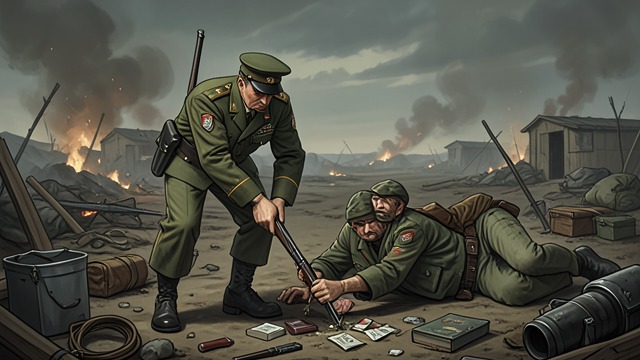
The Waterloo Story
A false act of rescue
At Waterloo, Thénardier searches the battlefield for valuables and takes belongings from the wounded Georges Pontmercy. Georges mistakenly believes that the soldier has saved him.
That error becomes a lasting debt in Marius’s mind. Thénardier’s reputation as a rescuer is built on a misunderstanding that benefits him later.
A useful legend
Georges asks his son to repay Thénardier if they meet again. Marius grows up with the instruction but without knowing what really happened on the battlefield.
The mistaken story links a family’s private history to later moral choices. It places gratitude on a false foundation.
The Inn at Montfermeil
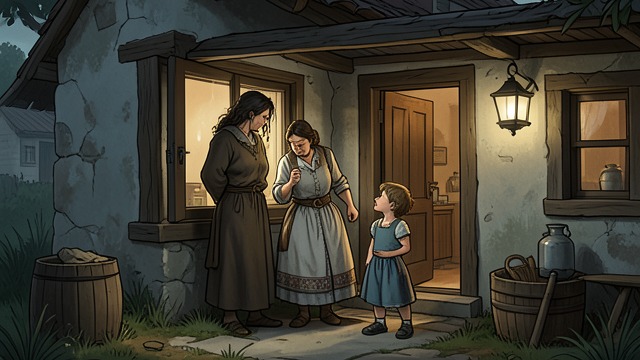
The Inn at Montfermeil
A charitable appearance
Thénardier and his wife run an inn that appears to be a family home. When Fantine asks them to care for Cosette, they agree in exchange for payment.
Their friendly welcome conceals a calculating arrangement. Once Cosette is in their power, they favor their own daughters and exploit her labor.
A child used for income
The couple raise their demands on Fantine and invent needs to extract more money. They keep the child in poor conditions while presenting themselves as her benefactors.
The inn becomes a small model of social cruelty: a vulnerable mother has few alternatives, and a child bears the cost of adult greed.
A Family Scattered
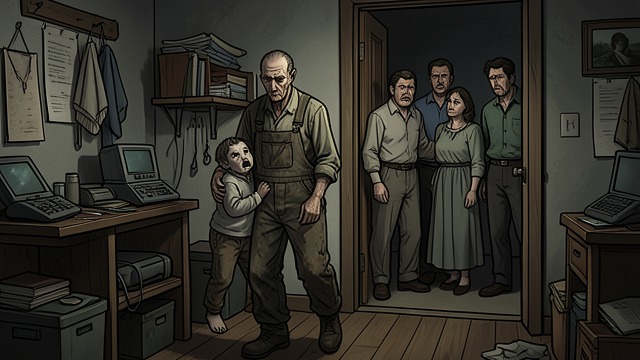
A Family Scattered
The innkeeper’s losses
Jean Valjean removes Cosette from the inn, depriving the Thénardiers of a source of money and control. Their household’s fortunes deteriorate over the following years.
The parents and daughters face the same city poverty that they once helped impose on Cosette. Their misfortune does not make their earlier cruelty disappear.
Children abandoned
Little Gavroche grows up in the streets, largely ignored by his parents. Éponine and Azelma remain within the failing household but inherit its insecurity.
The family’s decline creates different forms of abandonment rather than a single shared fate. Each child must meet poverty with unequal resources and choices.
Jondrette’s Trap

Jondrette’s Trap
A criminal identity restored
Living under the name Jondrette, Thénardier plots to rob and extort the man he recognizes as Jean Valjean. Marius, a neighboring tenant, overhears the plan and alerts the police.
The scheme reveals the transformation of the former innkeeper into a professional criminal. Poverty is part of the setting, but his deliberate exploitation remains his own choice.
Marius’s divided duty
Marius realizes that the target is the man who might have saved his father at Waterloo. He is caught between protecting Jean Valjean and obeying his father’s supposed request to help Thénardier.
Before Marius can resolve the conflict, the police intervene and Thénardier escapes. The old false debt continues to distort judgment.
The Sewer Bargain
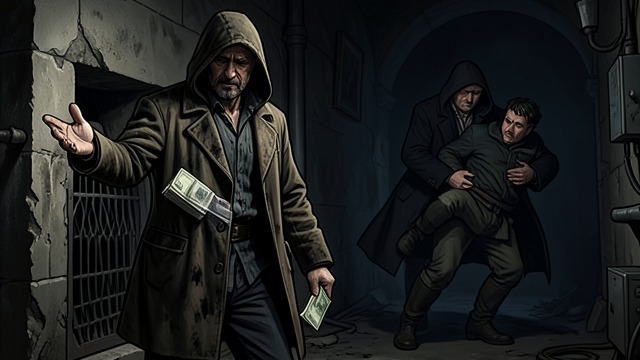
The Sewer Bargain
A meeting in darkness
Thénardier encounters Jean Valjean carrying the wounded Marius through the sewers. He does not recognize Valjean and assumes that Marius has been murdered.
He offers to open the sewer gate in exchange for half the money carried by the supposed killer. His assistance is mixed with theft and an attempt to keep evidence for later use.
A narrow escape
Thénardier takes Valjean’s money and opens the gate, allowing the rescuer and the wounded man to reach the riverbank. The act saves them without any intention of charity.
His hidden fragment of Marius’s coat later gives Marius evidence about the rescuer. The criminal’s opportunism accidentally helps reveal the truth.
1815, after the Battle of Waterloo
1818, at Montfermeil
After Jean Valjean takes Cosette away
Around 1832, at Gorbeau House
June 6, 1832, at the sewer outlet
