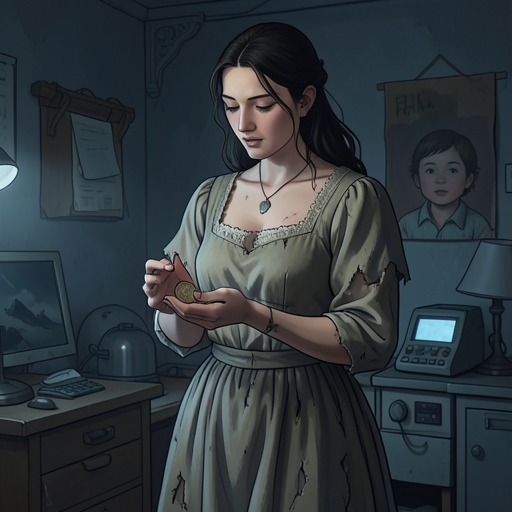
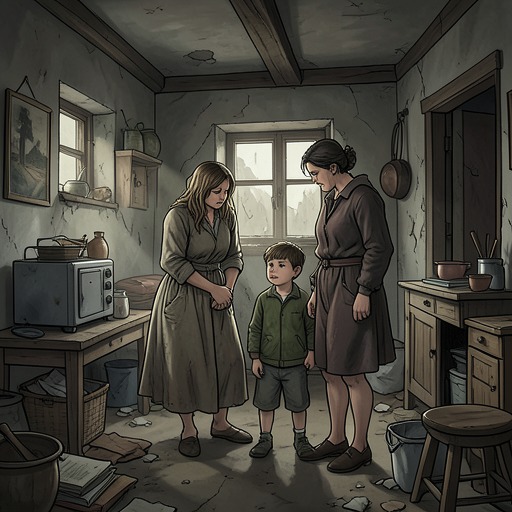
Azelma
Les MisérablesAzelma is one of the Thénardiers’ two young daughters, introduced alongside her sister Éponine as a picture of childhood comfort and privilege. Her brief appearance at the inn helps make Cosette’s neglect visible: the girls share warmth, play, and a doll, while Cosette watches from the margins.
Identity and Introduction
Azelma enters with Éponine while Cosette is occupied with her knitting. The sisters are described together as pretty, lively, clean, well-fed, and healthy. Their clothes are warm yet carefully arranged, preserving a coquettish appearance despite the winter. Their entrance changes the room’s balance: their mother’s gruff greeting is described as full of adoration, and the girls carry themselves with the ease of those who rule their small domestic world.
The Sisters and Cosette
Azelma and Éponine settle by the fire with a doll, turning it in their laps and chattering happily. Cosette looks up from her knitting to watch them with a lugubrious expression, but the sisters do not look back at her. The narrator compares Cosette’s place in their eyes to that of a dog, then makes the three girls a miniature image of adult society: envy on one side, disdain on the other. Azelma’s importance in the scene lies less in any individual action than in the privilege she shares with Éponine, set against Cosette’s exclusion.
The Doll and the Moment of Recognition
Cosette’s brief happiness lasts nearly a quarter of an hour as she handles the doll without being seen by anyone except the traveler eating his meager supper. A brightly lit pink foot protrudes from the shadow, and Azelma notices it. She draws Éponine’s attention to what she has seen; both sisters stop, astonished that Cosette has dared to take the doll. The discovery ends Cosette’s secret moment of play and makes the sisters’ possession—and Cosette’s precarious access to it—plain.