Champmathieu affair
Les MisérablesThe Champmathieu affair is the trial at which Jean Valjean must decide whether to let an innocent man suffer under his name or expose himself as a former convict. Its decisive reversal comes when Valjean, publicly known as M. Madeleine, enters the courtroom at Arras and identifies himself, saving Champmathieu from conviction while surrendering the security and respectability he has built.
Background: a name mistaken for another
The affair begins when Inspector Javert admits to M. Madeleine that he has mistaken him for Jean Valjean and reported him to the authorities. Meanwhile, the police have arrested Champmathieu as the man they believe to be the real Jean Valjean; the trial is due to reach a verdict the following day. The mistaken identification turns Valjean’s concealed past into an immediate threat to someone else’s freedom.
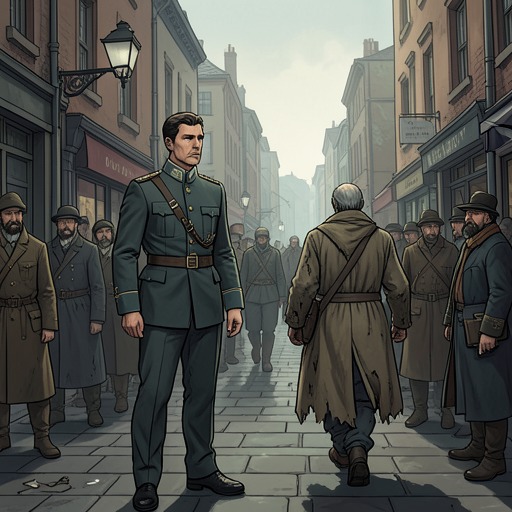
The danger carries the weight of Valjean’s actual history. He has spent nineteen years in the galleys for theft, has been free for only four days when he recounts his circumstances to Bishop Myriel, and is travelling toward Pontarlier. His yellow passport marks him as a released convict. The novel’s account of former convicts explains the wider machinery behind that stigma: a passport bearing the letter F and restrictions on residence and travel made them readily identifiable, while those crossing towns had to report to the gendarmerie. Valjean’s experience of rejection at inns and refusal of shelter shows how official surveillance becomes social exclusion.
The moral crisis
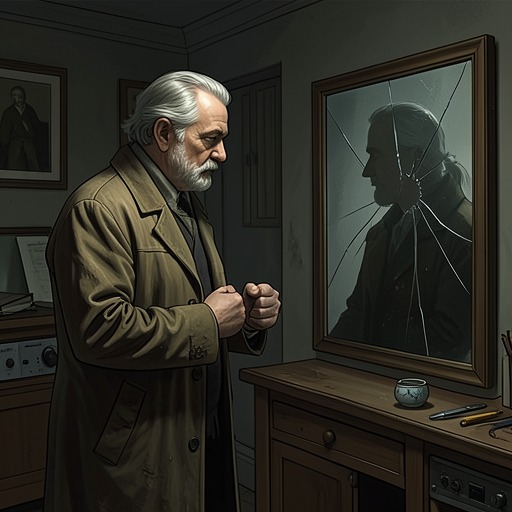
Under the name M. Madeleine, Valjean has become a respected mayor and has obligations he fears abandoning, including his promise to Fantine. Through the night, he struggles with the choice between preserving that life and stopping the prosecution of Champmathieu. His first response is to burn his former convict belongings. He even considers destroying the silver candlesticks given to him by Bishop Myriel, an act that would sever a material reminder of the mercy that helped shape his changed life.
The inward struggle gives the impending trial its moral force: keeping his new identity would protect his standing, but it would leave an old man to carry the consequences of Valjean’s past. The narrative frames this choice as a crisis of conscience rather than a calculation of personal advantage. After a night in which his irresolution returns, Valjean sets out for Arras.
The courtroom reversal
At the courthouse, Valjean asks to be admitted to the hearing. Three former convicts called by the prosecution claim to recognize Jean Valjean in Champmathieu. As the accused is on the point of being condemned, M. Madeleine declares that he is Jean Valjean. The revelation overturns the identification on which the case rests: Champmathieu is acquitted, and Valjean places himself at the disposal of the police.
The reversal exposes a judicial process capable of turning a mistaken identification into the punishment of an innocent person. The novel’s broader criticism is that justice can become dehumanizing and hurried, and that penalties may be grossly disproportionate to the offenses they punish. In this case, the danger is not merely theoretical: without Valjean’s intervention, Champmathieu would have been sent to the galleys under another man’s name.
Consequences and significance
Valjean’s self-disclosure resolves the immediate danger to Champmathieu but does not erase the force of his convict identity. Later, when speaking to Marius Pontmercy, he states that he spent nineteen years in the galleys for theft, was sentenced to life for theft and recidivism, and remains in violation of his release conditions. That later account underscores the continuing legal and social vulnerability attached to his past, even after he has acted to save another man from it.
The affair makes the conflict between conscience and law concrete. Valjean’s public identity as M. Madeleine can coexist with the legal system’s claim that he is a former convict, but only until that system’s mistake places an innocent man in danger. By giving up his position rather than allowing Champmathieu to suffer in his stead, Valjean turns a concealed identity into an act of moral responsibility. The courtroom scene also reveals the limits of official judgment: in this instance, the man the authorities misidentify is the one who must intervene to prevent their error from becoming a sentence.